
Network Coverage in Rural Areas: Why It Lags and What's Being Done
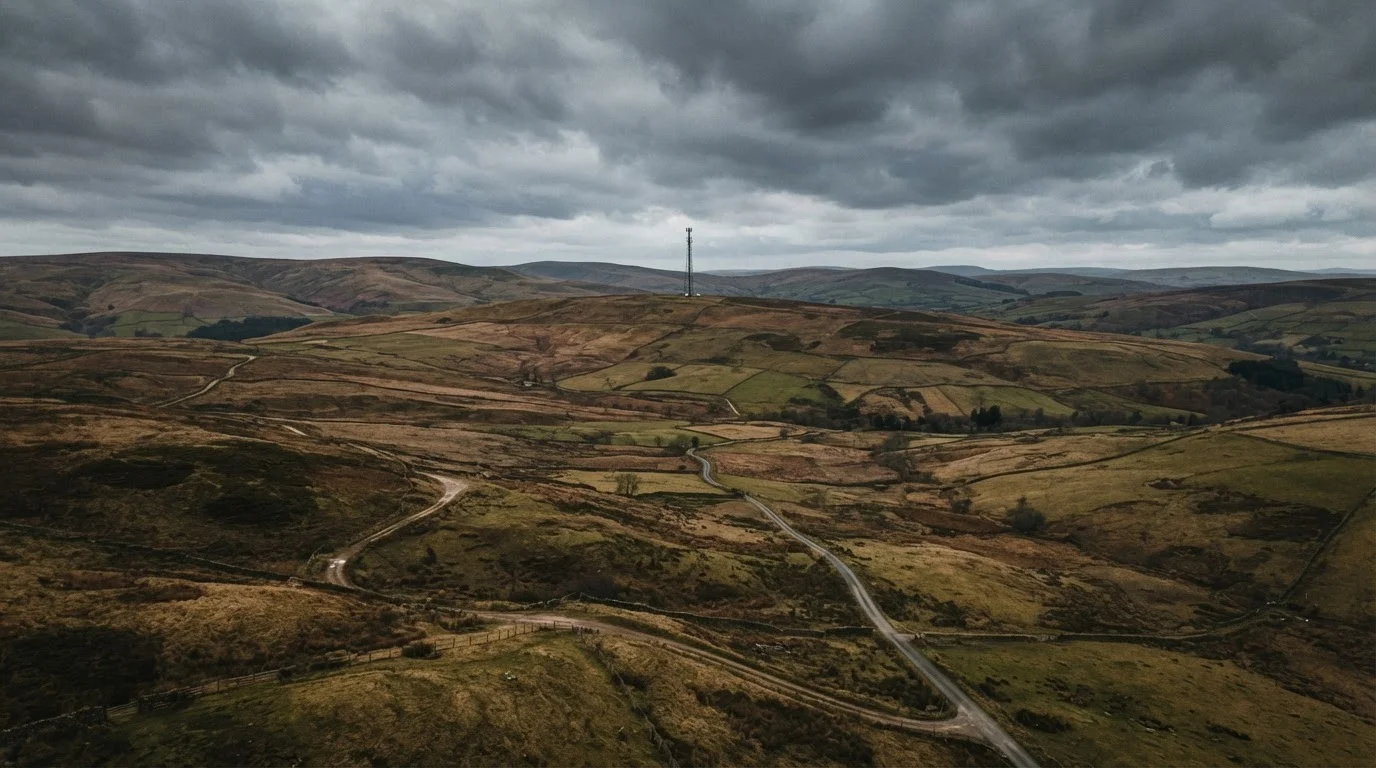
Photo credit: Telecom360.net | Connecting You To The Latest In Telecom
In this article
Rural connectivity gaps persist despite carrier promises. Explore the infrastructure reasons behind patchy rural coverage and the programmes aimed at closing the gap.
Key Takeaways
- Rural areas have fewer cell towers because low population density makes infrastructure investment financially unattractive for carriers.
- Lower-frequency spectrum bands extend reach in rural areas but deliver slower data speeds than mid-band or high-band frequencies.
- Federal programmes like the FCC's Rural Digital Opportunity Fund allocate billions to expand rural broadband and wireless infrastructure.
- Coverage maps often overstate rural signal strength because they rely on propagation models, not on-the-ground measurements.
- Satellite-based connectivity is emerging as an alternative for areas where terrestrial towers remain uneconomical to build.
Why Rural Coverage Lags: The Economics of Tower Deployment
Mobile network coverage is, at its core, a business calculation. Carriers spend hundreds of thousands of dollars per tower site - factoring in land acquisition, equipment, permitting, power infrastructure, and ongoing maintenance - and they recoup that investment through subscriber revenue. In a city of one million people, a single tower cluster can serve thousands of paying customers. In a rural county with the same geographic footprint but a fraction of the population, the same investment might serve dozens.
This asymmetry is the primary driver of the rural coverage gap. It isn't a technical failure; it's a structural economic one. Carriers are private businesses, and their network expansion decisions reflect where return on investment is achievable within reasonable timeframes. Rural communities, through no fault of their own, frequently fall below that threshold.
Terrain compounds the problem. Flat prairies allow signals to travel freely, but mountain ranges, dense forests, and valley geography create natural obstacles that attenuate radio signals rapidly. Each obstacle either requires additional tower placement - raising costs further - or results in coverage voids that no single tower can economically fill.
~21M
Americans lacking access to fixed broadband
The FCC has estimated that approximately 21 million Americans - disproportionately in rural areas - lacked access to broadband-speed internet, though independent researchers have suggested the actual figure may be higher.
$9.2B
RDOF funding committed to rural connectivity
The FCC's Rural Digital Opportunity Fund committed approximately $9.2 billion across two auction phases to expand rural broadband and voice coverage in underserved census blocks.
~630 MHz
Typical low-band spectrum used in rural deployments
Carriers predominantly use frequencies in the 600-700 MHz range for rural coverage because these bands propagate over much longer distances than mid-band or high-band spectrum.
For a detailed look at how carriers model and represent their coverage, see our article on how mobile network coverage maps are built and where they fall short.
Spectrum and Signal: The Technical Trade-Offs
When carriers do deploy infrastructure in rural areas, they typically rely on low-frequency spectrum bands - 600 MHz, 700 MHz, and 850 MHz - because these frequencies travel farther from each tower and penetrate obstacles more effectively than the mid-band (2.5 GHz) or high-band (mmWave) spectrum that powers dense urban networks. A single 600 MHz tower can theoretically cover a radius of many miles, whereas a mmWave cell might reach only a few hundred feet.
The trade-off is capacity. Lower frequencies carry less data per unit of spectrum, which translates to slower maximum data speeds. A rural user connected to a 700 MHz LTE signal may have adequate voice calls and basic data, but streaming high-definition video or conducting video calls can be inconsistent - not because the signal is absent, but because the bandwidth simply isn't there.
This dynamic also explains why the 5G rollout has done relatively little for rural users so far. Low-band 5G, deployed on 600 MHz spectrum, does extend 5G-branded coverage to rural areas, but the real-world speed gains over mature 4G LTE on the same frequencies are often modest. The transformative mid-band 5G speeds are concentrated where dense infrastructure - and dense populations - make the investment viable. For a deeper look at this divide, see why urban and rural 5G experiences diverge so dramatically.
Check Signal Before You Commit to a Plan
If you live or work in a rural area, don't rely solely on a carrier's coverage map when choosing a plan. Use crowd-sourced signal tools or ask neighbours with different carriers about their experience. Where possible, take advantage of trial periods to test real-world performance at your specific address and surrounding roads before committing long-term.
Programmes and Policies Aimed at Closing the Gap
Recognising that market forces alone will not deliver equitable rural connectivity, federal and state governments have created several programmes to subsidise infrastructure deployment in underserved areas.
- FCC Universal Service Fund (USF): Long-standing mechanism that directs carrier contributions toward service in high-cost areas, including rural regions where standalone economics don't work.
- Rural Digital Opportunity Fund (RDOF): An FCC auction-based programme that committed approximately $9.2 billion to expand fixed broadband and voice coverage in rural census blocks - with wireless providers participating alongside fixed-line operators.
- USDA ReConnect Program: Provides loans and grants specifically for rural broadband infrastructure, including wireless backhaul that supports mobile tower connectivity.
- Infrastructure Investment and Jobs Act (2021): Allocated $65 billion to broadband expansion, including provisions for rural wireless coverage improvement.
These programmes have accelerated tower construction in some previously unserved areas, though implementation timelines, bureaucratic challenges, and disputes over coverage definitions have slowed progress in others. Satellite-based connectivity - particularly from low-earth orbit networks - has also emerged as a supplement for areas where terrestrial towers remain uneconomical, offering broadband-class speeds with lower latency than traditional geostationary satellites.
Consumers evaluating rural coverage should be cautious about relying solely on carrier coverage maps, which routinely overestimate signal availability. For a comparison of how major carriers actually perform in low-density areas, see rural coverage realities across major carriers. And if you're evaluating your carrier options more broadly, our carrier comparisons hub provides context on how networks stack up across key criteria.
Roaming Can Bridge Some Rural Gaps
In areas where your primary carrier has no towers, your phone may connect via a roaming agreement with a partner network - but roaming coverage is not guaranteed and varies significantly by carrier and location. Data speeds and call quality on roaming connections are typically lower priority than home-network traffic. For more on how roaming works technically, see network roaming vs home coverage.
Frequently Asked Questions

Author
Phone Plans Editorial Team
Phone Plans Editorial Team is the collective byline for our editorial team and contributor network. Articles published under this byline or an editorial pen name are researched, written, and reviewed according to our editorial standards for clarity, consistency, and independence before publication.
View all articles →