
Battery Capacity Myths That Lead Buyers Astray
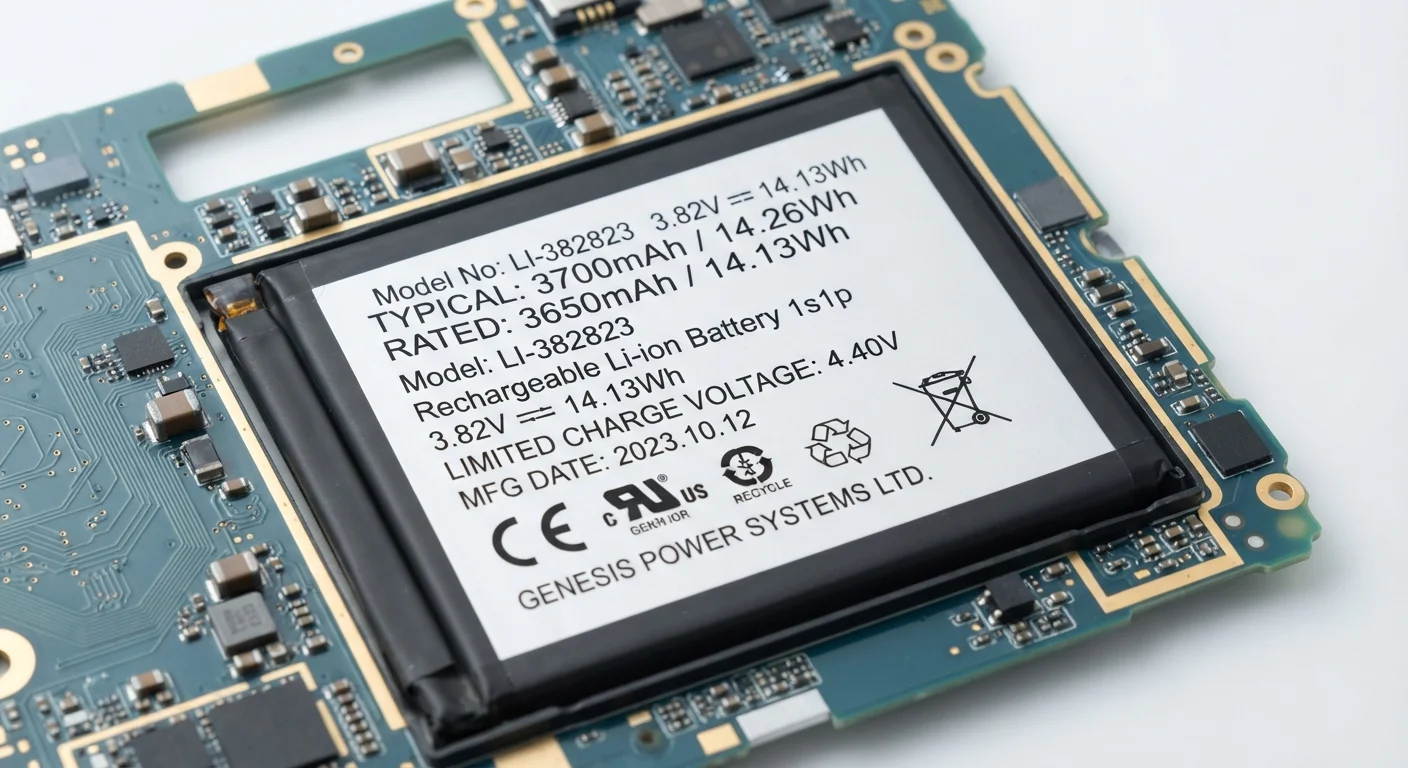
Photo credit: Telecom360.net | Connecting You To The Latest In Telecom
In this article
Why mAh alone doesn't predict battery life, and what factors — chip efficiency, screen brightness, software — actually determine how long a phone lasts.
Key Takeaways
- mAh measures battery capacity, not how long a phone will actually last on a charge.
- Processor efficiency and display technology often have a greater impact on battery life than raw capacity.
- Software optimization, background activity, and screen brightness are major real-world battery drains.
- Two phones with identical mAh ratings can deliver dramatically different usage times.
Why mAh Is the Most Misunderstood Spec in Mobile
When shoppers compare smartphones, milliampere-hours - commonly written as mAh - is one of the first battery specs they reach for. The logic seems intuitive: a bigger number means more battery. But treating mAh as a direct proxy for battery life is one of the most common and consequential mistakes in smartphone buying decisions.
mAh measures the total electrical charge a battery can store, not how efficiently a device uses that charge. A phone drawing 500 milliamps per hour from a 5,000 mAh battery will last roughly ten hours. A phone drawing 1,000 milliamps per hour from the same capacity lasts half that time. The drain rate - determined by the hardware and software running on the device - is every bit as important as the tank size. See how capacity and life differ in practice for a deeper look at this distinction.
Myth
A phone with a larger mAh battery will always last longer than one with a smaller battery.
Fact
Battery life depends on both capacity and power consumption rate. A smaller battery on an efficient chip can outlast a larger battery on an inefficient one.
Capacity sets the ceiling, but the processor, display, radios, and software determine how fast the ceiling is reached. Independent benchmark testing routinely shows phones with modest mAh ratings outperforming larger-battery competitors in real-world usage hours, purely due to hardware efficiency differences. mAh alone is not a reliable predictor without context about what hardware is consuming that charge.
Myth
Manufacturers' rated battery life figures reflect how the phone performs in normal daily use.
Fact
Manufacturer estimates are typically generated under controlled, light-use conditions that don't reflect average real-world behavior.
Testing protocols used for official ratings often involve static tasks at fixed brightness levels, minimal background app activity, and no mobile data. Real users stream video, receive notifications, run location services, and toggle between high-drain apps continuously. Third-party testing under more realistic mixed-use conditions consistently produces lower figures than official claims - sometimes substantially so.
Myth
Screen brightness has only a minor effect on battery life.
Fact
Display brightness is one of the highest-impact variables on battery drain, particularly on LCD-backlit panels.
Running a display at full brightness versus 50% can reduce battery endurance by a meaningful margin - in some device categories, this difference can account for hours of use. On OLED screens, brightness still matters significantly for bright content, since most pixels are active. Adaptive brightness features that respond to ambient light conditions can help moderate this drain without requiring manual intervention.
Myth
5G connectivity doesn't significantly affect battery life compared to 4G LTE.
Fact
5G modems - particularly sub-6GHz and especially mmWave - can consume considerably more power than their 4G equivalents under active use.
Early 5G modem generations carried a notable power penalty in many devices, and even current-generation modems draw more power when actively maintaining a 5G connection in areas with patchy coverage, where the radio must work harder to maintain signal. Devices that intelligently switch between 5G and 4G based on actual need tend to preserve battery life better than those locked to 5G at all times. This is one reason software-level radio management matters as much as modem hardware generation.
Myth
Battery capacity degrades evenly over time, so a two-year-old phone with 80% health still delivers 80% of original life.
Fact
Battery health is a nonlinear metric, and usage behavior, thermal history, and charge cycles interact in complex ways that make a simple percentage an incomplete picture.
While battery health tools report a percentage of original capacity, the relationship between that figure and real-world endurance is not perfectly proportional. A battery held frequently at very high or very low charge states, or subjected to heat stress, may exhibit performance drops that outpace the reported health percentage. Additionally, as capacity shrinks, the phone's power management behavior may change, further complicating direct comparisons to new-device performance.
The Real Factors That Determine Battery Life
Understanding which variables actually govern how long a phone lasts helps cut through spec-sheet noise. Three factors consistently rank above raw capacity in real-world impact.
~30-40%
Portion of battery drain attributable to the display
Independent teardowns and power profiling studies consistently identify the screen as the single largest power consumer in typical smartphone use cases.
2-3×
Battery life difference between same-capacity devices
Real-world testing has documented two-to-threefold differences in endurance between phones sharing similar mAh ratings but using different chip generations and display technologies.
Processor Architecture and Node Size
Modern mobile chips are built on process nodes measured in nanometers. Smaller nodes - such as moving from 7nm to 4nm manufacturing - generally allow transistors to switch states using less power, reducing idle and active drain simultaneously. A device running a well-optimized, newer-generation chip can outlast a competitor with a meaningfully larger battery on an older process, purely because it wastes less power on heat and inefficiency.
Display Panel Type and Refresh Rate
The screen is typically the largest single power consumer on a smartphone. OLED panels conserve power when displaying dark content because individual pixels turn off entirely, while LCD panels maintain a constant backlight. Additionally, high refresh rates - 90Hz or 120Hz - redraw the screen more frequently, increasing draw significantly compared to standard 60Hz. Adaptive refresh rate technology mitigates this by dropping to lower rates when motion isn't needed, but implementation quality varies across devices.
Software Optimization and Background Activity
The operating system's role is often underestimated. Aggressive background processes, poorly optimized apps, and push notification frequency all contribute to drain. Well-tuned power management can park idle cores, throttle radios when connectivity isn't needed, and defer non-urgent tasks. Devices running lean software stacks on efficient hardware consistently outperform those running heavier environments on larger batteries. For more on how background processes affect endurance, see how background refresh impacts battery.
mAh Is Not a Reliable Shorthand for Battery Life
Relying on mAh to compare battery life across devices can lead to a purchase that underperforms expectations. Always cross-reference independent, standardized battery tests that measure actual usage hours rather than capacity alone. Hardware efficiency, display type, and software optimization routinely matter more than the number on the spec sheet.
Making Smarter Comparisons Before You Buy
Rather than filtering by mAh alone, look for standardized battery-life tests from independent reviewers - expressed in hours of video playback, web browsing, or mixed use - rather than relying on manufacturer claims or raw capacity figures. These tests normalize conditions so cross-device comparisons are meaningful.
Also pay attention to charging architecture. Fast-charging standards affect how quickly you recover capacity, which changes how you use the phone day-to-day. Understanding watts, amps, and fast-charging standards can help you evaluate those claims accurately.
For a broader framework on reading spec sheets critically across all hardware categories, our guide to decoding smartphone spec sheets covers which numbers to trust and which to question. And if you manage devices at scale, the same pattern of misleading headline figures applies beyond consumer hardware - enterprise mobile plan myths follow a similar pattern.
This article is for informational purposes only. Real-world battery performance varies based on individual usage patterns, software versions, network conditions, and device age.

Author
Consumer Electronics Editorial Team
Consumer Electronics Editorial Team is the collective byline for our editorial team and contributor network. Articles published under this byline or an editorial pen name are researched, written, and reviewed according to our editorial standards for clarity, consistency, and independence before publication.
View all articles →