
Voice Assistants: What They Can Genuinely Do vs. What They Still Get Wrong
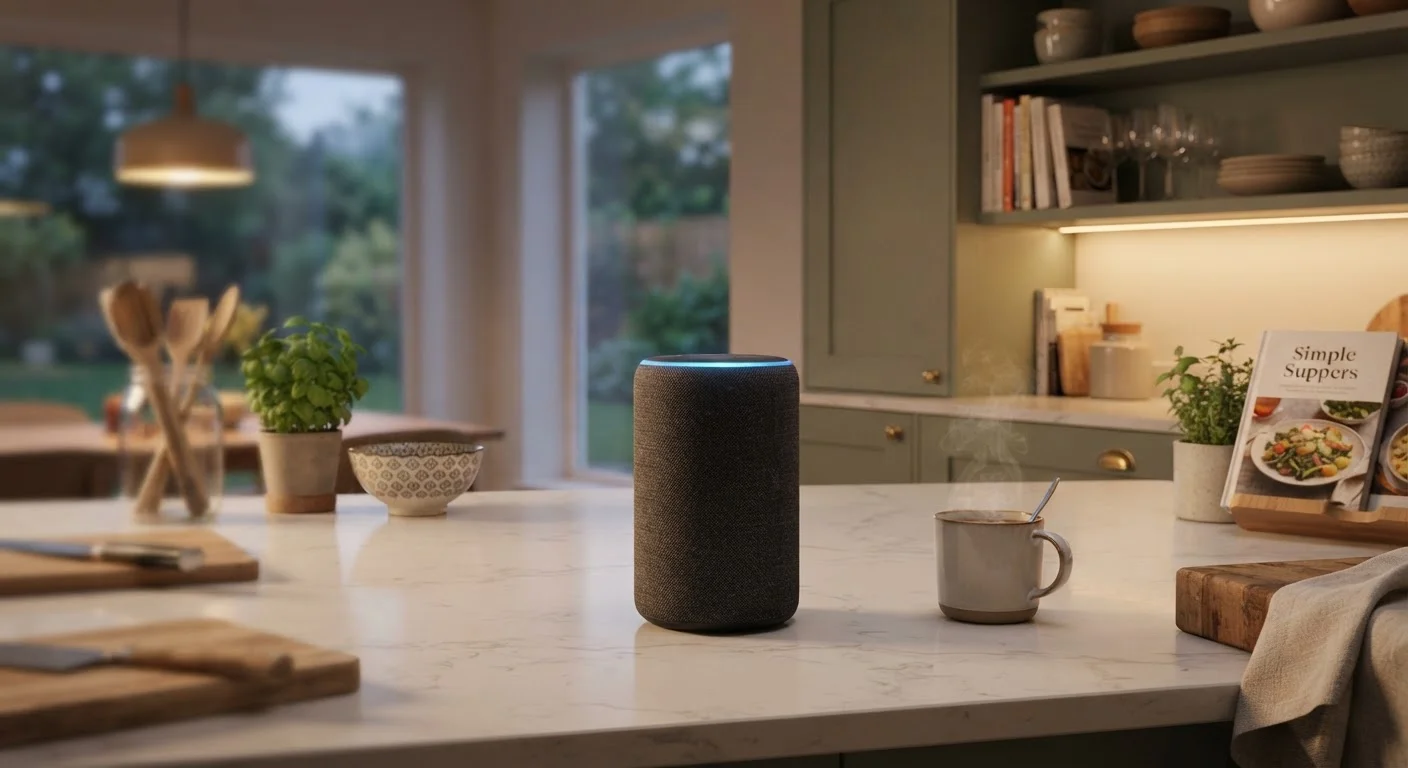
Photo credit: Telecom360.net | Connecting You To The Latest In Telecom
In this article
Voice assistants are more capable than ever — but also more limited than their marketing suggests. A balanced look at where they succeed and fail.
Key Takeaways
- Voice assistants handle routine tasks like timers, reminders, and smart home controls reliably.
- Complex reasoning, nuanced questions, and multi-step tasks remain consistent weak points.
- Privacy trade-offs are real - always-on microphones collect data even during idle periods.
- Accent recognition and non-native speech still produce noticeably higher error rates.
- Understanding the genuine limits of voice AI helps you use it more effectively and safely.
Hands-free convenience for routine daily tasks
Setting timers, reminders, and alarms without touching a device is consistently reliable and reduces friction in busy moments like cooking or driving.
Effective smart home device orchestration
When devices are properly configured, voice assistants can trigger multi-device routines with a single command, replacing several app interactions with one spoken instruction.
Reliable for simple factual lookups
Questions with clear, stable answers - current weather, unit conversions, sports scores - are handled accurately the vast majority of the time.
Enables safer, lower-distraction phone use while driving
Hands-free calling, navigation, and media control allow drivers to stay focused on the road while still accessing essential phone functions.
Accessibility benefits for users with motor impairments
Voice control can meaningfully expand device usability for people who find touchscreen interaction difficult, making smartphones and smart home devices more inclusive.
Produces confident but factually incorrect answers
Voice assistants frequently answer ambiguous or complex questions with unwarranted certainty. Users who accept these answers without verification risk acting on false information.
Struggles with multi-step conditional requests
Commands that require context-aware reasoning - such as rescheduling only under certain conditions - are routinely misinterpreted or silently simplified into a different action.
Always-on microphones raise legitimate privacy concerns
Detecting wake words requires continuous audio processing, meaning ambient conversations may be analyzed even when no command is issued. Default data retention settings are not always user-friendly.
Higher error rates for accented or non-native speech
Recognition accuracy remains measurably lower for speakers outside mainstream American English, limiting utility for a significant portion of the population.
Performance degrades sharply in noisy environments
Background television, music, or kitchen noise can substantially increase misrecognition rates, making voice assistants unreliable in many common household settings.
Limited ability to handle follow-up context across sessions
Most voice assistants do not maintain conversational memory between separate interactions, requiring users to re-state context each time they resume a topic.
Where Voice Assistants Genuinely Deliver
Modern voice assistants - found on smartphones, smart speakers, and increasingly in cars and appliances - have quietly become competent at a specific class of tasks. Understanding that class is the key to getting real value from them.
Hands-free convenience for routine daily tasks
Setting timers, reminders, and alarms without touching a device is consistently reliable and reduces friction in busy moments like cooking or driving.
Effective smart home device orchestration
When devices are properly configured, voice assistants can trigger multi-device routines with a single command, replacing several app interactions with one spoken instruction.
Reliable for simple factual lookups
Questions with clear, stable answers - current weather, unit conversions, sports scores - are handled accurately the vast majority of the time.
Enables safer, lower-distraction phone use while driving
Hands-free calling, navigation, and media control allow drivers to stay focused on the road while still accessing essential phone functions.
Accessibility benefits for users with motor impairments
Voice control can meaningfully expand device usability for people who find touchscreen interaction difficult, making smartphones and smart home devices more inclusive.
The clearest wins are in low-stakes, time-sensitive interactions: setting a kitchen timer while your hands are covered in dough, adding an item to a shared grocery list without unlocking your phone, or dimming the living room lights without leaving the couch. These are tasks where speed and convenience matter more than nuance, and where an occasional error has minimal consequence.
Voice assistants are also genuinely capable as smart home orchestrators. When devices are correctly configured, a single voice command can trigger a sequence of actions - locking doors, adjusting the thermostat, and turning off lights simultaneously. That kind of integration would otherwise require multiple app interactions. See how hardware choices affect this experience in our piece on smart displays vs. smart speakers.
Hands-free calling, navigation prompts while driving, and music or podcast playback are other areas where these assistants perform consistently. The common thread: tasks that are well-defined, reversible, and require no real-world verification.
Where Voice Assistants Still Fall Short
The same systems that set a timer flawlessly can confidently produce a wrong answer to a health question or misunderstand a request with even slight ambiguity. This gap between perceived and actual capability is where users most often run into trouble.
Produces confident but factually incorrect answers
Voice assistants frequently answer ambiguous or complex questions with unwarranted certainty. Users who accept these answers without verification risk acting on false information.
Struggles with multi-step conditional requests
Commands that require context-aware reasoning - such as rescheduling only under certain conditions - are routinely misinterpreted or silently simplified into a different action.
Always-on microphones raise legitimate privacy concerns
Detecting wake words requires continuous audio processing, meaning ambient conversations may be analyzed even when no command is issued. Default data retention settings are not always user-friendly.
Higher error rates for accented or non-native speech
Recognition accuracy remains measurably lower for speakers outside mainstream American English, limiting utility for a significant portion of the population.
Performance degrades sharply in noisy environments
Background television, music, or kitchen noise can substantially increase misrecognition rates, making voice assistants unreliable in many common household settings.
Limited ability to handle follow-up context across sessions
Most voice assistants do not maintain conversational memory between separate interactions, requiring users to re-state context each time they resume a topic.
A core issue is confabulation - the tendency of AI-driven assistants to generate plausible-sounding but incorrect responses rather than admitting uncertainty. Ask a voice assistant about a niche historical date or a medication interaction, and it may answer with unwarranted confidence. This pattern is explored in depth in our article on how people misread AI confidence.
Multi-step or conditional requests are another persistent failure mode. Asking an assistant to "reschedule my 3 p.m. meeting only if I have nothing else after 4" requires context-aware reasoning that most current systems cannot reliably execute. The request either gets simplified or misinterpreted.
Privacy remains a structural concern rather than a fringe issue. Always-on microphones must continuously process audio to detect wake words, which means ambient conversations are routinely analyzed - even if not stored permanently. Users should review the data settings on any device they deploy in a home or office.
The Accuracy Problem: A Closer Look
Accuracy failures in voice assistants are not random. They cluster around specific conditions that are worth knowing about.
~8%
Average word error rate for leading voice assistants
Research published in peer-reviewed speech technology journals has documented word error rates for major voice assistants in the range of 5-10% under controlled conditions, with rates rising significantly in noisy environments.
2-3×
Higher error rate for non-standard English accents
Multiple academic studies have found that word error rates for speakers with non-native or regional accents can be two to three times higher than for speakers of mainstream American English.
Accent and dialect recognition continues to lag for speakers of non-standard or non-American varieties of English, as well as for non-native speakers. Multiple independent studies have documented significantly higher word error rates for these groups compared to speakers of mainstream American English - a gap that has narrowed but not closed despite years of improvement.
Ambient noise degrades performance in ways that are easy to underestimate. A television playing in the background or a noisy kitchen can push error rates up sharply, even for commands the assistant would otherwise handle without difficulty.
The broader context of AI accuracy limitations is something worth understanding beyond voice assistants alone. Our analysis of common AI myths addresses how these limitations play out across different AI tools. Likewise, if you use AI features across multiple apps, it's worth reading about signs you're over-relying on AI features - the habits that gradually erode critical judgment apply equally to voice assistants.
Voice Assistants vs. Conversational AI: A Key Distinction
Traditional voice assistants (such as those built into smart speakers) are primarily command-and-response systems - they parse intent from speech and trigger actions. More recent conversational AI integrations in some devices attempt open-ended dialogue. These are architecturally different systems with different failure modes. The limitations described here apply most directly to the command-and-response model that still underlies the majority of consumer voice assistant interactions.
Using Voice Assistants More Effectively
The most effective users of voice assistants share a common trait: they have calibrated expectations. They use the technology for what it does well and route other tasks elsewhere.
Practically, this means:
- Use voice for execution, not research. Setting reminders or controlling devices is reliable. Looking up medical, legal, or financial information is not - verify independently.
- Keep requests atomic. Single-step commands succeed far more often than multi-part conditional ones. Break complex requests into sequential simple commands.
- Audit privacy settings periodically. Most platforms offer options to limit voice history retention or opt out of human review programs - these settings are not always enabled by default.
- Treat confident answers with appropriate skepticism. A fluent, immediate response is not evidence of accuracy. Cross-check anything consequential.
Voice assistants are best understood as a layer of convenience built on top of your existing tools - not as a replacement for judgment or reliable information sources. Used within those limits, they can meaningfully reduce friction in everyday routines without introducing unacceptable risk.

Author
AI & Cloud Editorial Team
AI & Cloud Editorial Team is the collective byline for our editorial team and contributor network. Articles published under this byline or an editorial pen name are researched, written, and reviewed according to our editorial standards for clarity, consistency, and independence before publication.
View all articles →