
Smart Displays vs. Smart Speakers: Choosing the Right Voice Assistant Hub
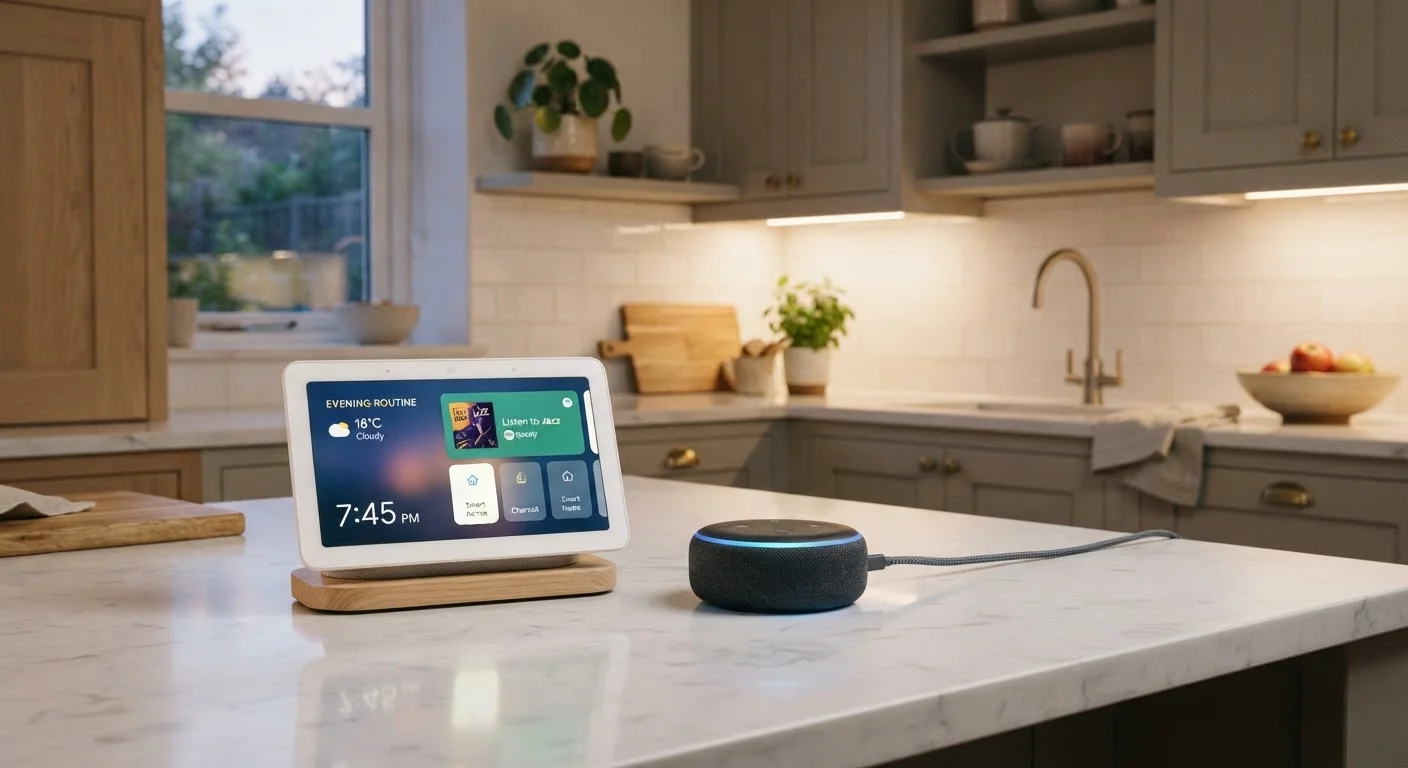
Photo credit: Telecom360.net | Connecting You To The Latest In Telecom
In this article
Screen or no screen? See how smart displays and smart speakers differ in utility, placement, and daily usefulness.
Key Takeaways
- Smart displays add a screen for visual responses, video calls, and media playback - smart speakers do not.
- Smart speakers are generally more compact and less expensive, making them easier to place throughout a home.
- Smart displays consume more power and require a dedicated surface, while smart speakers are highly portable.
- Both device types support major voice assistants and can control compatible smart home devices.
- Your choice should hinge on whether visual information meaningfully improves how you interact with your assistant.
What Separates a Smart Display from a Smart Speaker
At their core, both device categories house a microphone array, a speaker, and a voice assistant - Google Assistant, Amazon Alexa, or Apple's Siri depending on the ecosystem. The fundamental difference is the addition of a touchscreen on smart displays, typically ranging from 7 to 15 inches diagonally, which opens an entirely different interaction model.
Smart speakers respond to voice commands with audio output. Smart displays respond with audio and visual content: search results rendered on screen, video playback, step-by-step cooking instructions with images, weather maps, and live camera feeds from connected security devices. That screen also enables video calling - a feature smart speakers cannot replicate.
For a broader look at how these devices fit into a connected home, see our end-to-end smart home guide.
| Criterion | Smart Displays | Smart Speakers |
|---|---|---|
| Screen | Yes (7-15 inches) | No |
| Video calling | Supported | Not supported |
| Typical footprint | Larger; needs flat surface | Compact; flexible placement |
| Power consumption | Higher (screen always on) | Lower |
| General purchase cost | Higher | Lower |
| Audio quality ceiling | Good to very good | Good to excellent |
| Smart home control | Voice and touchscreen | Voice only |
| Camera included | Yes (for video calls) | No |
Practical Placement and Daily Use Patterns
Smart speakers win on versatility of placement. Their compact cylindrical or puck-like form fits on a nightstand, bookshelf, or bathroom ledge without demanding counter real estate. Battery-powered models exist for outdoor or room-to-room portability. Most households find that spreading several smart speakers across multiple rooms costs less than equipping each space with a display.
Smart displays, by contrast, demand a flat, stable surface and a permanent power connection. Their natural habitat is the kitchen - where visual recipe guides and hands-free timers provide clear practical value - or a home office desk where calendar management and video calls make the screen earn its footprint. Placing one in a bedroom is a personal choice, though the ambient light from a screen can be a drawback for light-sensitive sleepers.
~34%
U.S. adults owning a smart speaker
According to Pew Research Center survey data from 2023, roughly one-third of U.S. adults reported owning a smart speaker.
7-15 in
Typical smart display screen size range
Current smart display models span this range, with kitchen-oriented models clustering around 10 inches for readability at a distance.
3-15 W
Smart speaker active power draw
Measured wattage during active playback varies by model size; smart displays generally consume more due to their screens.
It's also worth considering privacy implications for both device types. Microphones are always listening for wake words in both categories, but smart displays add a camera for video calls - a second sensor that warrants attention. Our article on what smart speaker microphones actually capture covers what manufacturers store and how to manage your data.
Voice Assistant Capability: Where the Screen Changes the Equation
Voice assistants on both device types share the same underlying capabilities - setting timers, playing music, answering general knowledge questions, and controlling smart home devices. However, the smart display's screen resolves a persistent limitation of audio-only assistants: ambiguity in complex responses.
When you ask a smart speaker for a recipe, it reads the steps aloud. A smart display shows them with ingredient lists, imagery, and a step counter you can tap through. When you ask about the weather, a speaker gives a verbal summary; a display renders a multi-day forecast you can scan in seconds. For visually structured information - schedules, shopping lists, search results - a screen materially reduces the cognitive effort of using voice assistants.
That said, voice assistants on both platforms have genuine capability gaps. For a balanced assessment of what voice assistants actually do well versus where they consistently fall short, see our analysis of voice assistant capabilities and limitations.
Ecosystem Matters Before You Buy
The voice assistant platform - Alexa, Google Assistant, or Siri - shapes which third-party devices work smoothly with your hub. Before choosing between a display and a speaker, confirm compatibility with your existing smart home devices and the digital services (calendar, music, shopping) you rely on most. Switching ecosystems later often requires replacing multiple devices, not just the hub.
Cost, Power, and Ecosystem Considerations
Smart speakers typically carry a lower purchase price and draw minimal power - most consume between 3 and 15 watts during active use. Smart displays draw more power, particularly larger models, and their screens contribute meaningfully to ongoing electricity consumption if left on continuously.
Ecosystem lock-in is a practical concern for both. An Amazon Echo device integrates deeply with Alexa-compatible accessories; a Google Nest display works most fluently with Google Home devices and Google services like Calendar and Photos. Before purchasing either device type, auditing which smart home protocols and services you already use will help avoid compatibility friction. Matter, the cross-platform smart home standard ratified in 2022, is gradually reducing ecosystem walls - but full interoperability across all device categories remains a work in progress.

Author
Consumer Electronics Editorial Team
Consumer Electronics Editorial Team is the collective byline for our editorial team and contributor network. Articles published under this byline or an editorial pen name are researched, written, and reviewed according to our editorial standards for clarity, consistency, and independence before publication.
View all articles →