
Smart Speakers and Privacy: What the Microphone Actually Captures
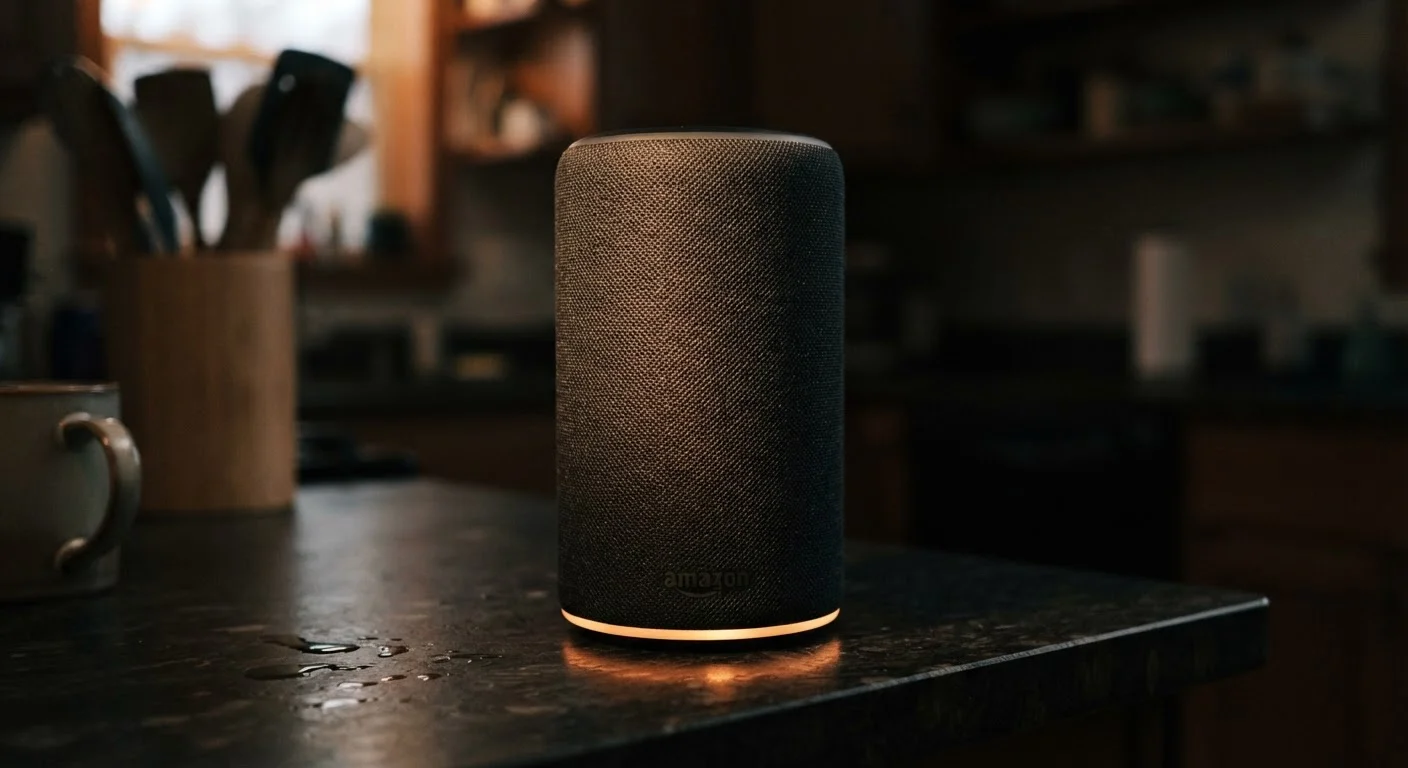
Photo credit: Telecom360.net | Connecting You To The Latest In Telecom
In this article
Separating myth from fact on always-on microphones, wake words, and what smart speaker manufacturers actually store.
Key Takeaways
- Smart speakers only transmit audio to the cloud after detecting a wake word, not continuously.
- Accidental activations do occur and can result in brief unintended recordings being stored.
- Most manufacturers offer tools to review, delete, and limit retention of voice recordings.
- Hardware mute buttons physically disconnect microphone circuits - a more reliable privacy measure than software mute.
- Regulatory scrutiny has pushed manufacturers toward clearer disclosure of data practices.
How Smart Speaker Microphones Actually Work
Smart speakers use an always-on microphone array paired with dedicated local hardware - often a purpose-built chip - to listen for a specific trigger phrase. This wake-word detection happens entirely on the device. No audio is streamed to external servers during this phase. The design is partly a practical constraint: continuously uploading raw audio would consume significant bandwidth and battery, and it would be immediately detectable in network analysis.
Once the wake word is detected, a short audio buffer captured just before and after the trigger is packaged and sent to the cloud, where more powerful natural-language processing interprets the request. Understanding this two-stage architecture dissolves the most common misconception about these devices. For a broader look at how on-device audio processing works in consumer hardware, see our piece on microphone arrays and beamforming in smartphones.
Myth
Smart speakers are always recording and streaming everything you say to company servers.
Fact
Smart speakers perform wake-word detection locally on the device and only transmit audio after the trigger phrase is recognized.
The always-listening misconception conflates two distinct processes. A small, low-power processor continuously analyzes incoming audio on the device itself, comparing sound patterns against a stored wake-word model. This local analysis never leaves the chip. Only when a match is detected does the device begin streaming audio to the cloud for full natural-language processing. Independent security researchers examining network traffic have consistently found that well-known smart speaker platforms do not maintain a continuous upstream audio feed during normal idle operation.
Myth
The microphone only activates when you deliberately say the wake word.
Fact
Phonetically similar phrases can trigger false activations, causing the device to record and upload unintended audio.
Wake-word engines are probabilistic, not deterministic. They balance sensitivity against false-positive rates, and that trade-off means similar-sounding words or phrases can occasionally fool the detector. Academic research into smart speaker false-activation rates has documented this phenomenon across multiple platforms. The practical implication is that conversations near a device may occasionally be captured even when no one deliberately invoked the assistant.
Myth
Manufacturers have no access to what you ask your smart speaker.
Fact
Voice queries are processed on company servers and, depending on account settings, may be retained and reviewed by human contractors for accuracy improvement.
Several major platform operators have confirmed - following investigative reporting - that a small sample of voice interactions is reviewed by human quality-assurance workers to improve speech recognition accuracy. This practice is typically disclosed in privacy policies, though not always prominently. Most platforms now allow users to opt out of human review and to delete stored recordings through account management interfaces. Reviewing your privacy dashboard periodically is the most direct way to understand what your account holds.
Myth
Unplugging your smart speaker when not in use is the only reliable privacy measure.
Fact
Hardware mute buttons on most modern smart speakers physically disconnect the microphone and provide strong privacy protection without requiring the device to be powered off.
Hardware mute physically breaks the circuit path between the microphone array and the processor, making it impossible for audio to be captured regardless of software state. This is meaningfully different from a software mute, which instructs the device's firmware to ignore microphone input - a layer of protection that depends on the integrity of the operating software. For users with heightened privacy concerns, using the hardware mute button when the assistant is not needed offers a practical middle ground between full functionality and unplugging entirely.
Myth
Smart speaker data is sold directly to advertisers for targeted ad campaigns.
Fact
There is no substantiated evidence that major smart speaker platforms sell raw voice recordings to third-party advertisers.
The perception that voice data is directly monetized by being sold to ad networks is widespread but lacks documented support. What does occur is that smart speaker ecosystems are often integrated with broader digital advertising platforms - meaning inferred interests derived from interactions may inform advertising on companion services. These are meaningfully different practices. Regulatory bodies in the U.S. and EU have investigated smart speaker data practices; findings have focused on insufficient disclosure and retention policies, not direct sale of recordings. Consulting a platform's privacy policy and data-sharing disclosures provides the most accurate picture of what they do with interaction data.
What Gets Stored, and What You Can Do About It
After a voice query is processed, platforms vary in how long they retain recordings and transcripts. Default settings on most major platforms store interaction history linked to your account, ostensibly to personalize responses over time. This history is accessible - and deletable - through account management settings or companion apps.
Accidental Recordings Are a Real Risk
Wake-word detection is imperfect. Phrases that phonetically resemble a device's trigger word can cause unintended activations, resulting in snippets of private conversation being uploaded and potentially reviewed by quality-assurance teams. Regularly auditing and deleting your voice history in the device's companion app is a practical step to limit exposure.
Regulatory pressure, including actions by the U.S. Federal Trade Commission and European data protection authorities, has prompted platforms to make deletion controls more accessible and to be clearer about human review practices. If privacy is a concern, spending a few minutes in your device's settings to restrict retention periods is worthwhile. For a parallel look at how AI systems on smartphones handle personal data, the article on AI privacy myths on your phone addresses similar questions in a mobile context.
Software Mute Is Not the Same as Hardware Mute
Some smart speakers offer a software-controlled mute option, but this still relies on the device's firmware to suppress the microphone signal. A physical mute button that severs the microphone circuit at the hardware level provides a stronger privacy guarantee - check your device's documentation to understand which type your model uses.
Users comparing smart speaker form factors for home placement may also find it useful to weigh privacy controls alongside features - our coverage of smart displays versus smart speakers examines how the two device types differ in daily utility and control options. More broadly, the Online Privacy hub covers data hygiene practices relevant to connected home devices.
1 in 4
U.S. adults own a smart speaker
Pew Research Center surveys have consistently found smart speaker adoption among U.S. adults has grown to roughly one in four households.
~19
False activations per day (research estimate)
A Northeastern University and Imperial College London study found test devices experienced up to 19 false activations daily depending on platform and sensitivity settings.

Author
Consumer Electronics Editorial Team
Consumer Electronics Editorial Team is the collective byline for our editorial team and contributor network. Articles published under this byline or an editorial pen name are researched, written, and reviewed according to our editorial standards for clarity, consistency, and independence before publication.
View all articles →