
Smartphone Audio: Microphone Arrays, Spatial Sound, and What Specs Don't Tell You
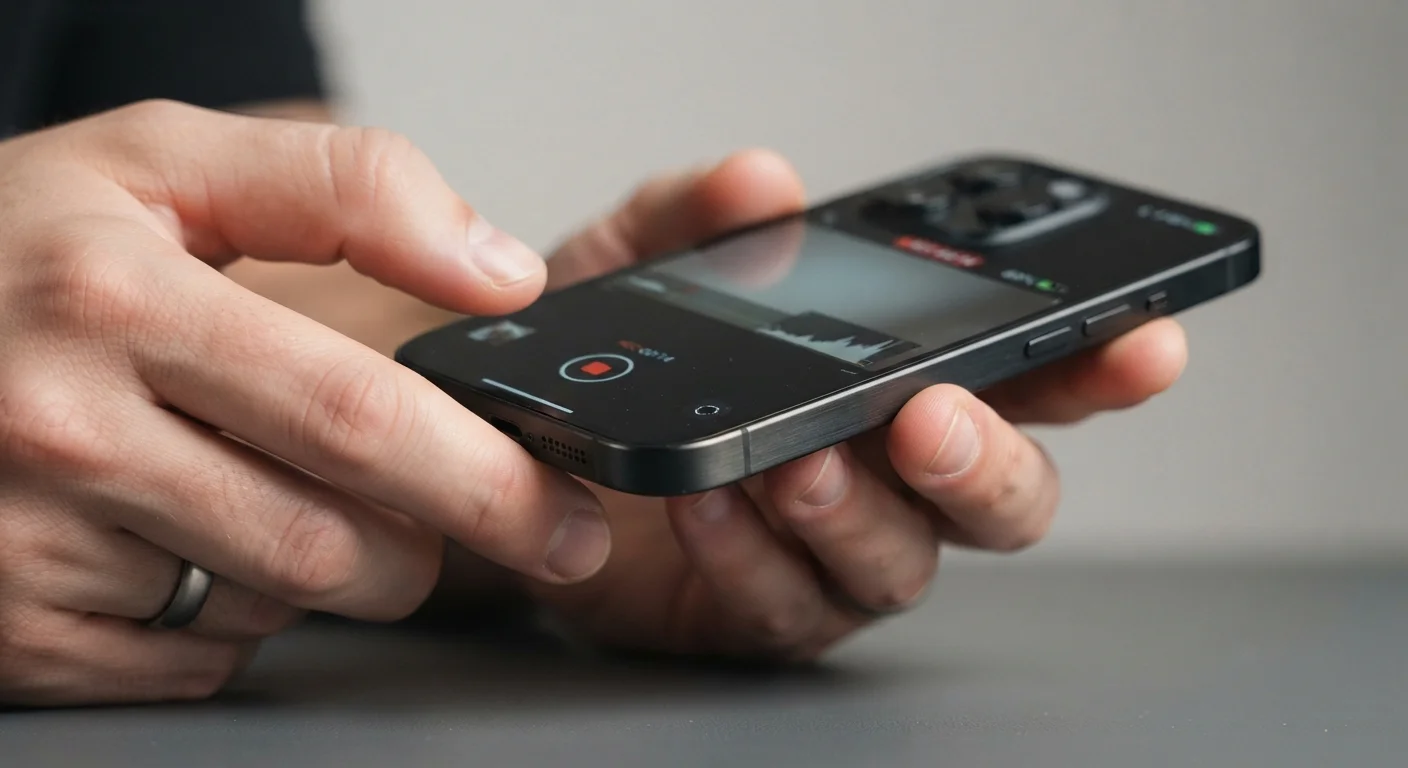
Photo credit: Telecom360.net | Connecting You To The Latest In Telecom
In this article
Multi-mic arrays, beamforming, and spatial audio are reshaping mobile sound. Here's what these features actually do under the hood.
Key Takeaways
- Most modern smartphones use three or more microphones positioned across the device body.
- Beamforming software - not hardware count - determines how well a phone isolates speech.
- Spatial audio and microphone array performance are rarely captured by spec sheet numbers alone.
- Wind noise suppression and echo cancellation are signal-processing features, not acoustic ones.
- Recording environment and microphone placement matter more than raw microphone specifications.
Why Multiple Microphones Exist - and Where They Go
A single microphone captures all sound equally from all directions - a fundamental limitation for a device that needs to prioritize your voice in a coffee shop or suppress the highway noise behind you on a video call. Multi-microphone arrays solve this through geometry: by placing capsules at physically distinct points on the device body, the phone's processor can calculate which sounds arrive simultaneously at all mics (ambient noise, typically from a distance) versus which arrive with a time delay between capsules (nearby sound, like your voice).
Typical placement schemes position one microphone at the bottom edge near the USB port, one at the top, and one or two on the rear - often near the camera module to capture ambient audio during video recording. This spatial separation is the hardware foundation, but it only becomes useful when the digital signal processor (DSP) runs algorithms that exploit the timing and phase differences between inputs.
Microphone Arrays vs. Camera Arrays: Parallel Logic
The relationship between microphone count and audio quality loosely mirrors the logic behind camera arrays - more sensors enable more computational options, but the software doing the processing ultimately determines the output. See our explanation of multi-camera array logic for a parallel breakdown.
The relationship between microphone count and audio quality loosely mirrors the logic behind camera arrays - more sensors enable more computational options, but the software doing the processing ultimately determines the output. See our explanation of multi-camera array logic for a parallel breakdown.
Beamforming, Noise Suppression, and Echo Cancellation
Beamforming is the core technique that makes multi-mic arrays useful for calls and voice capture. The DSP applies carefully calculated delays and weights to each microphone's signal before summing them, constructing a virtual "beam" that is sensitive in one direction and attenuated in others. For voice calls, the beam points toward the phone's likely position relative to your mouth; for video recording, it can be steered toward the scene in front of the rear camera.
Echo cancellation is a related but distinct process. When you're on a speakerphone call, the audio from the speaker reaches the microphone and gets retransmitted - creating a feedback loop your caller hears as echo. The DSP maintains a model of the outgoing speaker signal and subtracts it from the microphone input in real time. This is computationally intensive and the quality of implementation varies considerably between devices.
Wind noise suppression relies on a perceptual property: wind creates broadband low-frequency turbulence that hits all microphones nearly simultaneously. Since beamforming already distinguishes between "everywhere at once" (ambient) and "directional" (voice) signals, the same framework can identify and attenuate wind artifacts. Physical mesh grilles provide a first layer of protection; digital suppression handles what gets through.
Test Recording Audio Before You Need It
If audio quality matters for your use case - interviews, music, video content - record a short test clip in a noisy environment before relying on a device for important work. Listen back through headphones at full volume to hear suppression artifacts, clipping, or narrow-band processing that smoothed-over specs won't reveal. Real-world sample recording is the only reliable evaluation method.
Spatial Audio: Recording vs. Playback
"Spatial audio" appears on spec sheets in two different contexts that are easy to conflate. The first is spatial audio recording - capturing sound with enough directional information to reconstruct a three-dimensional soundscape during playback. This requires at least two microphones with sufficient separation to encode inter-aural level and timing differences; some phones use dedicated stereo microphone pairs for this purpose when shooting video.
The second is spatial audio playback, a software feature that processes any stereo or multi-channel audio through a head-related transfer function (HRTF) - a mathematical model of how the shape of a human head and ears filters sound from different directions. Combined with head-tracking via the phone's gyroscope and accelerometer, this creates the sensation that audio is anchored to a fixed point in space as you move your head. This processing happens entirely in software and is unrelated to the microphone hardware.
3-4
Microphones in a typical flagship smartphone
Industry teardowns and manufacturer documentation consistently show three to four discrete microphone capsules in current-generation flagship devices.
~20 dB
Typical SNR improvement from beamforming
Academic literature on microphone array processing indicates beamforming can improve signal-to-noise ratio by roughly 20 dB compared to a single omnidirectional microphone in diffuse noise fields.
20 Hz-20 kHz
Human audible frequency range
Phone microphone capsules are typically tuned for the 100 Hz-8 kHz voice range, meaning full-spectrum audio recording performance is a deliberate design trade-off rather than a technical limitation.
Understanding the distinction matters for feature evaluation. A phone may support playback spatial audio for streaming services without having the microphone array quality needed to record spatial audio convincingly - and vice versa. Spec sheets rarely distinguish between these two capabilities, which is one reason audio performance is difficult to evaluate without hands-on testing.
What Specs Don't Capture - and How to Actually Evaluate Audio
Consumer smartphone specs almost never include the figures that matter most for microphone quality: sensitivity (how efficiently the capsule converts sound pressure into electrical signal), self-noise (the internal noise floor of the capsule itself, measured in dB-A), or frequency response curves. The DSP algorithms for noise suppression and beamforming are entirely proprietary and undocumented in any public specification.
This mirrors a broader pattern in smartphone hardware evaluation. Just as sensor megapixel counts don't predict photographic output - as discussed in our camera sensor explainer - microphone count doesn't predict voice clarity. And as with general spec sheet interpretation, knowing what the numbers on the box actually mean helps set realistic expectations.
For practical evaluation, audio sample comparisons in controlled environments - wind, crowd noise, reverberant rooms - reveal what algorithms are actually delivering. It's also worth noting that microphone performance for privacy purposes, such as wake-word detection in voice assistants, involves a different set of design trade-offs than recording quality; our coverage of what smart device microphones actually capture covers that dimension separately.
Finally, wireless audio output quality is its own domain. Once sound leaves the phone's speaker or travels to Bluetooth headphones, codec selection and headphone driver characteristics take over - topics explored in our audio codecs explainer.
Frequently Asked Questions

Author
Smartphones Editorial Team
Smartphones Editorial Team is the collective byline for our editorial team and contributor network. Articles published under this byline or an editorial pen name are researched, written, and reviewed according to our editorial standards for clarity, consistency, and independence before publication.
View all articles →