The Productivity App Landscape: What Each Category Actually Does
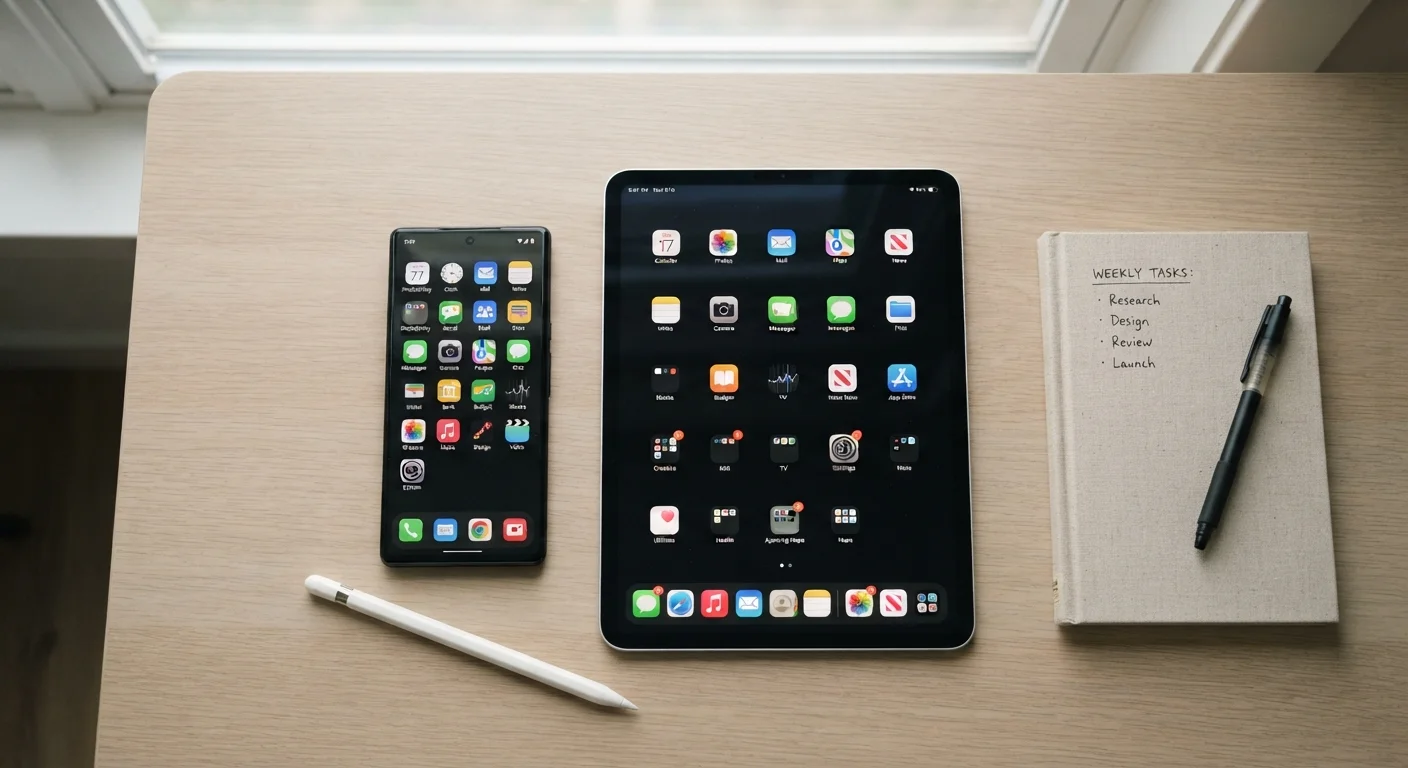
Photo credit: Telecom360.net | Connecting You To The Latest In Telecom
In this article
From task managers to focus timers, understand the distinct categories of productivity apps and which workflows each one is built to support.
Key Takeaways
- Productivity apps divide into distinct categories based on the type of workflow problem they solve.
- Task managers, note-taking tools, calendar apps, focus timers, and writing environments each operate on different mental models.
- Choosing the wrong category for your workflow creates friction - even if the app itself is well-built.
- Many apps deliberately blur category lines; knowing the core categories helps you evaluate those trade-offs.
- Your dominant work style should drive which category you anchor to first.
Why Categories Matter More Than Features
When you scan an app store for productivity tools, you're confronted with hundreds of options that all promise to organize your work. The problem isn't scarcity - it's that most comparisons focus on feature lists rather than on the underlying workflow model each app is built around.
Every productive app category encodes a specific assumption about how work happens. A task manager assumes work is a list of discrete actions to complete. A note-taking app assumes work involves accumulating and connecting information over time. A calendar assumes work happens in time blocks. These are genuinely different mental models, and using the wrong category for your dominant work pattern creates friction regardless of how polished the app is.
For a deeper look at the methodologies - GTD, time-blocking, kanban - that shape how these tools are designed, see the workflow patterns that underpin productivity apps.
5+
Distinct core productivity app categories
Task management, note-taking, calendar/time-blocking, focus timers, and writing environments each address structurally different workflow problems.
~80%
Apps that blend at least two categories
Industry analysis of major productivity platforms consistently finds most combine task, note, and calendar functions within a single interface.
The Core Categories and What They're Built to Solve
Task and To-Do Managers
These apps treat work as a collection of discrete, completable actions. Their core mechanic is capture-and-check-off: you add an item, assign it context (due date, priority, project), and mark it done. They work best for people whose work involves clear, bounded deliverables. The underlying logic often draws from GTD methodology - externalizing tasks so your brain isn't carrying the overhead of remembering them.
Note-Taking and Knowledge Capture Apps
These tools are built around the idea that work involves accumulating information - meeting notes, research, ideas - and retrieving it later. Unlike task managers, nothing in a note-taking app is ever truly "done"; the goal is an evolving knowledge base. Some apps in this category implement bidirectional linking (connecting notes to each other), which suits knowledge workers whose ideas build on each other over time.
Calendar and Time-Blocking Tools
Calendar apps model work as events anchored to time. Time-blocking variants go further, letting you schedule focused work sessions directly on your calendar rather than keeping tasks in a separate list. This category suits people who think in terms of when work happens rather than what needs to happen.
Focus and Deep-Work Timers
Focus timer apps create structured work-break intervals to reduce cognitive fatigue and protect uninterrupted blocks. They don't manage tasks or notes - their only job is to regulate attention over a session. They pair well with task managers but function poorly as standalone systems.
Writing and Long-Form Drafting Environments
Distinct from general note-taking apps, writing environments are optimized for sustained prose composition. They typically strip away distractions, offer distraction-free full-screen modes, and handle document structure (chapters, scenes, sections) rather than fragmented notes. They're built for output, not capture. See how these categories map to different work styles for a fuller picture.
Match the Category to Your Bottleneck First
Before evaluating individual apps, identify the single workflow problem that causes the most friction - lost tasks, scattered notes, missed deadlines, or inability to focus. Start with the category that addresses that problem directly. Adding more categories before the first one is working reliably typically adds overhead rather than reducing it.
When Apps Deliberately Blur the Lines
A growing number of platforms - sometimes called all-in-one workspaces - deliberately span multiple categories. They combine task lists, notes, databases, and calendars within a single interface. The appeal is real: fewer context switches and a unified data model. The trade-off is equally real: each individual function tends to be shallower than a purpose-built tool in that category.
Before committing to a multi-category platform, it's worth identifying which workflow problem actually costs you the most time. If task management is your primary bottleneck, a dedicated task manager will almost always outperform a general workspace on that specific function. The trade-offs between all-in-one platforms and specialized apps are worth understanding before you migrate your workflow.
Unfamiliar with terms like kanban, sprints, or OKRs that appear across these platforms? The productivity tools glossary covers the vocabulary you'll encounter. And once you've identified the right category, use a structured checklist to evaluate a specific app before committing to it.
Categories Are Descriptive, Not Prescriptive
App categories describe design intent, not rigid boundaries. A note-taking app can hold task lists; a task manager can store reference text. The category tells you what the tool is optimized for - which is different from what it's technically capable of. Optimizing for the right use case is what produces a sustainable workflow.
Frequently Asked Questions

Author
Apps & Software Editorial Team
Apps & Software Editorial Team is the collective byline for our editorial team and contributor network. Articles published under this byline or an editorial pen name are researched, written, and reviewed according to our editorial standards for clarity, consistency, and independence before publication.
View all articles →