
Mobile Device Management and Your Phone Plan: How They Work Together
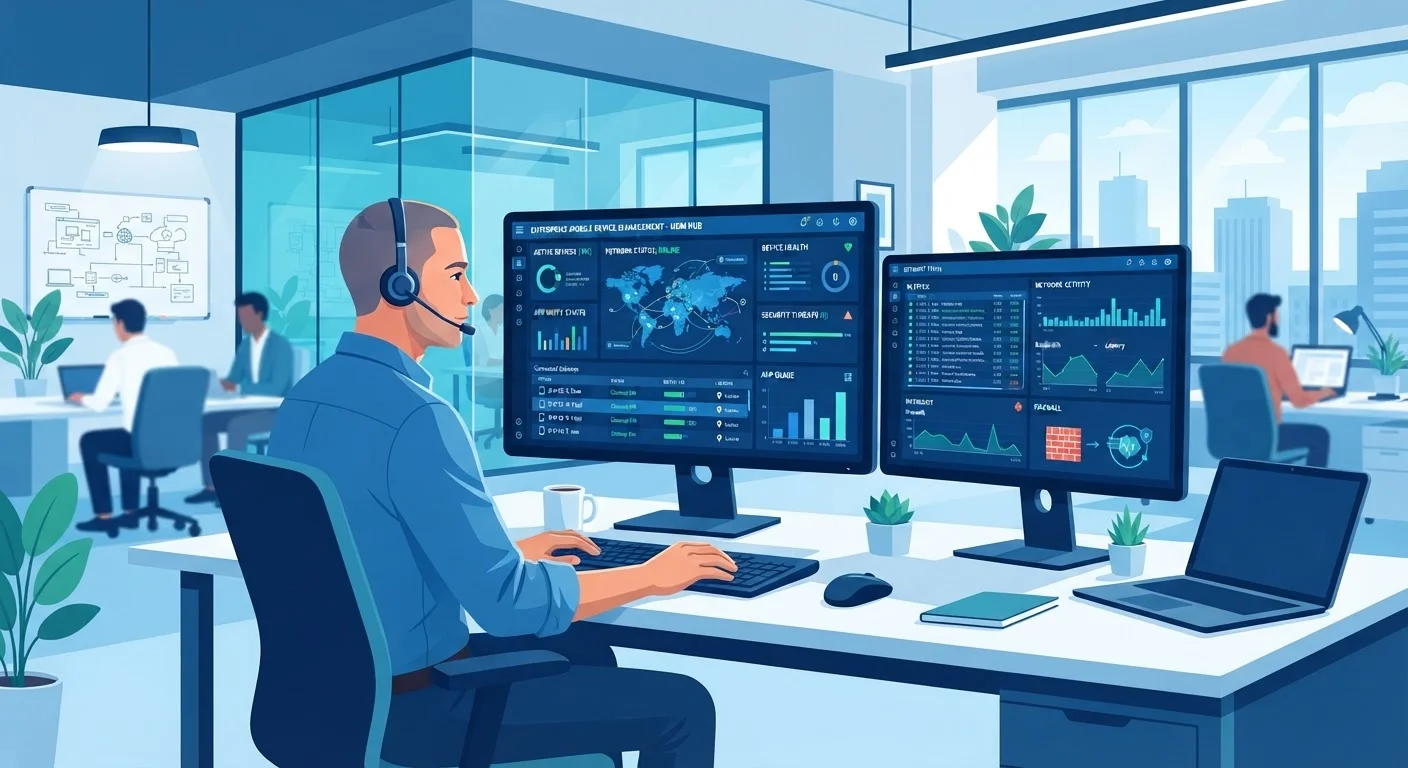
Photo credit: Telecom360.net | Connecting You To The Latest In Telecom
In this article
Learn how MDM platforms integrate with enterprise phone plans to give IT teams control over devices, data usage, and security policies.
Key Takeaways
- MDM software and enterprise phone plans are complementary layers - one controls the device, the other controls connectivity.
- Carriers may offer native MDM integrations or portals that sync directly with third-party management platforms.
- IT teams can enforce data usage limits, application policies, and remote wipe capabilities through MDM regardless of plan structure.
- BYOD and company-issued device strategies each have distinct MDM enrollment and policy implications.
- Choosing a phone plan without considering MDM compatibility can create significant administrative gaps.
Two Layers of Enterprise Mobile Control
Managing a mobile workforce requires control at two distinct levels: the network layer, governed by the enterprise phone plan, and the device layer, governed by MDM software. Neither operates effectively in isolation. A carrier plan can pool data and provision lines across hundreds of employees, but it cannot enforce which apps are installed or remotely lock a stolen handset. MDM handles those tasks - but it depends on reliable, centrally managed connectivity to do its job.
Understanding this relationship is foundational for IT and operations leaders evaluating enterprise mobility. See how enterprise phone plans differ from consumer options for context on what carrier-side capabilities are actually available to business accounts before layering in MDM.
72%
Enterprises using formal MDM or EMM platforms
According to IDC research on enterprise mobility management adoption across mid-to-large organizations.
3.4×
Higher data breach cost without mobile security policies
IBM's Cost of a Data Breach Report has consistently found organizations without endpoint security controls face significantly higher breach costs.
60%
IT teams managing both BYOD and corporate devices
A Jamf survey of IT administrators found the majority now support mixed-device environments requiring hybrid MDM policies.
What MDM Actually Controls
An MDM platform - once a device is enrolled - gives IT administrators a centralized console to push and enforce configurations across the entire device fleet. Core capabilities typically include:
- Policy enforcement: Screen lock requirements, password complexity, encryption mandates, and OS update schedules.
- Application management: Deploying, restricting, or silently removing apps from enrolled devices without user intervention.
- Remote actions: Locking, locating, or wiping devices that are lost, stolen, or held by departing employees.
- Compliance monitoring: Flagging devices that fall out of policy (e.g., rooted Android phones or devices running outdated OS versions).
For a breakdown of how MDM terminology relates to broader frameworks like EMM and UEM, see MDM, EMM, and UEM decoded.
“The phone plan gives you the road; MDM gives you the traffic rules. Without both, you either have no infrastructure or no governance - and in enterprise mobility, you need both to operate safely at scale.”
— Enterprise Mobility Management Research Group, Industry analyst collective focused on corporate endpoint governance
How Phone Plans and MDM Integrate in Practice
The integration between enterprise phone plans and MDM is primarily administrative and operational rather than technical at the protocol level. Key touchpoints include:
- Carrier enrollment programs: Both Apple Business Manager (ABM) and Android Enterprise support zero-touch enrollment - devices ship pre-configured and automatically enroll in the company's MDM upon first activation. Carriers can align SIM provisioning with these workflows.
- Usage visibility: Some carriers expose data consumption APIs that MDM platforms can query, enabling IT teams to view per-device usage alongside compliance status in a single dashboard.
- Line lifecycle management: When an employee is onboarded or offboarded, coordinating MDM enrollment/unenrollment with carrier line activation/deactivation reduces the risk of orphaned accounts or unsecured active lines.
For teams managing dispersed workforces, coordinating plans across locations and time zones adds another layer of operational complexity that MDM centralization helps address.
Align MDM Enrollment With Line Provisioning
When onboarding new employees, treat MDM enrollment and carrier line activation as a single coordinated workflow rather than separate IT and HR tasks. Zero-touch enrollment programs (Apple Business Manager, Android Enterprise zero-touch) allow devices to be pre-configured so they enroll automatically when powered on - significantly reducing setup time and human error. Establishing this process as a standard operating procedure prevents unsecured devices from connecting to corporate resources before policies are applied.
MDM Considerations for Fleet and BYOD Models
The choice between issuing company-owned devices and supporting employee-owned phones (BYOD) directly shapes how MDM is deployed and what the phone plan needs to support. With a corporate fleet, IT retains full device ownership - MDM can apply unrestricted policies, and carrier lines are straightforwardly tied to business accounts. With BYOD, the calculus shifts considerably.
Most modern MDM platforms address BYOD through work profile containerization - a sandboxed environment on the device that separates corporate apps and data from personal content. IT can manage and wipe the work container without touching personal files or apps. This requires careful policy design and clear employee communication about what IT can and cannot see.
Structuring mobile access for a distributed workforce covers the administrative and cost trade-offs between these models in detail. For a comprehensive view of how these decisions fit into a long-term enterprise mobility strategy, the complete guide to enterprise mobile plans is a useful reference.
Frequently Asked Questions

Author
Business Tech Editorial Team
Business Tech Editorial Team is the collective byline for our editorial team and contributor network. Articles published under this byline or an editorial pen name are researched, written, and reviewed according to our editorial standards for clarity, consistency, and independence before publication.
View all articles →