
Prepaid vs Postpaid Phone Plans: The Structural Differences That Matter
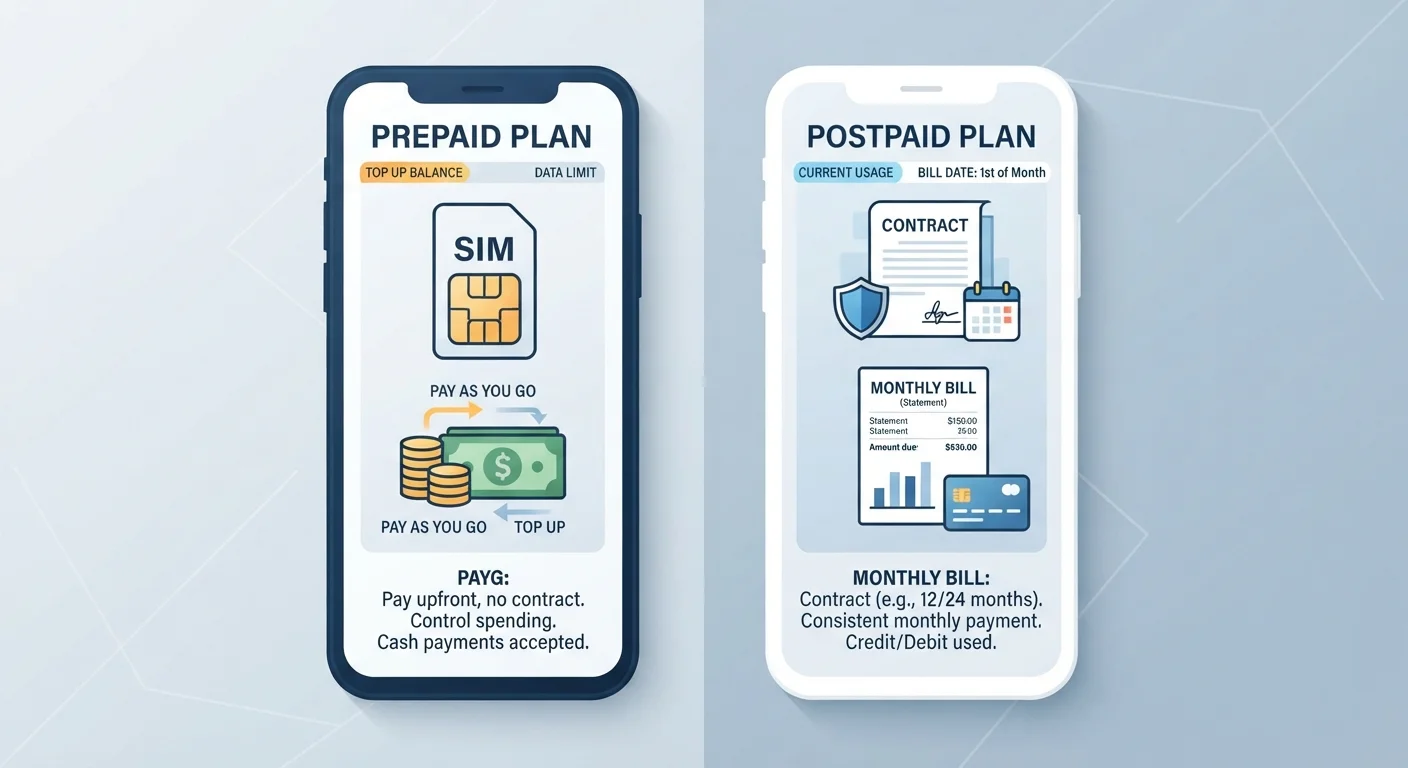
Photo credit: Telecom360.net | Connecting You To The Latest In Telecom
In this article
Prepaid and postpaid plans look similar on paper but work very differently. Here's how each billing model operates and what it means for your usage.
Key Takeaways
- Prepaid plans require upfront payment and carry no credit obligation or contract.
- Postpaid plans bill after usage and typically require a credit check and monthly commitment.
- Network priority during congestion often favors postpaid subscribers over prepaid on the same carrier.
- Prepaid plans generally offer more billing transparency; postpaid plans can carry fees and overages.
- Device financing and premium perks are more commonly available on postpaid tiers.
- Neither model is universally superior - the right choice depends on your financial habits and usage needs.
How Each Billing Model Is Structured
The most fundamental distinction between prepaid and postpaid plans is when money changes hands relative to service use. On a prepaid plan, you pay for a set amount of service before you use it - whether that's a fixed data allotment, a set number of days, or a reloadable balance. Once that allocation is exhausted or expires, service stops or degrades until you reload. There's no bill at the end of the month because the transaction already occurred.
Postpaid plans invert this relationship. The carrier extends service on credit throughout a billing cycle - typically 30 days - then sends an itemized bill afterward. This model assumes the carrier has verified your creditworthiness through a hard or soft credit inquiry. It's structurally similar to a utility account: you consume first, pay later.
This distinction cascades into nearly every downstream difference between the two plan types, from device access to network priority. For a broader look at how these categories fit into the full plan landscape, see our complete phone plan type reference.
| Criterion | Prepaid | Postpaid |
|---|---|---|
| Payment timing | Before service is used | After billing cycle ends |
| Credit check required | No | Typically yes |
| Contract or commitment | None | Monthly or longer terms |
| Network priority (congestion) | Lower priority | Higher priority |
| Device financing | Not available via carrier | Installment plans available |
| Multi-line / family discounts | Limited availability | Widely available |
| Bill predictability | Fixed - pay only what you load | Variable - fees can add up |
| Service interruption risk | Stops when balance depletes | Continuous unless cancelled |
Network Priority, Device Access, and Account Features
On a congested cell tower, carriers use Quality of Service (QoS) policies to manage traffic. In most cases, postpaid subscribers receive higher network priority than prepaid subscribers on the same carrier - this is disclosed in carrier terms and means prepaid users may experience slower speeds during peak hours in busy areas, even on an otherwise identical plan.
Device financing is another structural gap. Carrier installment plans - where the cost of a phone is spread across 24 or 36 monthly payments - are effectively lines of credit. Because they require creditworthiness verification and account-level billing, they're only available on postpaid accounts. Prepaid users must pay for devices outright or finance through a third party.
~40%
US wireless subscribers on prepaid plans
Industry analysts have estimated that roughly 40% of US wireless connections run on prepaid or no-contract arrangements, reflecting significant market adoption.
24-36 months
Typical carrier device installment terms
Major US carriers commonly spread flagship device costs across 24 to 36 monthly installments, a structure only available to postpaid account holders.
Account-level features like shared data pools, family plan discounts, and bundled streaming perks are also postpaid-native. These require a persistent account relationship with billing history, which prepaid's transactional model doesn't support in the same way. If you're weighing these differences in a business context, our analysis of business vs. consumer plans covers how account structure affects liability and billing controls.
Transparency, Risk, and Who Each Model Suits
Prepaid plans offer a structural spending ceiling - you cannot be billed more than you've loaded. This makes them genuinely predictable in a way postpaid plans are not. Postpaid bills can include taxes, regulatory fees, equipment charges, and in some cases overage fees depending on the plan tier. While unlimited postpaid plans reduce data overage risk, the final bill is rarely exactly what the advertised plan price suggests.
Conversely, postpaid plans carry fewer logistical interruptions. There's no risk of your service cutting out mid-month because you forgot to reload. For users who rely on continuous connectivity for work, this reliability has real value.
MVNOs Complicate the Picture
Many prepaid plans are sold by Mobile Virtual Network Operators (MVNOs) - companies that lease capacity from major carriers like T-Mobile, AT&T, or Verizon. An MVNO prepaid plan technically runs on the same physical towers as a postpaid plan from the host carrier, but the MVNO's traffic is deprioritized below the host's own postpaid subscribers. This means two plans that appear to use the same network can deliver different real-world performance under load.
The right model depends on your financial habits, device needs, and tolerance for billing complexity. Neither is universally superior. For a structured side-by-side view of how these and other plan types compare across billing, data rules, and flexibility, see our structured plan comparison. For a deeper dive into what else changes beyond the payment schedule, this carrier-level breakdown covers priority, perks, and network access in detail.

Author
Phone Plans Editorial Team
Phone Plans Editorial Team is the collective byline for our editorial team and contributor network. Articles published under this byline or an editorial pen name are researched, written, and reviewed according to our editorial standards for clarity, consistency, and independence before publication.
View all articles →