
Unlimited, Prepaid, Family, Business: What Each Plan Type Actually Means
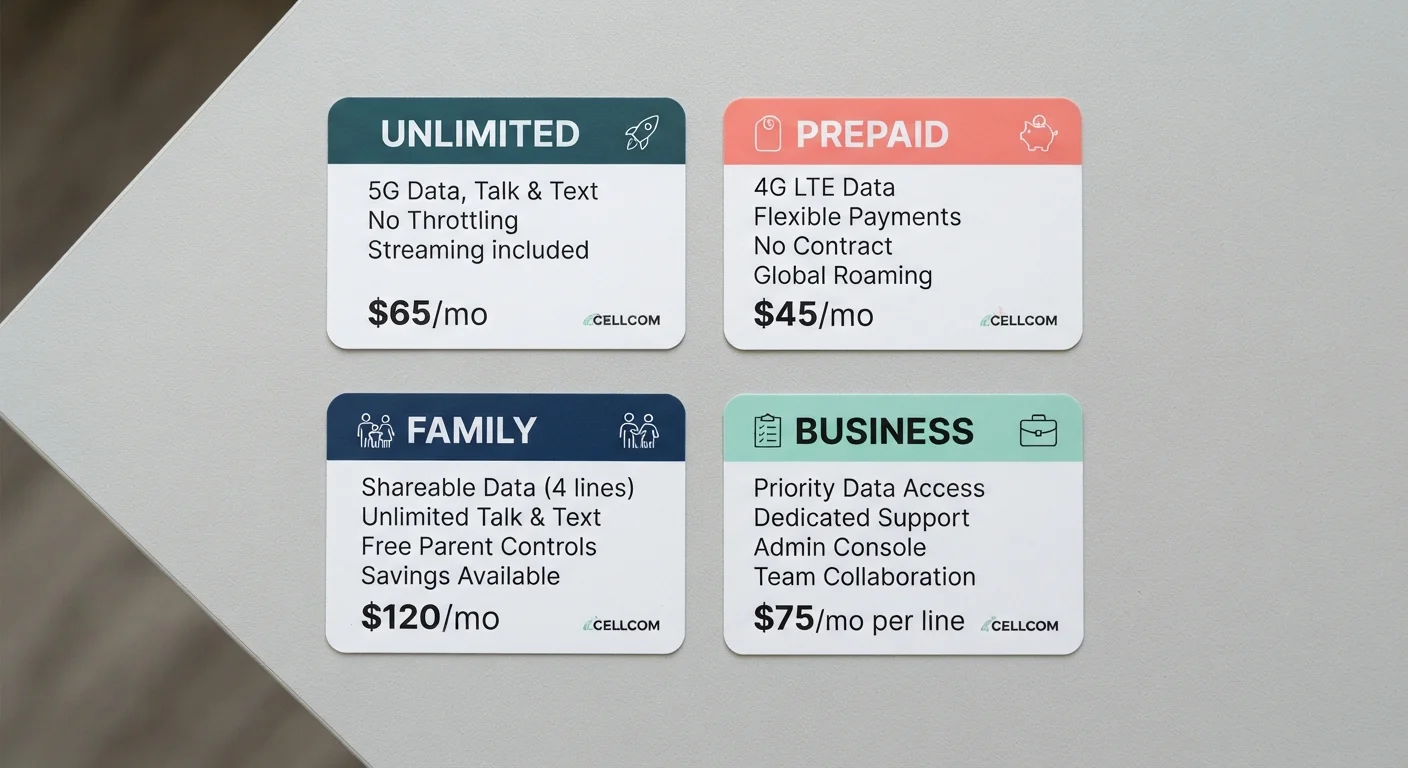
Photo credit: Telecom360.net | Connecting You To The Latest In Telecom
In this article
Cut through the jargon. Here's what unlimited, prepaid, family, and business phone plans actually offer — and who each one suits best.
Key Takeaways
- "Unlimited" data plans almost always include usage thresholds where speeds are reduced after a set amount of high-speed data.
- Prepaid plans require no credit check and bill in advance, offering more budget predictability but sometimes lower network priority.
- Family plans pool costs across multiple lines, reducing the per-line rate - but all lines usually share the same carrier contract terms.
- Business plans add features like device management, invoicing, and priority support that personal plans typically lack.
- The right plan category depends on billing preference, number of users, and how the phone is primarily used.
What "Unlimited" Plans Actually Deliver
The word "unlimited" is one of the most overloaded terms in mobile marketing. In practice, unlimited plans guarantee that your data connection won't be cut off at a hard cap - but they do not guarantee consistent speeds throughout the month.
Virtually every unlimited plan on the US market includes a premium data threshold - sometimes called a high-speed data allotment. Once you exceed it (amounts vary by tier and carrier), the network may deprioritize your traffic during congested periods. This is called network management or throttling, and it's disclosed in the fine print of every major carrier's terms.
Higher-tier unlimited plans typically raise that threshold and add guaranteed minimum speeds, while entry-level unlimited tiers keep the threshold lower and offer fewer speed protections. The difference matters most in dense urban areas or venues where congestion is common.
~85%
US unlimited plans that include speed thresholds
Analysis of major carrier plan disclosures consistently shows that nearly all unlimited plans include deprioritization language after a stated high-speed data amount.
3-4 lines
Typical breakeven point for family plan savings
Industry plan structures commonly show the steepest per-line price drops when accounts reach three to four lines, making that the point where family plans typically outperform individual plans on cost.
Unlimited plans are generally suited to heavy data users - people who stream video, use mobile hotspot frequently, or simply don't want to monitor a monthly data budget. See the plan type comparison for a breakdown of how unlimited stacks up against other categories on key dimensions.
How Prepaid Plans Work - and Who Benefits
Prepaid plans flip the standard billing model: you pay before you use service, not after. There's no monthly invoice, no credit check, and typically no long-term contract. If you stop paying, service stops - that's the entire enforcement mechanism.
This structure makes prepaid appealing for several groups: people building or rebuilding credit, travelers who need temporary domestic service, parents setting hard spending limits for dependents, or anyone who prefers financial predictability over carrier perks.
Check Network Priority Before Switching to Prepaid
If you're considering moving from a postpaid plan to a prepaid plan on the same carrier, ask specifically about network priority tiers. Some carriers offer prepaid options with postpaid-equivalent priority, while others maintain a strict two-tier system. This single factor can have the largest real-world impact on your daily experience.
The trade-off is real, though. Prepaid lines on major carriers typically carry lower network priority than postpaid lines on the same towers. During peak congestion, postpaid customers are served first. For most everyday usage this difference is imperceptible, but in dense urban areas it can show up as slower streaming or longer load times.
Prepaid plans are also common through MVNOs - companies that lease network access from major carriers and resell it under their own brands, often at lower prices. For a deeper look at how the billing structure shapes the experience beyond just price, see our article on prepaid vs postpaid structural differences.
Family Plans: Shared Cost, Shared Terms
Family plans bundle multiple lines under a single account, typically offering a lower per-line rate as more lines are added. The savings structure is deliberate - carriers use multi-line accounts to increase customer retention, since switching becomes more logistically complex with several lines involved.
All lines on a family account usually sit under the same contract and are subject to the same plan tier rules. The primary account holder is responsible for the full bill and manages line-level settings, which can be either convenient or limiting depending on the household dynamic.
It's worth noting that "family" is purely a commercial label - carriers don't require lines to belong to relatives. Friends, roommates, or small groups who trust each other to split costs can use these plans the same way. The key practical concern is that the account owner carries full billing responsibility for every line.
For households already on the same carrier with multiple devices, consolidating into a family account is often straightforward. For those mixing carriers or plan types, the complete plan type reference covers transition considerations in detail.
Business Plans: Beyond Personal Service
Business plans are designed for organizations managing service across multiple employees or devices, and they differ from personal plans in ways that go beyond just more lines. The core additions are operational: centralized account management dashboards, dedicated business customer support channels, invoicing formatted for corporate accounting, and integration with mobile device management (MDM) platforms that let IT teams enforce security policies remotely.
Some business plans also offer pooled data - a shared high-speed data bucket distributed across all lines - which can be more efficient than individual allotments when usage varies significantly across employees.
The business phone plans hub covers how enterprise mobile plans are structured for teams. For hardware context alongside plan decisions, the business devices hub addresses phones and equipment optimized for professional environments.
Business plans are not inherently more expensive than personal plans at the same line count - in fact, per-line costs often decrease significantly at higher line counts. However, the management overhead and contract terms are more complex, and they're generally unnecessary for individuals or very small groups who don't need centralized control.
This article is for informational purposes only. Plan features, pricing, and terms vary by carrier and are subject to change. Always review the current terms directly with the provider before making a plan decision.
Frequently Asked Questions

Author
Phone Plans Editorial Team
Phone Plans Editorial Team is the collective byline for our editorial team and contributor network. Articles published under this byline or an editorial pen name are researched, written, and reviewed according to our editorial standards for clarity, consistency, and independence before publication.
View all articles →