
What Neural Processing Units Actually Do in a Modern Phone Chip
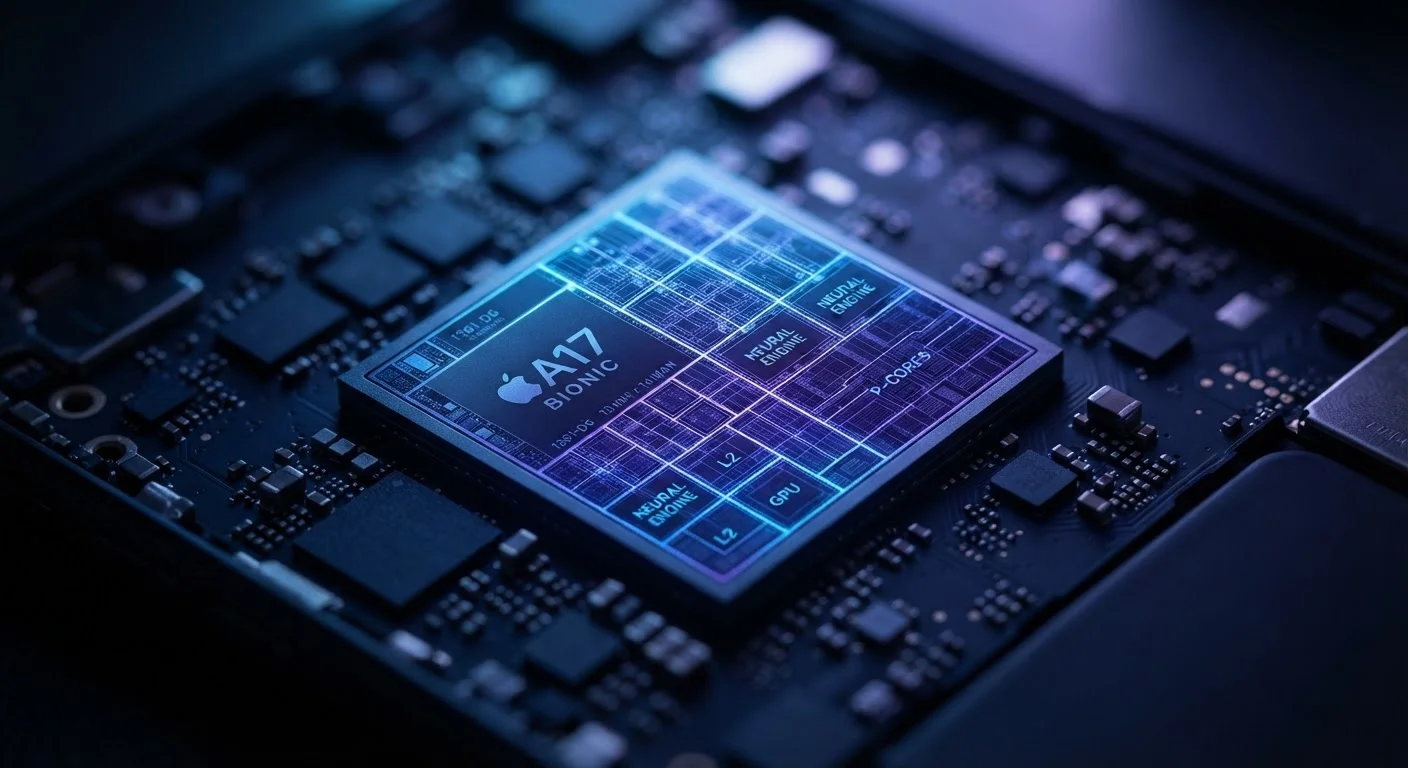
Photo credit: Telecom360.net | Connecting You To The Latest In Telecom
In this article
NPUs are now standard in flagship chips, but their role is widely misunderstood. This explainer breaks down their real function in plain language.
Key Takeaways
- An NPU is a chip block specialized for AI math, separate from the CPU and GPU.
- It enables on-device AI processing, keeping sensitive data off remote servers.
- NPUs handle tasks like photo scene detection, voice isolation, and face recognition.
- Dedicated hardware uses significantly less power than running AI on the main CPU.
- NPU capability is now a meaningful differentiator between flagship and mid-range chips.
Why a General-Purpose CPU Isn't Enough for AI
A smartphone's main CPU is a versatile workhorse - it handles app logic, file management, and user input with ease. But AI models work differently. A neural network performing face recognition might execute hundreds of millions of multiply-and-accumulate operations in a fraction of a second. Asking a CPU to do this repeatedly, in real time, consumes significant power and competes with every other task the processor is juggling.
The solution chip designers settled on is specialization. Just as a GPU was introduced to offload graphics rendering from the CPU, an NPU exists to offload neural network inference - the process of running a trained AI model to produce a result. For deeper context on how all these blocks fit together inside a single chip, see how smartphone processor specs translate to real-world performance.
~100×
NPU efficiency advantage over CPU for AI tasks
Industry analyses of mobile chip architectures consistently show dedicated NPUs completing neural network inference at a fraction of the energy cost of equivalent CPU execution.
45 TOPS
Typical NPU throughput in leading flagship chips
High-end mobile chips announced in recent generations have advertised NPU throughput in the range of 35-45 TOPS, enabling on-device generative AI features.
What the NPU Is Actually Doing Right Now
Most NPU activity happens without any direct user action. When you open the camera, the NPU is analyzing the scene in real time - identifying whether you're shooting a landscape, food, or a pet, then adjusting exposure, color, and sharpening accordingly. When you speak to a voice assistant, the NPU handles the initial audio processing and keyword detection before the request ever reaches a cloud server.
Photo computational processing is one of the clearest examples. Techniques like portrait-mode background separation, night-mode multi-frame stacking, and real-time video stabilization all depend on running neural network models many times per second. Doing this on a CPU would drain a battery noticeably; an NPU can sustain it with a fraction of the energy budget.
Face unlock is another everyday application. The NPU processes depth and image data, runs it through a trained recognition model, and returns an authentication result - typically in well under a second. Because this happens entirely on-device, the biometric data never leaves your phone. This is covered in more detail in our explainer on the AI systems already embedded in modern smartphones.
Check NPU Specs When Comparing Phones
When evaluating a new phone, look beyond CPU clock speed and core count. NPU throughput - measured in TOPS - indicates how capable the chip is for AI-driven camera features, voice processing, and emerging on-device AI tools. A wide gap in TOPS between two phones often predicts a visible difference in camera intelligence and AI feature availability.
How NPU Power Translates to Real Differences
Not all NPUs are equal. Chip designers measure NPU throughput in TOPS - trillions of operations per second. A higher TOPS figure means the chip can run larger or more complex models, or run the same models faster. This is one area where the gap between flagship and mid-range chips remains genuinely meaningful: a high-end NPU can enable real-time video effects, on-device live transcription, and generative AI features that a weaker NPU simply cannot sustain at acceptable speed.
The efficiency advantage is equally significant. Because the NPU's circuits are hardwired for AI math rather than general computation, they achieve far better performance-per-watt than a CPU attempting the same task. This is why always-on features - like listening for a wake word or continuously stabilizing video - are practical on a phone that needs to last all day. For a broader look at how chip architecture shapes these trade-offs, the process node explainer is a useful companion read.
TOPS Figures Aren't Directly Comparable Across Vendors
Different chip makers measure and report TOPS differently - some count only integer operations, others include floating-point, and the precision of each operation varies. A raw TOPS number from one vendor cannot be directly compared to another's without knowing the methodology. Use TOPS as a rough directional indicator within a vendor's own product line rather than as an absolute cross-brand benchmark.
As on-device AI workloads grow - think real-time language translation, generative image editing, and more sophisticated assistants - the NPU's role will only expand. Understanding what it does is increasingly relevant to evaluating any new phone.
Frequently Asked Questions

Author
AI & Cloud Editorial Team
AI & Cloud Editorial Team is the collective byline for our editorial team and contributor network. Articles published under this byline or an editorial pen name are researched, written, and reviewed according to our editorial standards for clarity, consistency, and independence before publication.
View all articles →