
Flagship Chip vs Mid-Range Chip: Where the Performance Gap Is Real and Where It Isn't
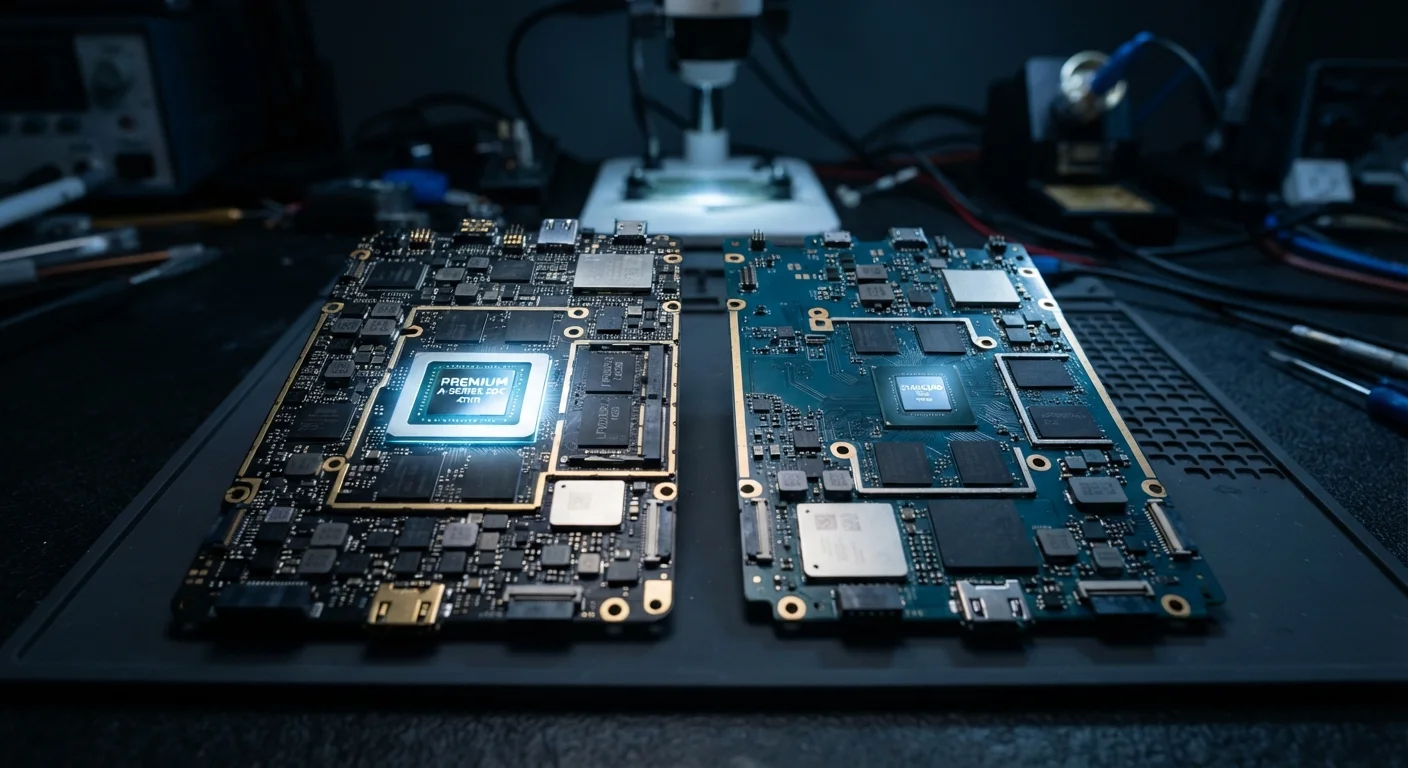
Photo credit: Telecom360.net | Connecting You To The Latest In Telecom
In this article
Flagship processors command a price premium, but mid-range chips have closed the gap in many tasks. See where the difference is meaningful and where it's marginal.
Key Takeaways
- Flagship chips deliver measurably superior performance in sustained workloads like gaming, video encoding, and computational photography.
- Mid-range chips handle everyday tasks - browsing, messaging, streaming - with performance most users won't notice lagging.
- The performance gap is widening in on-device AI processing, where dedicated neural engine hardware in flagships is significantly ahead.
- Thermal management, not raw clock speed, is often the deciding factor in sustained performance over extended sessions.
- For most users, the real-world difference only emerges at the edges: demanding apps, multitasking under load, and future software support.
How the Two Tiers Are Defined
Chip tiers aren't arbitrary marketing labels - they reflect real differences in silicon investment. Flagship processors (think Qualcomm's Snapdragon 8-series or Apple's A-series) receive the latest fabrication process node, the most advanced CPU and GPU core designs, and purpose-built accelerators for AI and image signal processing. Mid-range chips (Snapdragon 7-series, Dimensity 7000-series, and similar) use slightly older node processes or scaled-down core configurations, prioritizing cost efficiency over peak capability.
To understand what those architectural differences actually mean in practice, see our primer on what processor specs actually mean. The short version: a chip's real-world impact depends on workload type, thermal headroom, and how well software is optimized - not spec sheet numbers alone.
Where the Gap Is Genuinely Significant
Sustained gaming and GPU-intensive tasks. Flagship GPUs maintain higher frame rates under thermal stress. Mid-range chips frequently throttle - reducing clock speeds to manage heat - within 15-20 minutes of demanding 3D rendering. The result isn't just lower average frame rates; it's inconsistent frame pacing that's perceptible during gameplay.
Computational photography. Camera quality in modern smartphones is almost entirely determined by the image signal processor (ISP) and neural engine, not the lens or sensor alone. Flagship chips process more frames per second during night mode captures, apply more sophisticated noise reduction algorithms, and handle 4K video encoding with less artifacting. Mid-range ISPs have improved markedly, but the gap in low-light and video remains measurable.
On-device AI workloads. This is the fastest-widening gap. Generative AI features - real-time translation, scene-aware photo editing, on-device large language model inference - depend on a dedicated neural processing unit (NPU). Flagship NPUs in current-generation chips are substantially more capable. Software and performance resources cover how these workloads interact with device hardware in more depth.
| Criterion | Flagship Chip | Mid-Range Chip | |
|---|---|---|---|
| Sustained gaming performance | High, with stable frame rates under load | Moderate; throttles faster under heat | |
| Computational photography | Advanced ISP; stronger low-light and video | Capable; noticeable gap in low-light video | |
| On-device AI / NPU capability | Significantly more capable NPU | Limited; fewer AI features supported | |
| Everyday app and UI performance | Smooth; rarely a bottleneck | Equally smooth for typical tasks | |
| Battery efficiency | Higher efficiency per watt (advanced node) | Slightly less efficient; varies by design | |
| OS and software update longevity | Longer support window typical | Shorter; often 2-3 years of major updates | |
| Price premium | Significant; often $200-$400 more | Lower device cost; wider availability |
Thermal management over time. Even if a mid-range chip matches a flagship in a 30-second benchmark burst, sustained workloads expose the thermal design difference. As discussed in our guide to cores and clock speed, how a chip maintains performance under heat matters more than its peak clock speed.
Where the Gap Is Largely Overstated
Web browsing, messaging, and social media. These tasks are I/O-bound and UI-responsive rather than CPU-intensive. A mid-range chip from the past two to three years will open apps, render pages, and scroll feeds without meaningful latency. Users switching from a mid-range to a flagship for these tasks alone are unlikely to notice a difference.
Music streaming and video playback. Hardware-accelerated video decode is present across both tiers. Streaming services like Netflix or YouTube don't stress modern mid-range silicon; the bottleneck is network throughput, not processor performance.
General app launch times. Differences in app cold-start times between tiers are typically measured in fractions of a second - often under 300 milliseconds. This is perceptible only in controlled benchmarks, not real-world use. The larger variable is how much RAM the device has and whether the OS is aggressively killing background processes - explored further in our article on running too many apps on a mid-range device.
Test Your Real-World Use Case
Before attributing performance differences to chip tier, identify which tasks you actually perform most. If your top three uses are messaging, streaming, and social apps, a mid-range chip is almost certainly sufficient. Reserve flagship consideration for sustained gaming, advanced photography, or AI-driven features you actively plan to use.
The Longevity and Software Support Dimension
One underappreciated advantage of flagship chips is software longevity. Manufacturers and OS developers typically optimize new features - and guarantee OS update support - for devices with current-generation silicon first. A flagship chip purchased today is more likely to remain capable of running demanding applications three or four years from now than a mid-range equivalent.
Process node efficiency also plays a role here. Chips built on a more advanced fabrication node (measured in nanometers) generally deliver better performance-per-watt. That translates to longer battery endurance at equivalent workloads and less thermal stress over the device's lifespan. For a deeper look at what those node figures actually communicate, see our explainer on what the nanometre figure on a chip actually tells you.
For users who upgrade devices every 18-24 months, this longevity factor is largely irrelevant. For those who keep a phone for three or more years, it becomes a meaningful consideration.

Author
Smartphones Editorial Team
Smartphones Editorial Team is the collective byline for our editorial team and contributor network. Articles published under this byline or an editorial pen name are researched, written, and reviewed according to our editorial standards for clarity, consistency, and independence before publication.
View all articles →