
The App Store Approval Process: Why It Exists and How It Works
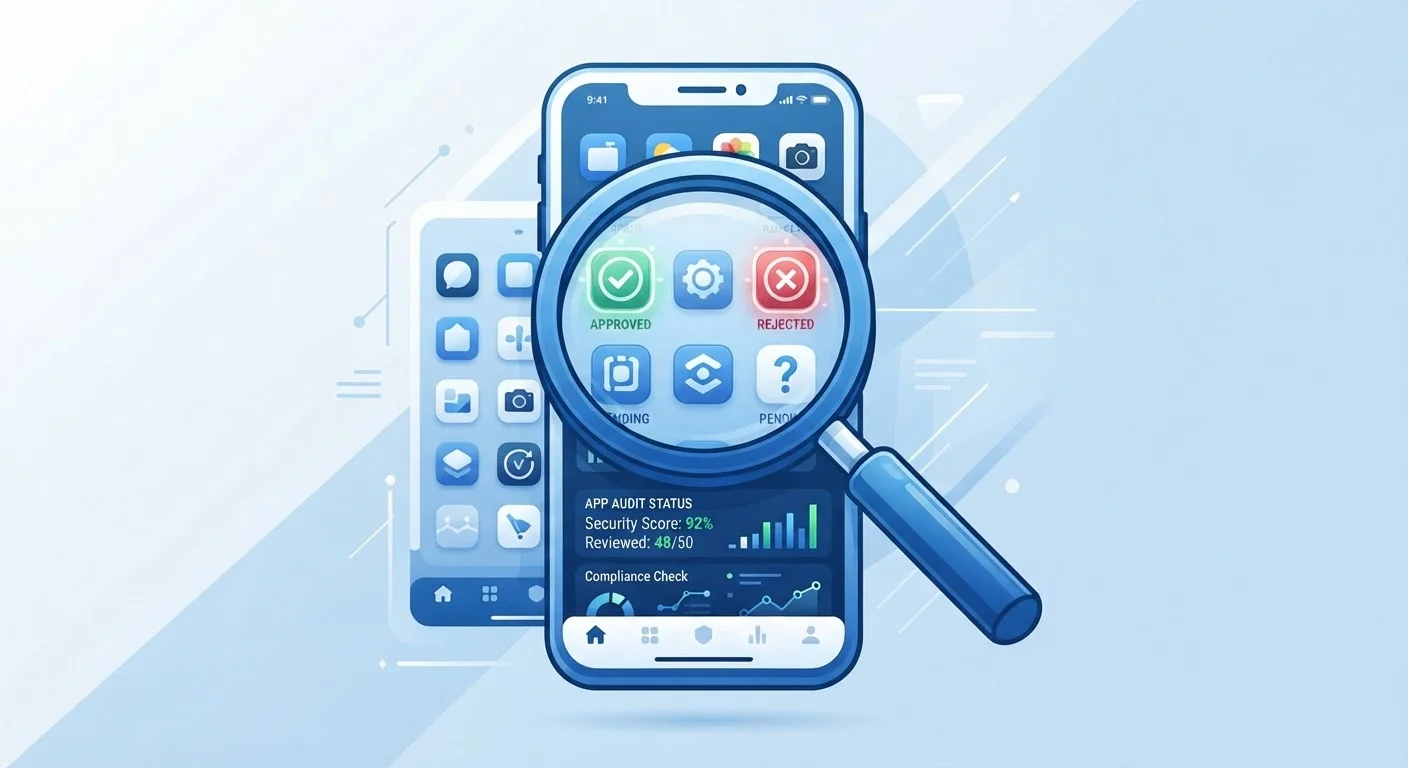
Photo credit: Telecom360.net | Connecting You To The Latest In Telecom
In this article
Apple and Google review apps before publishing them. Here's what that review process checks for and why some apps get rejected.
Key Takeaways
- Both Apple and Google require developers to submit apps for review before public distribution.
- Reviews check for security vulnerabilities, policy violations, and deceptive content.
- Automated tools handle initial scanning; human reviewers assess borderline or complex cases.
- Apps can be rejected for technical, content, or business-model reasons.
- Approval does not guarantee an app is safe - malicious apps occasionally slip through.
Why App Stores Have a Review Process
When mobile app distribution moved to centralized stores in the late 2000s, platform operators faced a practical problem: how do you allow millions of third-party developers to publish software on your platform without exposing users to malware, scams, and broken experiences? The review process was the answer.
The core goals haven't changed much since then. Reviews exist to catch apps that could harm users' devices or data, deceive users about what the app actually does, violate legal requirements like child safety laws or data protection rules, and undercut the stability of the platform itself. For consumers, the review layer is a meaningful - if imperfect - quality filter. For developers, it creates a standardized bar that applies to everyone distributing through those channels.
Third-Party Distribution Is a Separate Category
This article covers the standard App Store and Google Play review processes. Both platforms have introduced mechanisms for alternative distribution in certain markets - notably, Apple's support for third-party marketplaces in the European Union under the Digital Markets Act. Apps distributed outside official stores operate under different - and typically less rigorous - review structures.
What the Review Actually Checks
Both Apple's App Store Review Guidelines and Google Play's Developer Policy cover several distinct categories of requirements.
- Technical quality: Apps must not crash on launch, must function as described, and must use only publicly documented system APIs. Apps that call private frameworks - code Apple or Google hasn't exposed for developer use - are rejected.
- Privacy and data handling: Apps must accurately declare what data they collect and why. Since Apple introduced its privacy nutrition labels and App Tracking Transparency framework, developers must document data practices in detail before submission.
- Content standards: Both platforms enforce content age-ratings and prohibit categories like hate speech, graphic violence without appropriate rating labels, and sexual content in general-audience apps.
- Business model compliance: Apps selling digital goods must use the platform's in-app purchase system, which has been a significant source of developer friction and regulatory scrutiny.
For a deeper look at how each platform structures these checks differently, see how each store reviews apps.
Check the App's Privacy Nutrition Label
On iOS, every App Store listing includes a privacy label that discloses what data the app collects and whether it links that data to your identity. Reviewing this label before downloading takes under a minute and gives you a meaningful signal about the developer's data practices - independently of whether the app was approved.
Automated Scanning vs. Human Review
Review pipelines at both Apple and Google are not purely human-driven. Automated static analysis tools scan binary code for known malware signatures, forbidden API calls, and metadata inconsistencies before a human ever looks at a submission. This stage filters the large volume of straightforward violations efficiently.
Human reviewers step in for apps that pass automated screening but trigger policy questions - a new category of app, an unusual permission request, or content that requires contextual judgment. Apple has been more explicit about its human review component; Google has historically leaned further on automation, though both platforms have invested in expanding human capacity after high-profile incidents where dangerous apps reached users.
1.7M+
Apps available on the Apple App Store
Apple has reported over 1.7 million apps available in its store, each of which has passed at least one review cycle.
~1M
Apps rejected or removed by Apple annually
Apple has stated in its annual App Store Transparency Reports that it rejects or removes approximately one million app submissions per year for policy violations.
Why Some Apps Still Get Through - and What You Can Do
The review process meaningfully reduces risk but does not eliminate it. Sophisticated actors deliberately build apps that appear benign during review and activate harmful behavior afterward - a technique sometimes called time-bomb malware. Others use legitimate functionality in combination to extract data in ways that technically pass individual policy checks.
This is why understanding the review process is only part of the picture. Even after an app is approved, evaluating its permission requests and developer transparency remains worthwhile. Checking an app's permissions before accepting them is a practical habit that supplements what the store review does. And if you want to identify suspicious patterns in apps you've already encountered, spotting fake or malicious apps before installing them covers the signals worth knowing.
The approval process is a structural safeguard, not a guarantee. Understanding how it works helps you calibrate how much trust to extend - and where to stay alert on your own.
Frequently Asked Questions

Author
Apps & Software Editorial Team
Apps & Software Editorial Team is the collective byline for our editorial team and contributor network. Articles published under this byline or an editorial pen name are researched, written, and reviewed according to our editorial standards for clarity, consistency, and independence before publication.
View all articles →