
VPN vs. Tor: Choosing the Right Tool for Anonymous Browsing
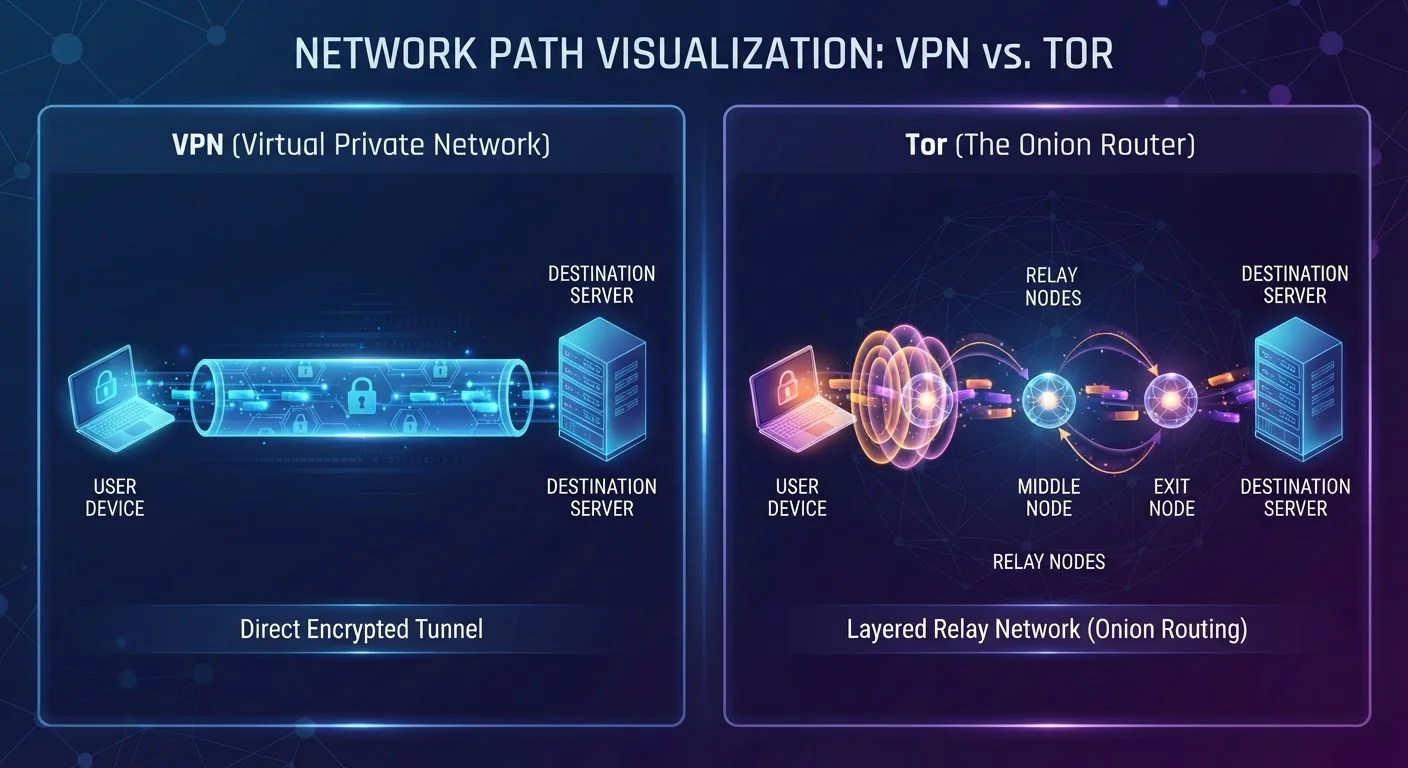
Photo credit: Telecom360.net | Connecting You To The Latest In Telecom
VPNs and Tor both mask your online activity, but they work differently and suit different needs. Here's how to understand which approach fits your situation.
Key Takeaways
- VPNs encrypt your traffic and route it through a single server operated by a third-party provider.
- Tor routes traffic through at least three volunteer-operated relays, preventing any single node from knowing both who you are and what you're accessing.
- VPNs offer faster speeds and broader compatibility; Tor provides stronger anonymity but at a significant performance cost.
- Neither tool guarantees complete anonymity - your behavior, browser settings, and endpoints still matter.
- Combining VPN and Tor is possible but adds complexity and is rarely necessary for typical users.
How Each Tool Works
Understanding the difference between a VPN and Tor starts with how each one actually handles your traffic. If you're new to these concepts, the online privacy fundamentals guide is a useful starting point.
A VPN creates an encrypted tunnel between your device and a server operated by the VPN provider. Your internet service provider (ISP) sees only that you're connected to a VPN server - not which sites you visit. However, the VPN provider itself can see your traffic, which means trust in that provider is essential. Your real IP address is replaced with the server's IP, masking your location from the websites you visit.
Tor (The Onion Router) works differently. Your traffic is encrypted in multiple layers - like an onion - and passed through at least three volunteer-operated relays worldwide. Each relay decrypts only enough to know where to send the data next. The entry node knows your IP but not your destination; the exit node knows your destination but not your IP. No single point has the full picture.
| Criterion | VPN | Tor |
|---|---|---|
| How traffic is routed | Single encrypted server | Three or more volunteer relays |
| Who can see your activity | VPN provider (by design) | No single relay sees both identity and destination |
| Speed impact | Minimal to moderate | Significant slowdown |
| Ease of use | Simple apps for all platforms | Requires Tor Browser; limited app support |
| Anonymity strength | Moderate (trust provider) | High (distributed architecture) |
| Best for | Everyday privacy and security | High-stakes anonymity needs |
This architectural difference is why Tor provides stronger anonymity but at a significant speed penalty. Those relays add latency, and there's no central provider optimizing for performance.
Limitations You Should Know
Neither tool is a silver bullet. VPNs shift trust from your ISP to your VPN provider - if the provider logs activity or is compelled to share data, your privacy depends on their policies and jurisdiction. A VPN also does nothing to prevent tracking via browser fingerprinting, cookies, or logged-in accounts.
Tor's weaknesses are different. Exit nodes - the final relay before traffic reaches its destination - can observe unencrypted traffic if the destination site doesn't use HTTPS. Additionally, using Tor makes you identifiable as a Tor user to your ISP and potentially to websites, even if your specific activity is hidden. Certain behaviors, like logging into personal accounts over Tor, can immediately de-anonymize you regardless of the technology.
HTTPS Still Matters Over Tor
Tor encrypts traffic between your device and the exit node, but the connection between the exit node and the destination website uses whatever protocol that site supports. If you're visiting a site without HTTPS, the exit node operator can read your traffic in plaintext. Always verify that a site uses HTTPS - indicated by the padlock icon - especially when using Tor for sensitive activity.
Both tools complement - rather than replace - good browser hygiene. See browser privacy settings worth adjusting and understand why private browsing mode alone isn't enough to protect your activity.
Choosing the Right Approach
For most everyday users - protecting data on public Wi-Fi, reducing ISP tracking, or accessing geo-restricted content - a VPN represents the more practical option. It's fast, compatible with virtually all apps and devices, and straightforward to use.
Tor makes more sense when the anonymity requirements are genuinely high: investigative journalism, communicating with confidential sources, or accessing information in an environment where browsing habits could carry legal or personal risk. Organizations like the Electronic Frontier Foundation and Freedom of the Press Foundation specifically recommend Tor for these scenarios.
2M+
Daily Tor network users globally
According to Tor Project metrics, millions of users connect to the Tor network daily, with usage spiking in regions with increased internet censorship.
~3-5×
Typical Tor slowdown vs. direct browsing
Security researchers generally estimate Tor adds significant latency due to multi-hop relaying, making real-time applications impractical for most users.
Some users run both simultaneously - connecting to a VPN before entering the Tor network - but this adds complexity and is rarely justified for typical threat models. In most cases, choosing one tool and using it correctly delivers better outcomes than attempting to combine both without a clear reason.
Whatever you choose, remember that anonymity tools reduce exposure - they don't eliminate it. Your decisions about which accounts you log into, what you share, and where you browse remain the most significant factors in your actual privacy posture.

Author
Cybersecurity Editorial Team
Cybersecurity Editorial Team is the collective byline for our editorial team and contributor network. Articles published under this byline or an editorial pen name are researched, written, and reviewed according to our editorial standards for clarity, consistency, and independence before publication.
View all articles →