
Why Strong Passwords Alone Won't Keep Your Accounts Safe
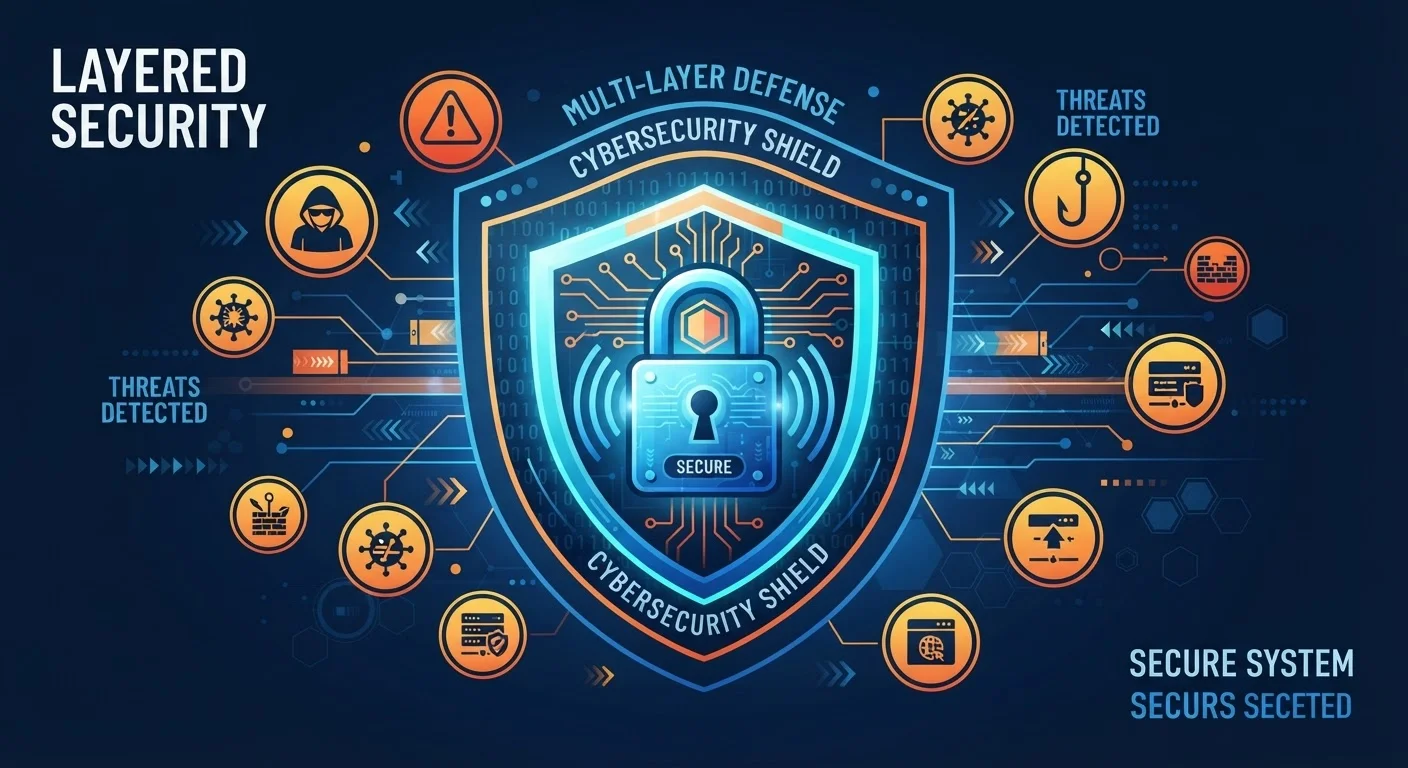
Photo credit: Telecom360.net | Connecting You To The Latest In Telecom
In this article
Passwords are just one layer of account security. Learn what else is needed — and why relying solely on a complex password leaves you more exposed than you'd think.
Key Takeaways
- Passwords can be exposed through data breaches even if they are complex and unique.
- Multi-factor authentication adds a critical second barrier attackers can't easily bypass.
- Reusing passwords across sites multiplies the damage when any single breach occurs.
- Security questions, outdated recovery emails, and SMS-only 2FA each introduce their own vulnerabilities.
- Monitoring accounts for unauthorized access is as important as setting a strong password.
The Password Myth That Leaves Accounts Exposed
The advice to "use a strong password" has been repeated so often it has become a shorthand for full account security. In practice, it addresses only one of several ways attackers gain unauthorized access. Phishing, data breaches, SIM-swapping, and social engineering can all render your carefully crafted password irrelevant.
Understanding these gaps is not about creating alarm - it's about building habits that actually match the threat landscape. As detailed in our overview of common cybersecurity myths, the assumption that a complex password is sufficient is one of the most widespread misconceptions among everyday users.
Breached Passwords Are Sold, Not Just Used Once
When your credentials appear in a data breach, they are typically sold or shared on dark web marketplaces within days. Attackers then use automated tools to test those credentials across hundreds of other services - a technique known as credential stuffing. A strong password only helps if it has never been exposed. Check services like Have I Been Pwned to see whether your email has appeared in known breaches.
Below are the most common mistakes people make when depending on passwords alone - along with straightforward steps to close each gap.
Mistakes That Undermine Password Security
Relying on password complexity without enabling multi-factor authentication (MFA).
Why it happens: Many users believe a long, random password is the strongest protection available, not realizing that stolen credentials bypass password strength entirely.
Reusing the same password - even a strong one - across multiple accounts.
Why it happens: Remembering dozens of unique passwords feels impractical, so people default to one trusted password they apply everywhere.
Setting weak or guessable security questions as account recovery options.
Why it happens: Security questions feel like a natural safety net, and many sites still require them - but answers like a mother's maiden name or hometown are often findable through social media.
Neglecting to update recovery email addresses and phone numbers.
Why it happens: Account recovery settings are set once and forgotten, sometimes pointing to email addresses that no longer exist or phone numbers that have been reassigned.
Ignoring account activity alerts and breach notification services.
Why it happens: Notification emails are easy to dismiss as routine, and many users aren't enrolled in any breach monitoring service.
For a deeper look at the mechanics behind these risks, our article on credential stuffing versus brute force attacks explains precisely how attackers exploit reused and breached credentials at scale.
Building a More Resilient Account Security Posture
Layering security measures - strong unique passwords, MFA, accurate recovery settings, and active monitoring - reduces the attack surface considerably. No single measure is foolproof, but each additional layer forces attackers to work harder and increases the likelihood they move on to easier targets.
80%+
Of breaches involve compromised credentials
Verizon's Data Breach Investigations Report has consistently found that the large majority of hacking-related breaches involve stolen or weak credentials.
~50%
Of users reuse passwords across sites
Surveys conducted by security research organizations regularly find that roughly half of respondents admit to reusing passwords across multiple online accounts.
Two-factor authentication deserves particular attention. SMS-based codes are a meaningful improvement over passwords alone, but they carry known weaknesses. Our guide to 2FA options on mobile devices walks through the practical trade-offs between SMS codes, authenticator apps, and hardware keys. Similarly, if you store sensitive files online, the practices covered in securing your cloud storage extend the same layered thinking to another common vulnerability point.
Account security is not a one-time configuration - it is an ongoing practice. Reviewing your security settings periodically, acting promptly on breach alerts, and understanding how attackers work puts you in a fundamentally stronger position than password complexity alone ever could.

Author
Cybersecurity Editorial Team
Cybersecurity Editorial Team is the collective byline for our editorial team and contributor network. Articles published under this byline or an editorial pen name are researched, written, and reviewed according to our editorial standards for clarity, consistency, and independence before publication.
View all articles →