
The Real Story Behind Megapixels: When More Is Less
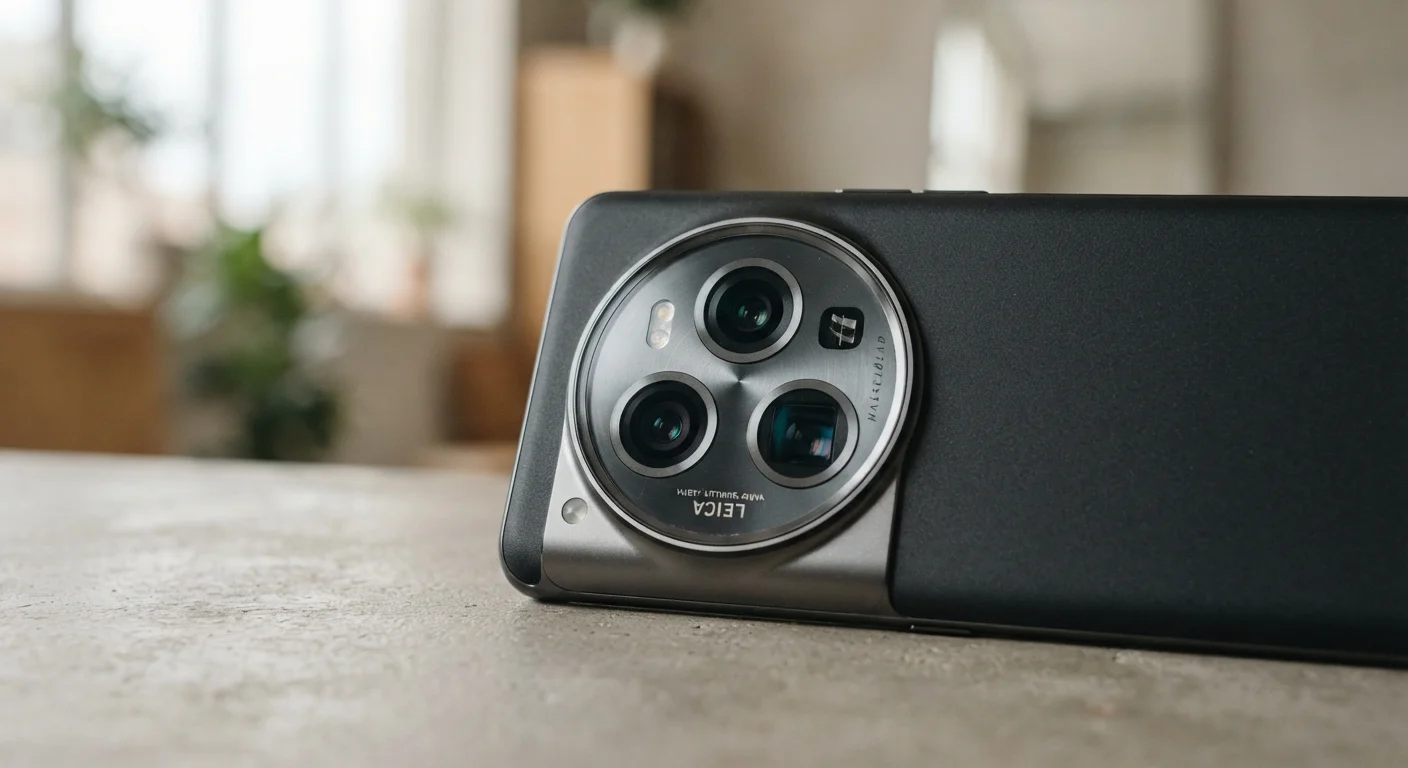
Photo credit: Telecom360.net | Connecting You To The Latest In Telecom
In this article
A 200MP camera doesn't guarantee sharp photos. Learn why megapixel count is just one variable in a complex imaging equation.
Key Takeaways
- Megapixel count measures resolution only - not color accuracy, dynamic range, or low-light capability.
- Sensor physical size and pixel pitch (individual pixel area) matter far more than raw pixel count.
- Pixel binning allows high-MP sensors to combine adjacent pixels for better low-light performance.
- Computational photography can outperform raw hardware specs in many real-world shooting conditions.
- Storage, processing load, and lens quality all constrain the real-world value of a very high megapixel count.
Why Megapixels Became the Default Selling Point
Megapixels - one million pixels - are an easy number to print on a box. They're concrete, comparable, and intuitive enough that a larger number feels like a clear upgrade. That's precisely why they became shorthand for camera quality in consumer marketing, even though imaging engineers have long known they represent just one narrow slice of the overall picture.
A megapixel count describes only how many discrete sample points a sensor captures. It says nothing about how large each pixel is, how efficiently the sensor converts light to signal, how wide the aperture is, or how effectively the image signal processor (ISP) interprets raw data. For a deeper look at how these variables interact, see our explainer on sensor size and pixel count.
Myth
A higher megapixel count always means sharper, more detailed photos.
Fact
Sharpness depends on sensor size, lens quality, pixel pitch, and processing - megapixel count is only one factor among many.
Resolution defines how many data points are captured, not how accurately or cleanly those points represent the scene. A sensor with densely packed small pixels introduces noise and diffraction artifacts that can make a technically high-resolution image appear softer than one captured at a lower count with larger, better-lit pixels. Lens quality also limits the detail a sensor can resolve - if the optical path introduces aberrations, more megapixels merely capture those flaws with greater fidelity.
Myth
More megapixels means better performance in low light.
Fact
In low-light conditions, larger individual pixels outperform a higher count of smaller ones because each photosite captures more light per unit of time.
Low-light imaging is fundamentally a photon-collection problem. Smaller pixels - the trade-off of squeezing more of them onto the same sensor area - gather fewer photons per exposure, making the electrical signal weaker relative to background noise. This produces grainy, color-inaccurate images. Pixel binning mitigates this by merging adjacent photosites, effectively creating a lower-resolution but brighter output. A sensor optimized for low light often intentionally uses fewer, larger pixels rather than maximizing count.
Myth
Smartphone cameras with 100MP+ sensors are better than professional cameras at capturing detail.
Fact
Full-frame and medium-format sensors used in professional cameras have dramatically larger physical areas, giving them a decisive optical and dynamic-range advantage regardless of megapixel count.
Sensor physical size is the dominant variable in image quality comparisons. A full-frame sensor measuring roughly 36 × 24 mm dwarfs the 1/1.3-inch or 1-inch sensors found in even the most capable smartphones. That larger area means more total light collected, less noise, wider dynamic range, and more natural depth-of-field control. A 100MP smartphone sensor still operates under the fundamental constraints of its compact form factor, which limits how large each photosite can be regardless of total count.
Myth
Printing large photos always requires a very high megapixel count.
Fact
Print resolution requirements are determined by viewing distance and print size - most standard print dimensions are well-served by 12-24MP captures.
The threshold for perceived sharpness in print is approximately 300 dots per inch (DPI) at typical viewing distance. A 12MP image (roughly 4000 × 3000 pixels) produces a sharp 13 × 10-inch print at 300 DPI. For large-format work viewed from greater distances - billboards, trade show graphics - the effective DPI requirement drops significantly, meaning even lower-resolution captures can appear sharp. Very high megapixel counts become meaningful mainly for aggressive cropping or very large fine-art prints examined at close range.
Myth
The camera with the highest megapixel count in a price range is the best value choice.
Fact
Image quality value depends on the full imaging system - sensor size, aperture, ISP capability, and software - not megapixel count alone.
Manufacturers sometimes use high megapixel numbers to signal quality in a price-sensitive segment while using smaller sensors and narrower apertures to control cost. The resulting images may technically resolve more pixels but deliver inferior color, noise performance, and dynamic range compared to a competing device with a more balanced hardware and software approach. Evaluating camera quality from specification sheets requires looking at the complete imaging pipeline, not a single headline figure.
The Physics That Marketing Glosses Over
Every pixel on a camera sensor is a photosite - a tiny well that collects photons and converts them into an electrical charge. The fundamental trade-off is area: when you fit more pixels onto the same physical sensor, each individual pixel shrinks. Smaller pixels collect fewer photons per exposure, which directly increases shot noise (random variation in the light signal) and reduces dynamic range - the span between the darkest shadow and brightest highlight a camera can capture simultaneously.
This is why a flagship phone with a larger sensor and fewer, bigger pixels can routinely outperform a mid-range device advertising a far higher megapixel count. The physics of light collection favor area over quantity. Manufacturers address this tension through pixel binning, where the sensor combines the charge from four or more adjacent pixels into a single output pixel, boosting effective sensitivity at the cost of final resolution. The result is often a sharper, cleaner image than using full native resolution in dim conditions.
~4×
Light gathered by doubling pixel area
Doubling a pixel's linear dimensions increases its light-collecting area by approximately four times, directly improving signal-to-noise ratio in low-light conditions.
12MP
Resolution used by many flagship shooters
Several highly regarded smartphone camera systems have shipped primary sensors at 12MP, prioritizing larger pixel pitch and optical quality over raw resolution.
300 DPI
Standard print sharpness threshold
Professional print workflows typically target 300 dots per inch at the intended viewing distance, a threshold reachable with captures well below 50MP for most common print sizes.
Aperture - expressed as an f-number - compounds this further. A wider aperture (lower f-number, such as f/1.8 versus f/2.8) admits significantly more light, reducing the exposure time needed and lessening motion blur. No megapixel increase compensates for a fundamentally light-starved optical path. For context on how zoom systems add another layer of complexity, our optical vs. digital zoom breakdown explains how resolution interacts with focal length choices.
Lens Quality Caps What Any Sensor Can Deliver
A camera sensor can only resolve detail that the lens in front of it is capable of projecting clearly. In constrained smartphone designs, optical compromises - including fixed apertures, smaller glass elements, and limited lens correction - can become the binding constraint on image quality long before megapixel count does. Assessing the full optical and computational system is essential before drawing conclusions from sensor specifications alone.
Where Computational Photography Changes the Equation
Modern smartphone cameras rarely rely on a single raw frame. Night modes, HDR capture, and portrait simulation all involve the ISP and on-device machine learning stacking or blending multiple exposures, identifying edges, and synthesizing detail that no single frame - regardless of megapixel count - could produce alone. Understanding what's happening algorithmically is essential to evaluating what a camera spec sheet actually delivers. Our deep dive into AI camera features covers the mechanics behind scene detection, multi-frame processing, and semantic segmentation.
The practical upshot: a 12MP sensor paired with a powerful ISP and mature image processing pipeline can produce more detailed, more color-accurate images than a 200MP sensor running rudimentary software. Resolution captured is not the same as resolution rendered. When evaluating cameras, treat megapixels as one input into a larger equation - then examine sensor size, aperture, pixel pitch, and the software stack before drawing conclusions. For a consolidated view of which specifications actually correlate with image quality, this spec-focused guide provides a useful framework.

Author
Smartphones Editorial Team
Smartphones Editorial Team is the collective byline for our editorial team and contributor network. Articles published under this byline or an editorial pen name are researched, written, and reviewed according to our editorial standards for clarity, consistency, and independence before publication.
View all articles →