
How Business Smartphones Differ from Standard Consumer Models
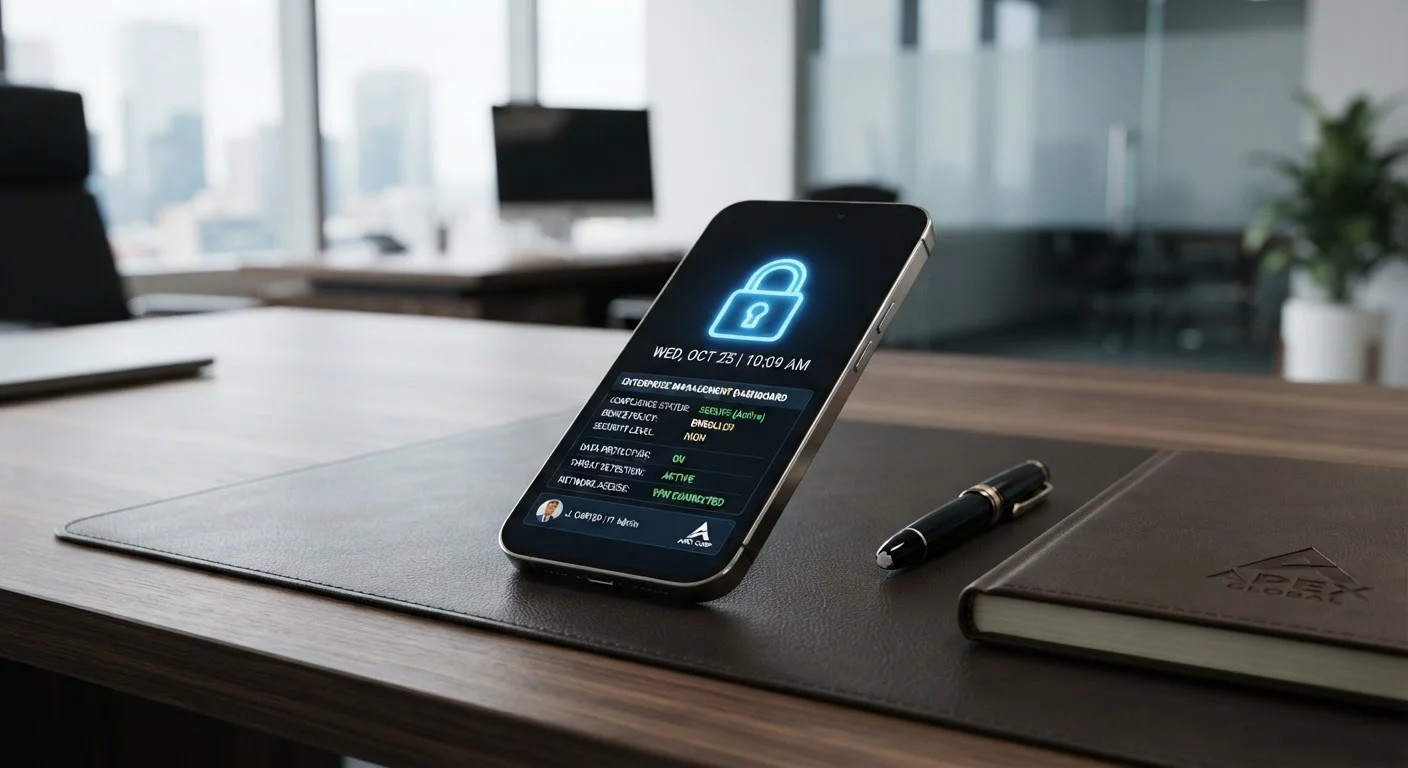
Photo credit: Telecom360.net | Connecting You To The Latest In Telecom
In this article
Enterprise phones often include features invisible to the average buyer — from hardware security keys to dual-persona software support.
Key Takeaways
- Business smartphones include hardware-level security features absent from most consumer devices.
- Enterprise models support dual-persona environments that separate personal and work data on one device.
- Extended software support lifecycles make business devices more viable for multi-year fleet management.
- Centralized mobile device management (MDM) compatibility is a core enterprise requirement, not an add-on.
- Ruggedized variants meet MIL-SPEC or IP ratings suited for field and industrial environments.
The Core Separation: Security Hardware vs. Software Layers
Consumer smartphones secure data primarily through software - encryption managed by the operating system and app-level authentication. Business smartphones frequently add a dedicated hardware security element: a secure enclave or Trusted Execution Environment (TEE) that stores cryptographic keys in isolated hardware inaccessible to the main processor. Some enterprise models include discrete security chips that generate and protect credentials even if the OS is compromised.
This distinction matters directly for compliance-driven industries. Financial services, healthcare, and legal organizations operate under frameworks - such as HIPAA or SOC 2 - that require demonstrable hardware-rooted trust chains. A consumer handset, regardless of software configuration, cannot provide that assurance at the hardware layer.
Device security frameworks for smartphones build on this hardware foundation, making the choice of device - not just the management platform - a security decision in its own right.
5+ years
Typical enterprise smartphone security update commitment
Enterprise device programs commonly guarantee OS and security patch support well beyond the consumer standard of three to four years.
IP68
Water and dust ingress protection on enterprise ruggedized models
Many enterprise-class smartphones are rated IP68 (dust-tight, immersion-resistant), with additional MIL-STD-810 mechanical testing for drop and vibration resilience.
100%
Zero-touch enrollment coverage via Android Enterprise or Apple Business Manager
Enterprise device management frameworks allow IT teams to provision entire device fleets remotely before devices are distributed to end users.
Software Management: MDM Integration and Dual-Persona Support
Mobile Device Management (MDM) compatibility is the enterprise feature that IT administrators rely on most. Business-grade devices expose APIs that let administrators enforce screen lock policies, restrict app installations, remotely wipe data, and push configuration profiles - all without user interaction. Consumer phones may support basic MDM enrollment but often lack the low-level policy controls enterprises require.
Dual-persona architecture, available through Android Enterprise Work Profiles and Apple's Managed Apple IDs, partitions the device into separate personal and corporate environments. Corporate apps, email, and data remain isolated and manageable by IT, while personal apps remain fully private. This architecture resolves the central tension in BYOD deployments: employee privacy versus corporate data governance.
Evaluate MDM Compatibility Before Procurement
Before finalizing a device selection, verify that the handset is certified under Android Enterprise Recommended or Apple Business Essentials compatibility lists. These certifications confirm the device exposes the management APIs your MDM platform requires. Uncertified devices may enroll but fail to enforce critical security policies at the hardware level.
For context on how device choice intersects with plan structure, see how business phone plans differ from consumer options.
Lifecycle, Support, and Fleet Management
Enterprise device programs are built around predictable, multi-year deployment cycles. A consumer device with a three-year support window creates a liability in a fleet managed on five-year refresh cycles - security patches stop arriving while devices remain active. Enterprise-class devices are typically committed to longer update lifecycles, with vendors offering advance notification of end-of-support dates for IT procurement planning.
Bulk enrollment capabilities - such as zero-touch enrollment on Android or Apple Business Manager - allow IT teams to configure hundreds of devices before they reach employees. This is architecturally unavailable on standard consumer handsets and has no consumer-tier equivalent.
What makes a device business-grade covers the broader hardware specification landscape, including how these lifecycle commitments manifest in procurement contracts. For teams evaluating how devices pair with their mobile plans, enterprise phone plans for small businesses provides practical context on matching device class to plan structure.
Durability Standards and Role-Specific Variants
Not every business phone needs to survive a six-foot drop onto concrete, but for field service engineers, warehouse staff, or public safety personnel, MIL-STD-810 ratings and IP68 or higher ingress protection are non-negotiable specifications. Enterprise device lines frequently include ruggedized variants purpose-built for these environments - thicker chassis, reinforced ports, and larger-capacity batteries to sustain full-shift operation.
Consumer flagship phones occasionally achieve high IP ratings, but they are not systematically tested to military drop and vibration standards, and replacement programs for enterprise fleets differ from consumer warranty structures. Device classes for different business roles maps specific durability and performance requirements to common workplace functions, offering a practical reference for procurement decisions.
Understanding where business smartphones sit relative to other enterprise hardware - and how the same logic applies across device categories - is explored in business laptop versus consumer laptop comparisons.
Frequently Asked Questions

Author
Business Tech Editorial Team
Business Tech Editorial Team is the collective byline for our editorial team and contributor network. Articles published under this byline or an editorial pen name are researched, written, and reviewed according to our editorial standards for clarity, consistency, and independence before publication.
View all articles →