
Business Laptop vs. Consumer Laptop: Where the Differences Actually Matter
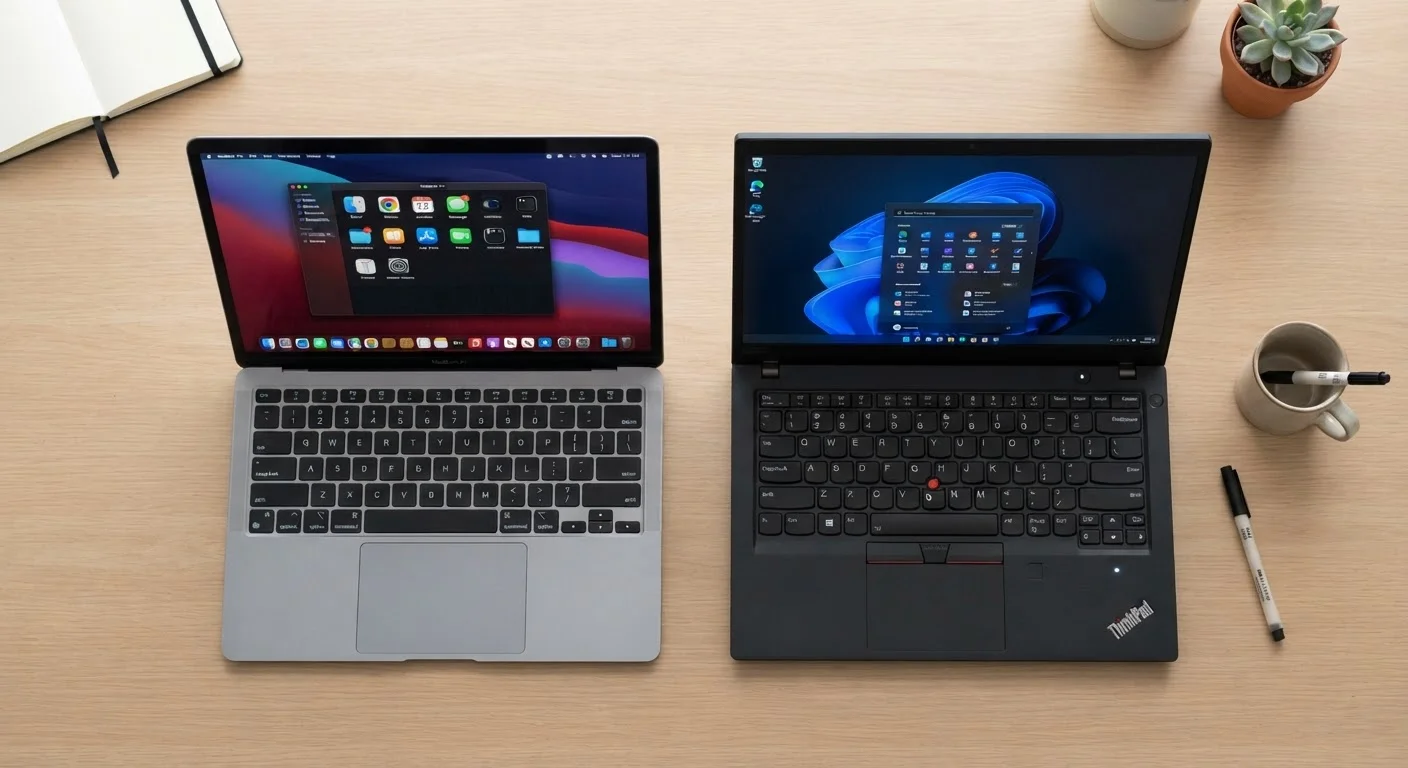
Photo credit: Telecom360.net | Connecting You To The Latest In Telecom
In this article
Same specs on paper, different builds in practice. Here's what distinguishes a business laptop from its consumer counterpart.
Key Takeaways
- Business laptops typically include hardware security chips, MIL-SPEC durability ratings, and enterprise management interfaces absent from consumer models.
- Warranty terms and support SLAs differ significantly - business devices often include on-site or next-day service contracts.
- Consumer laptops may match or exceed business specs on paper but lack the software ecosystem and manageability tools IT departments require.
- Total cost of ownership, not sticker price, is the more meaningful metric when evaluating laptops for workplace deployment.
- Processor platforms like Intel vPro distinguish business devices by enabling remote management even when the OS is unresponsive.
Why the Spec Sheet Doesn't Tell the Whole Story
A business laptop and a consumer laptop can carry identical processors, the same RAM capacity, and equivalent storage - yet perform very differently in a corporate environment. The divergence lives beneath the spec sheet, in the engineering decisions, certifications, and support structures that manufacturers build around the hardware itself.
Understanding where these differences actually matter requires looking past clock speeds and display resolution to factors like repairability, remote management, and long-term vendor accountability. For IT decision-makers, these are often the variables that determine whether a device purchase scales gracefully or creates compounding support overhead. See also how business smartphones diverge from consumer models along similar lines - the pattern holds across device categories.
| Criterion | Business Laptop | Consumer Laptop |
|---|---|---|
| Hardware security platform | vPro / AMD PRO with full out-of-band management | TPM only; limited remote management |
| Durability certification | MIL-STD-810 common across product lines | Rarely certified; chassis optimized for aesthetics |
| Default OS edition | Windows Pro or Enterprise | Windows Home (typical) |
| Warranty term | 3 years, on-site or next-day options | 1 year, mail-in standard |
| MDM / endpoint management | Full support; BIOS-level configurability | Partial; requires additional configuration |
| Repairability | Modular design; documented service manuals | Varies; often limited by thin chassis design |
| Upfront cost | Higher; reflects enterprise build standards | Lower; optimized for retail price points |
| Typical refresh cycle fit | 4-5 years with sustained support | 2-3 years before support or performance concerns |
Security and Manageability: The Structural Gap
The most consequential difference between business and consumer laptops involves hardware-level security and remote manageability. Business-tier devices from major manufacturers typically integrate a TPM 2.0 chip alongside support for platforms like Intel vPro, which enables out-of-band management - meaning IT can access a device remotely even when the operating system has failed or the machine is powered off.
Consumer laptops may include a TPM chip for BitLocker compatibility, but they rarely support the full vPro stack or equivalent AMD PRO features. This limits what IT departments can do without physical access to the machine. For organizations managing dozens or hundreds of endpoints, that gap translates directly into labor cost. What makes a device business-grade covers these platform distinctions in detail, including what vPro certification actually entails in practice.
3-5 yrs
Typical business laptop warranty and support window
Enterprise laptop vendors commonly offer extended service agreements covering hardware and on-site support well beyond the standard consumer one-year period.
MIL-STD-810
Durability standard applied to many business laptops
This US military specification covers environmental stress testing including drop, humidity, vibration, and temperature - a benchmark rarely applied to consumer-grade hardware.
Out-of-band
Management capability unique to vPro-class platforms
Intel vPro and equivalent AMD PRO platforms allow IT administrators to remotely access and remediate devices independent of the operating system state.
Durability, Warranties, and Total Cost of Ownership
Consumer laptops are engineered for lifestyle appeal - thin profiles, premium materials for aesthetics, and competitive pricing. Business laptops trade some of that visual polish for structural resilience. Many carry MIL-STD-810 certification, meaning they have passed standardized tests for drop resistance, humidity, vibration, and temperature variance. For field workers or frequent travelers, this isn't a marketing badge - it's a measurable reduction in device failure rates.
Warranty structures reinforce the total cost of ownership argument. Business laptops typically ship with three-year warranties that include options for on-site or next-business-day service. Consumer warranties are usually one year, mail-in only, with extended coverage available at additional cost - and rarely matching enterprise SLA terms. Organizations evaluating rugged laptops for demanding environments will find durability tiers extend well beyond standard MIL-SPEC into purpose-built industrial categories.
When calculating total cost of ownership over a four-year deployment cycle, the higher upfront cost of a business device often becomes more defensible. Reduced IT support calls, lower replacement rates, and sustained performance under prolonged workloads shift the math considerably - a factor that the sticker price comparison alone obscures.
Software Ecosystem and Processor Platforms
Business laptops are designed to integrate cleanly into enterprise software environments - Windows Pro or Enterprise editions (rather than Home), compatibility with Mobile Device Management platforms, and in many cases, pre-configured BIOS settings that align with corporate security policies. Consumer devices often ship with Windows Home and bloatware that requires additional IT effort to remediate before deployment.
Processor platform selection also carries downstream consequences. The shift toward ARM-based chips in both consumer and business devices introduces software compatibility variables that IT managers need to evaluate carefully. ARM vs. x86 in business devices examines what the architecture shift means specifically for enterprise management and legacy application support - a consideration that doesn't surface in consumer purchasing contexts.
The same logic that separates business from consumer laptops applies across device categories. Business phone plans vs. consumer plans follows an analogous structure: surface-level parity masking meaningful differences in management, accountability, and long-term fit for professional use.

Author
Business Tech Editorial Team
Business Tech Editorial Team is the collective byline for our editorial team and contributor network. Articles published under this byline or an editorial pen name are researched, written, and reviewed according to our editorial standards for clarity, consistency, and independence before publication.
View all articles →