
What Makes a Device 'Business-Grade'? The Key Specs Explained
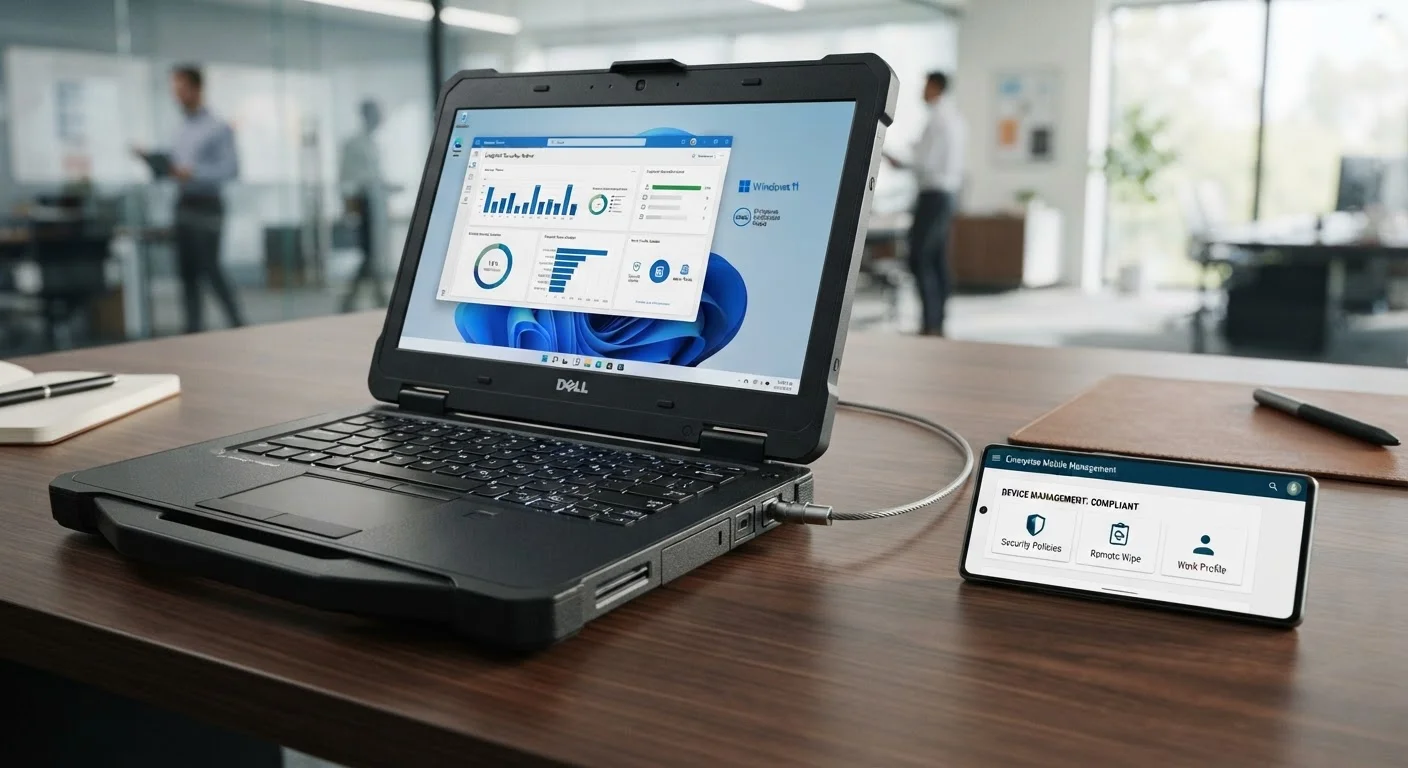
Photo credit: Telecom360.net | Connecting You To The Latest In Telecom
In this article
From MIL-SPEC durability to vPro processors, learn what separates business-grade hardware from consumer devices.
Key Takeaways
- Business-grade devices meet durability, security, and manageability standards that consumer hardware typically does not.
- Hardware security features like TPM chips and vPro processors are often absent in consumer-tier equivalents.
- MIL-STD-810 certification indicates a device has passed environmental stress testing - not just drop protection.
- Remote management support (MDM/UEM compatibility) is a defining characteristic of enterprise-ready hardware.
- Longer firmware and driver support windows reduce total cost of ownership over a multi-year deployment.
The Core Distinction: Engineering Intent
Consumer devices are optimized for retail appeal - thin profiles, vibrant displays, competitive price points. Business-grade hardware is engineered with a different set of priorities: sustained reliability under workload, compatibility with enterprise IT infrastructure, and a support lifecycle that matches corporate procurement cycles.
This distinction shows up not just in the spec sheet, but in areas buyers rarely see at purchase time: firmware update commitments, image customization options, and the availability of enterprise service contracts. A device marketed as "business-grade" should demonstrate measurable advantages across at least three dimensions - security architecture, durability certification, and management capability. Understanding each of these helps separate genuine enterprise hardware from consumer products with a rebadged price tag.
For a complete view of how device decisions fit into broader procurement strategy, see our guide to the full business device lifecycle.
Security Architecture: Hardware Roots of Trust
Software security depends on a trustworthy hardware foundation. Business-grade devices typically include a TPM chip - a dedicated microcontroller that stores cryptographic keys, enables full-disk encryption, and supports secure boot processes. TPM 2.0 is now required for Windows 11 and is standard in enterprise-tier hardware.
Beyond TPM, platforms like Intel vPro add a layer of remote hardware management that operates independently of the main operating system. This enables IT teams to remotely diagnose, patch, or wipe a device even when it is unresponsive - a capability with significant value in distributed workforces. AMD Pro platforms offer comparable functionality for organizations running AMD-based fleets.
TPM 2.0
Minimum hardware security standard for Windows 11
Microsoft's Windows 11 system requirements mandate TPM 2.0 compliance, making it a baseline expectation for any new enterprise device deployment.
5+ years
Typical business-grade driver and firmware support window
Enterprise hardware vendors commonly commit to extended update support timelines, compared to shorter windows common in consumer product lines.
MIL-STD-810
Durability test methods referenced by enterprise hardware vendors
The standard includes over 30 individual test methods; vendors self-select which apply to their specific product claims.
Physical security provisions - Kensington lock slots, smart card readers, and optional fingerprint or IR facial recognition - are more consistently present in business lines than consumer equivalents. These features reflect an engineering philosophy where security is a structural requirement, not an optional add-on.
Durability Standards: What Certifications Actually Mean
MIL-STD-810 is the most widely cited durability benchmark in enterprise hardware. Originally developed for U.S. military equipment, the standard defines testing methodologies across dozens of environmental stressors - temperature shock, humidity, vibration, sand and dust exposure, and low-pressure altitude simulation. Importantly, manufacturers self-select which test methods to apply, so the label alone does not guarantee a comprehensive test profile.
Always Request the Specific Test Methods
When evaluating a MIL-STD-810 claim, ask the vendor which specific test methods were applied and at what severity levels. Two devices can both carry the MIL-STD-810 label while having been tested against entirely different environmental scenarios. A device tested for vibration only is not equivalent to one tested across temperature, humidity, and dust exposure.
IP ratings, governed by IEC 60529, define resistance to solid particle and liquid ingress. An IP65 rating, for instance, indicates complete dust protection and resistance to water jets - relevant for field, manufacturing, or outdoor deployments. For a detailed breakdown of how these ratings are tested and what they exclude, see our explainer on IP, MIL-SPEC, and drop protection.
For organizations operating in industrial or field environments, fully rugged devices add reinforced chassis construction, sealed ports, and extended operating temperature ranges. Our analysis of rugged laptops for field workplaces covers how to assess whether a ruggedized device genuinely matches your environment.
Manageability and Lifecycle Support
Enterprise IT teams manage hundreds or thousands of devices simultaneously. Business-grade hardware must integrate cleanly with MDM and UEM platforms - enabling remote provisioning, policy enforcement, application deployment, and remote wipe. Consumer devices often support basic MDM enrollment, but business-tier hardware provides deeper integration hooks and hardware attestation features.
Equally important is the vendor's support commitment. Business product lines typically offer longer driver and firmware update windows - often five or more years - compared to consumer lines that may see support lapse after two or three. This directly affects total cost of ownership and security posture over a standard 3-5 year device lifecycle.
For organizations weighing platform decisions, our comparison of business and consumer laptops examines where these support and build differences have the greatest practical impact. The hardware specs hub also provides context on how specific components translate to real-world enterprise performance.
Frequently Asked Questions

Author
Business Tech Editorial Team
Business Tech Editorial Team is the collective byline for our editorial team and contributor network. Articles published under this byline or an editorial pen name are researched, written, and reviewed according to our editorial standards for clarity, consistency, and independence before publication.
View all articles →