
Durability Ratings on Phones and Tablets: IP, MIL-SPEC, and Drop Protection
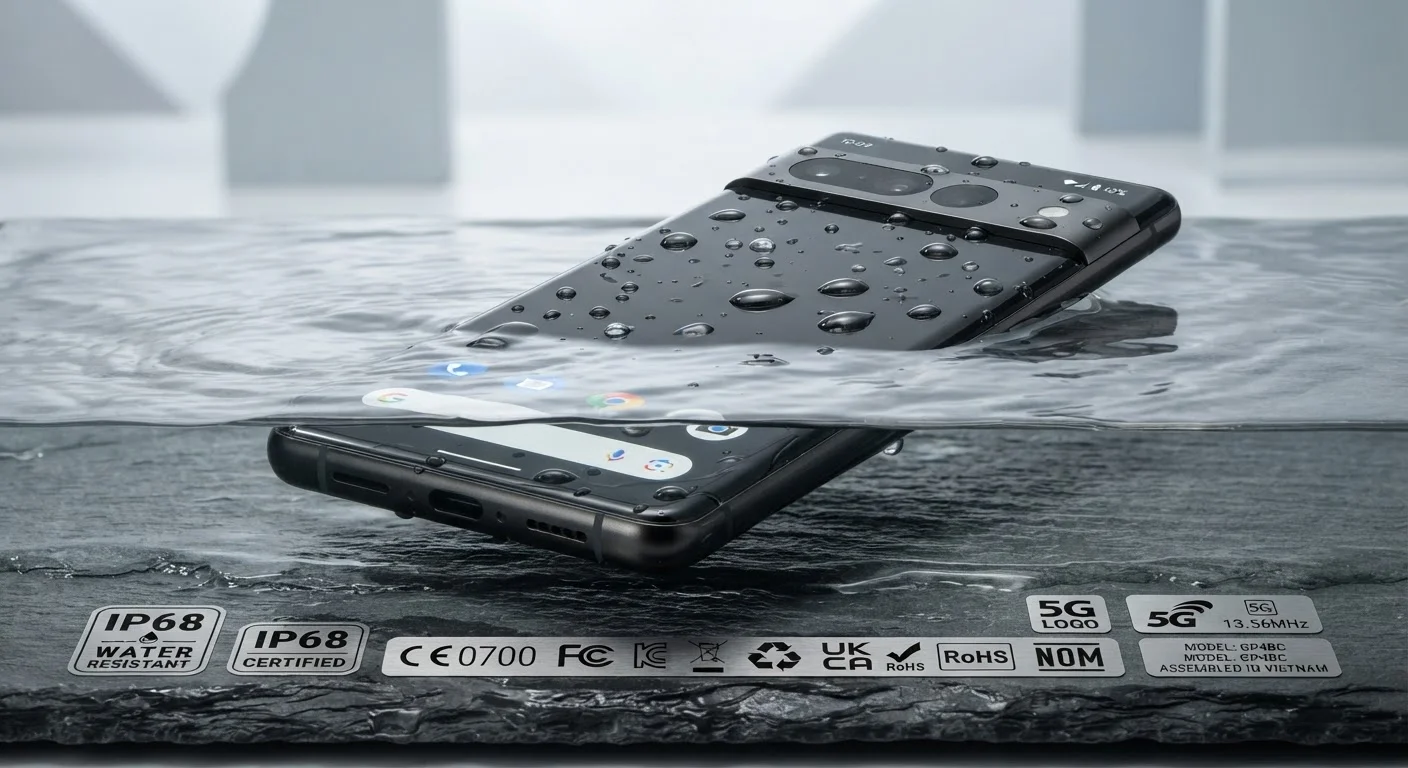
Photo credit: Telecom360.net | Connecting You To The Latest In Telecom
In this article
IP67, IP68, MIL-STD-810 — what these certifications test for, what they don't cover, and how to read durability claims accurately.
What Durability Ratings Actually Test
When a phone or tablet ships with an IP68 or MIL-STD-810 designation, that label reflects performance under a specific, controlled test protocol - not a blanket promise against everyday damage. Understanding what each standard measures is the foundation for reading any durability claim accurately. For a broader look at how hardware specs translate to real-world decisions, see reading a smartphone spec sheet before committing to a plan.
| IP Rating Standard | IEC 60529 (International Electrotechnical Commission) |
| IP67 Liquid Test | Up to 1 meter depth, 30 minutes immersion (IEC 60529) |
| IP68 Liquid Test | Depth and duration set by manufacturer within standard (IEC 60529) |
| MIL-STD-810 Type | Test methodology, not a third-party certification (U.S. Department of Defense) |
| Drop Test Method | MIL-STD-810H Method 516.8 (U.S. DoD, 2019) |
| IP Rating Validity | Applies to new devices; seals degrade with wear and damage |
IP (Ingress Protection) ratings come from the IEC 60529 standard published by the International Electrotechnical Commission. The two-digit code after "IP" tells you two distinct things: the first digit measures protection against solid particles (dust, debris) on a 0-6 scale, and the second measures protection against liquids on a 0-9K scale. A device rated IP67 is fully dust-tight and can withstand immersion up to 1 meter for 30 minutes. IP68 extends liquid immersion depth and duration, but manufacturers set their own specific parameters within the standard's framework - so two IP68 phones may not have been tested under identical conditions.
MIL-STD-810 is a U.S. Department of Defense test methodology covering environmental stresses: temperature extremes, humidity, altitude, vibration, shock, and more. Critically, it is not a certification - it is a collection of test methods. A manufacturer selects which methods and how many cycles to run, then self-declares compliance. There is no independent third-party body verifying the claim.
Drop Protection: What the Numbers Don't Tell You
Drop ratings are among the most frequently misunderstood durability claims. A common format states a device survived drops from a specific height - typically 1.2 to 1.8 meters - onto a specific surface such as steel plate or plywood. These figures reflect controlled lab conditions: controlled height, drop angle, and surface uniformity. Real-world drops involve unpredictable angles, hard corners, and varied surfaces like concrete or tile edges, which concentrate impact force very differently than a flat plate.
IP Rating
Ingress Protection rating per IEC 60529. The first digit indicates solid particle protection (0-6); the second indicates liquid protection (0-9K). Higher numbers indicate greater resistance.
MIL-STD-810
A U.S. Department of Defense document defining environmental test methods covering temperature, humidity, shock, vibration, and drop. Manufacturers self-declare compliance; no independent certification body issues approval.
Ingress Protection
The degree to which a device enclosure resists the entry of solid particles and liquids, as defined and tested under IEC 60529.
Drop Test Protocol
A standardized procedure specifying drop height, surface material, and orientation sequence used to assess a device's structural integrity after impact.
Gasket Seal
A mechanical seal inside a device enclosure that prevents liquid or dust ingress. Gaskets can degrade over time or after physical impact, reducing effective IP-rated protection.
MIL-STD-810G Method 516.6 and its successor 810H Method 516.8 are the drop test procedures most commonly referenced in marketing materials. The standard specifies 26 drops (or fewer, depending on configuration) across multiple face, edge, and corner orientations. However, a manufacturer may test only a subset of these configurations and still reference the standard. Consumers should look for explicit statements about which test methods were applied rather than assuming full-protocol compliance.
Gorilla Glass, sapphire crystal, and similar screen materials address scratch and impact resistance on the display surface - but these are separate attributes from the chassis drop rating and are governed by the individual material manufacturer's own testing, not IP or MIL-SPEC standards. For devices used in demanding professional environments, what separates business-grade hardware goes deeper into how these specs interact with enterprise requirements.
Key Limitations and What Ratings Don't Cover
IP ratings are tested on new devices. Wear over time - including worn gaskets, cracked seals from a prior drop, or damage from previous liquid exposure - can significantly degrade actual ingress protection without any visible indicator to the user. Most manufacturer warranties explicitly exclude liquid damage even on IP-rated devices, an important distinction that is often buried in fine print.
Warranty Coverage and IP Ratings Don't Always Align
Many manufacturers rate their devices IP67 or IP68 yet explicitly exclude liquid damage from the standard warranty. This means a device that fails after water exposure - even within the rated depth and duration - may not be covered for repair or replacement. Always review the warranty terms separately from the durability rating when assessing real-world risk.
Drop protection ratings also say nothing about internal component stress. A device can pass a drop test with no visible damage while sustaining micro-fractures in solder joints or stress on the battery that only manifest later as intermittent failures. Similarly, neither IP nor MIL-SPEC addresses protection against drops onto sharp objects, extreme point-load impacts, or screen-first falls onto abrasive surfaces.
For field or industrial use cases, consider how these limitations stack up against rugged-specific certifications. Evaluating rugged laptops for field and industrial workplaces provides a useful parallel framework for assessing whether a device's rated specs genuinely match its intended environment. Physical durability also intersects with security posture - a device damaged by liquid or impact may expose internal components or compromise encrypted storage integrity, a topic covered in device security across your digital life.

Author
Consumer Electronics Editorial Team
Consumer Electronics Editorial Team is the collective byline for our editorial team and contributor network. Articles published under this byline or an editorial pen name are researched, written, and reviewed according to our editorial standards for clarity, consistency, and independence before publication.
View all articles →