
Postpaid vs. Prepaid Business Phone Plans: The Trade-offs Worth Understanding
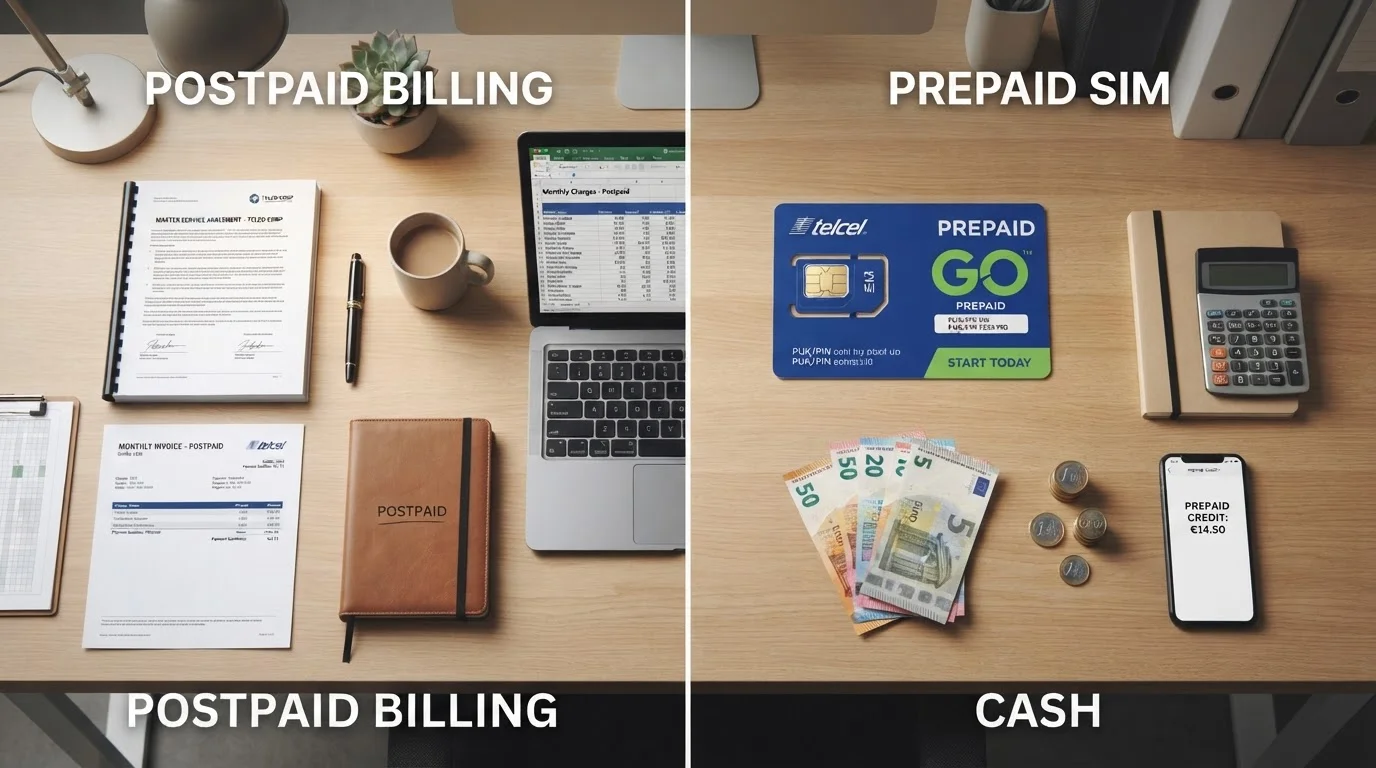
Photo credit: Telecom360.net | Connecting You To The Latest In Telecom
In this article
Compare the operational and financial trade-offs of postpaid and prepaid structures for business mobile plans across different team sizes.
Key Takeaways
- Postpaid plans offer centralized multi-line billing and device financing but require credit approval and contracts.
- Prepaid plans eliminate overages and contract lock-in but typically lack dedicated business account support.
- Network priority during congestion often differs between postpaid and prepaid tiers on the same carrier.
- Team size and billing complexity are the most reliable predictors of which structure fits better.
- Switching between structures requires number porting steps that can create temporary service disruptions.
How the Two Billing Structures Actually Work
The core difference between postpaid and prepaid business plans is not simply when payment occurs - it's the entire operational framework each model implies. Understanding this distinction is foundational before evaluating either for enterprise use. For a broader breakdown of how these plan categories are defined, see what each plan type actually means.
Postpaid plans bill in arrears: usage accumulates across a billing cycle, and the carrier invoices the account holder after the fact. For businesses, this typically means a consolidated statement covering multiple lines, device installment payments, and any overage or add-on charges. Credit approval is required, and most business postpaid agreements involve a service commitment - commonly 24 months when device financing is included.
Prepaid plans collect payment upfront. The account holder purchases a defined allotment of data, minutes, and messages before service is active. When the allotment is exhausted or the period expires, service pauses or slows - depending on the plan - rather than generating a surprise invoice. There is no credit check and no term contract.
The structural differences between these models extend further than billing timing, affecting everything from network access priority to the availability of business-grade support tiers.
Head-to-Head: Key Criteria for Business Decision-Makers
Evaluating these structures for a business context requires examining criteria that don't appear in consumer-facing plan comparisons. The table below contrasts the dimensions most relevant to enterprise purchasing decisions.
| Criterion | Postpaid Business Plans | Prepaid Business Plans |
|---|---|---|
| Billing model | Monthly invoice after usage | Upfront payment before use |
| Contract requirement | Yes - typically 24 months with device financing | None - cancel anytime |
| Credit check | Required for account approval | Not required |
| Multi-line management | Centralized account portal | Generally per-SIM or limited batch tools |
| Network priority | Higher priority during congestion | Typically deprioritized during congestion |
| Device financing | Installment plans available | Devices purchased outright |
| International roaming | Business packages commonly available | Limited or add-on only |
| Overage risk | Present without active usage controls | None - service slows or pauses |
| Business account support | Dedicated reps for enterprise accounts | Standard consumer support tiers |
| Suitable team size | 10+ lines most efficient | 1-9 lines or variable headcount |
Network priority is a frequently overlooked factor. Most major US carriers deprioritize prepaid traffic relative to postpaid during periods of network congestion. For field teams relying on real-time data access or voice calls in high-density areas, this distinction has operational consequences worth quantifying.
Scalability and Administrative Overhead
For organizations managing five or fewer lines, the administrative gap between postpaid and prepaid is manageable. Beyond that threshold, postpaid's centralized account structure - consolidated invoices, bulk line management portals, and dedicated business account representatives - provides efficiency that prepaid cannot replicate at comparable scale.
Prepaid lines are activated individually. Each number is typically managed through a separate account or SIM, which creates reconciliation complexity as headcount grows. Some carriers have introduced prepaid-adjacent business accounts that batch multiple lines, but these products occupy a middle ground and vary significantly by provider.
~30%
US businesses using prepaid for some mobile lines
Industry estimates suggest roughly 30% of small US businesses use at least some prepaid lines to manage costs, according to mobile industry research aggregators.
24 months
Typical postpaid business contract with device financing
Most major US carriers structure business device financing agreements over 24-month terms, tying line commitment to hardware installment schedules.
Small businesses that currently operate on consumer postpaid plans should also review the trade-offs of running your business on a consumer phone plan, as the operational limitations there overlap with several prepaid constraints.
If your organization is considering a structural switch, review the number porting checklist before switching structures to avoid coverage gaps during the transition.
Cost Control and Budget Predictability
Prepaid's fixed-cost model is its most defensible business advantage. Because charges are capped at the point of purchase, finance teams can forecast mobile expenses with precision. There are no end-of-cycle surprises from international roaming overages, premium SMS charges, or shared data pool exhaustion.
Postpaid plans offer a different kind of predictability: flat-rate line fees and included data allotments are stable month to month, provided usage stays within plan parameters. The risk is the exception - unexpected usage spikes or roaming events that generate charges outside the base invoice. Business accounts generally have more tools to set spending caps and usage alerts, but those controls require active configuration.
For a broader look at how different plan structures compare across billing, data rules, and flexibility dimensions, see the structured plan type comparison. Teams evaluating carrier-specific differences in prepaid versus postpaid access and perks will also find value in what changes beyond the payment schedule across carriers.
Hybrid Approaches Are Common in Practice
Many businesses do not choose exclusively between postpaid and prepaid. A common pattern is maintaining a core postpaid account for full-time staff while using prepaid SIMs for contractors, field workers, or temporary project teams. This hybrid approach can balance administrative manageability with cost containment, though it requires separate billing reconciliation for each structure.

Author
Business Tech Editorial Team
Business Tech Editorial Team is the collective byline for our editorial team and contributor network. Articles published under this byline or an editorial pen name are researched, written, and reviewed according to our editorial standards for clarity, consistency, and independence before publication.
View all articles →