
Wearable Technology End to End: From Sensor to Insight
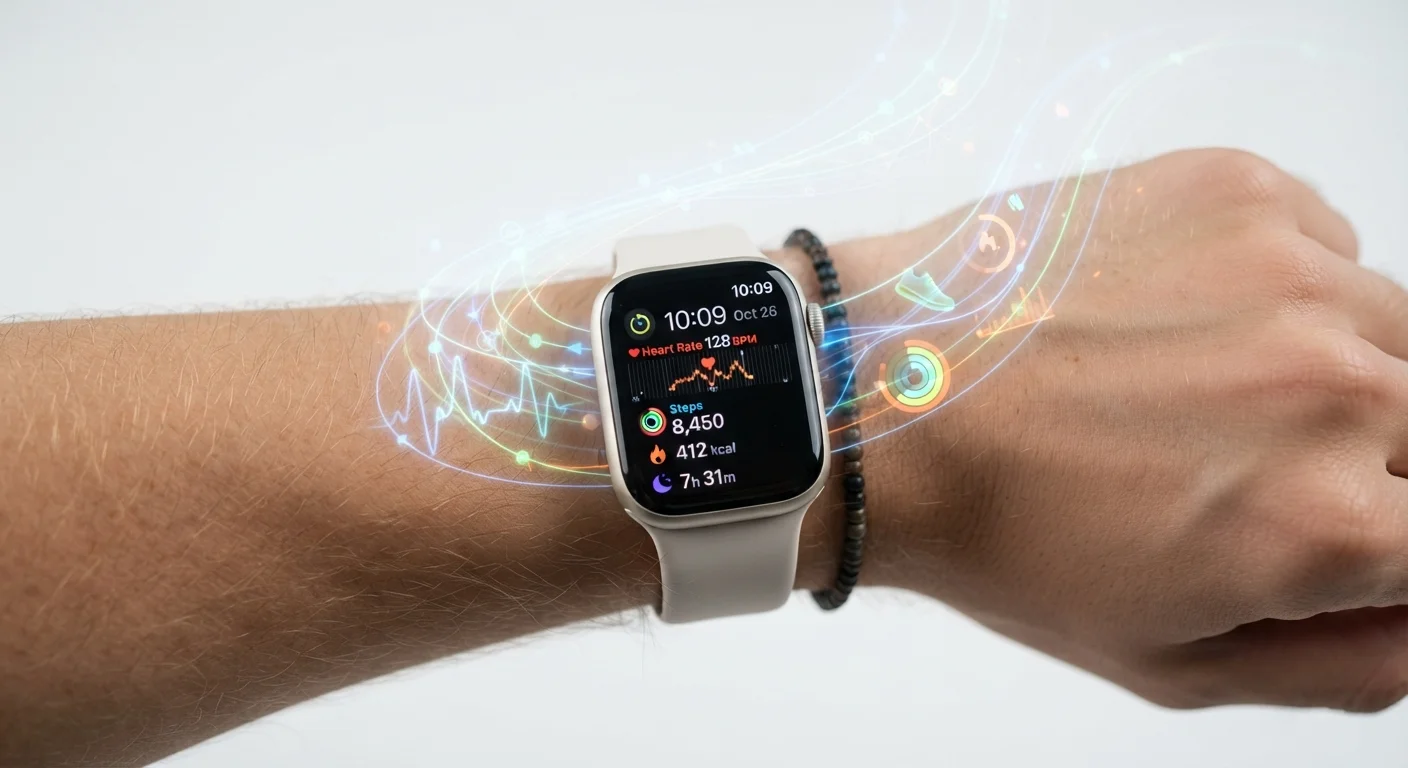
Photo credit: Telecom360.net | Connecting You To The Latest In Telecom
In this article
A comprehensive guide to how wearable devices work — covering sensors, connectivity, software, data interpretation, and form factor trade-offs.
Key Takeaways
- Wearable accuracy depends on sensor quality, placement, and the algorithms that interpret raw signals.
- On-device processing reduces latency and protects privacy by limiting data sent to the cloud.
- Battery life, sensor count, and form factor involve unavoidable engineering trade-offs.
- Connectivity protocols like Bluetooth LE significantly affect power draw and data throughput.
- Software and machine learning models are as important as hardware in determining output quality.
- Health metrics from wearables are estimates, not clinical measurements - context always matters.
How Wearable Sensors Capture Raw Data
Every wearable device begins its work at the sensor layer - the hardware that translates physical and biological signals into electrical data. The most common sensor types include PPG optical sensors for heart rate, accelerometers for motion and step detection, gyroscopes for orientation, skin-temperature thermistors, and GSR electrodes for stress estimation.
PPG sensors work by shining LED light - typically green or infrared - into the skin and measuring the light reflected back. Blood volume in capillaries changes with each heartbeat, altering reflectance. The sensor captures this fluctuation as a waveform. Accelerometers, by contrast, use MEMS technology to detect motion along multiple axes, generating continuous data streams sampled many times per second.
For a deeper look at what each sensor type actually measures and the accuracy limits of each, see our guide to wearable sensors decoded.
~100 Hz
Typical PPG sensor sampling rate
Most consumer PPG implementations sample between 25 Hz and 100 Hz; higher rates improve accuracy but increase power draw.
1-2 ms
Bluetooth LE connection interval
Bluetooth LE connection intervals in wearables typically range from 7.5 ms to several seconds depending on the data priority and power mode.
3-7 days
Typical smartwatch battery runtime
Battery life varies substantially based on display type, sensor polling frequency, and cellular versus Bluetooth-only operation.
From Signal to Insight: On-Device Processing
Raw sensor output is noisy. Motion artifacts, ambient light interference, and electrical noise all corrupt the signal before it becomes a usable metric. On-device processors - typically low-power ASIC chips or dedicated sensor hubs - apply filtering algorithms to clean the data before it ever reaches the main application processor.
A common technique is FFT-based frequency analysis, which isolates the heart rate signal from movement noise. More sophisticated devices run neural-network inference directly on the chip, enabling real-time anomaly detection without a cloud round-trip. This approach, known as edge computing, keeps sensitive physiological data on the device longer and reduces battery consumption from radio transmission.
When evaluating on-device processing claims, ask whether the device can generate metrics without a smartphone connection - this confirms true edge computation rather than marketing language.
Genuine edge processing means the device's own chip runs the algorithm locally; many devices merely buffer data and compute metrics only after syncing to a phone or cloud service.
Check whether a wearable's algorithm has been peer-reviewed or validated against a clinical reference standard - not just internally tested - before treating its health metrics as reliable.
Independent validation studies reveal real-world accuracy limits that manufacturer specifications often omit, helping users calibrate appropriate trust in the data.
The trade-off is processing capacity: edge chips powerful enough to run complex models draw more power than simpler filters, compressing battery life. Device manufacturers must balance computational capability against runtime expectations.
Connectivity and Data Transmission
Once processed, data moves off the device through a wireless protocol. Bluetooth LE (version 5.x in most current wearables) is the dominant standard for wrist-worn devices, offering a practical range of around 10 meters and data rates sufficient for most health telemetry. Some devices also incorporate NFC for contactless payments and UWB for precise spatial positioning.
Wi-Fi is less common in small wearables due to its power demands but appears in smartwatches designed for standalone operation. LTE cellular connectivity enables complete independence from a paired smartphone - useful for athletes and emergency-alert use cases - but substantially increases device size and power consumption.
Minimize Radio-On Time to Extend Battery
Configuring your wearable to sync at set intervals rather than continuously - where the platform allows it - is one of the most effective ways to extend daily battery runtime. Bluetooth LE radio activity is often the largest single power consumer outside the display, and reducing its duty cycle can add hours to a charge.
The syncing relationship between a wearable and its companion smartphone also affects the broader smartphone and tablet ecosystem, since many health platforms aggregate data across multiple device classes.
Software, Algorithms, and Interpretation
Hardware captures signals; software determines what those signals mean. Wearable platforms apply proprietary algorithms to convert cleaned sensor data into metrics like VO2 max estimates, sleep stage classifications, and stress scores. These algorithms are typically trained on population datasets and validated against clinical reference methods - though the size and diversity of those validation datasets vary considerably by manufacturer.
VO2 max, for instance, is estimated using heart rate, pace, and elevation data. It is a modeled approximation, not a laboratory measurement. Similarly, sleep staging relies on movement and heart rate variability patterns rather than the EEG signals used in clinical polysomnography. Understanding these limitations is essential for interpreting your data correctly.
For a practical guide to evaluating whether your wearable's outputs can be trusted, see what to verify before trusting a wearable's health metrics. And if you've noticed confusing readouts, common misreadings in wearable fitness data explains how to interpret them accurately.
“The gap between what a consumer wearable measures and what a clinician can reliably act on is still significant. The sensor hardware has advanced faster than our ability to validate the algorithms at population scale.”
— Dr. Jessilyn Dunn, Biomedical engineer and wearable health data researcher, Duke University
Form Factor Trade-Offs and Design Constraints
The physical design of a wearable determines which sensors fit, how well they contact skin, and how long the battery lasts. A slim band can house an accelerometer and a PPG sensor comfortably; adding an electrocardiogram (ECG) electrode array, an altimeter, and an SpO2 sensor requires more board area and a larger battery - which means more weight and bulk.
Display type also affects power budget significantly. Always-on AMOLED displays are visually rich but consume substantially more power than memory-in-pixel (MIP) reflective displays. Earable devices - including hearables and audio wearables - introduce different constraints: acoustic driver size, ear-canal fit, and microphone placement all affect both audio performance and sensor accuracy for in-ear biometrics like pulse.
Thicker Bands Don't Always Mean Better Sensors
A larger device footprint accommodates more sensors but does not guarantee better data quality. Sensor placement, skin-contact pressure, and algorithm quality matter more than hardware count. A device with four mediocre sensors and poor signal processing will consistently underperform one with two well-implemented sensors and rigorous validation.
Compared to more stationary connected hardware covered in our smart home technology end-to-end guide, wearables face uniquely severe constraints because every gram and milliwatt must be justified in something worn on the body all day.
Privacy and Security Considerations
Wearables collect some of the most sensitive data a consumer device can generate - continuous heart rate, location, sleep patterns, menstrual cycles, and stress indicators. Understanding where that data is stored, who can access it, and how it is secured is as important as understanding sensor accuracy.
Most platforms store raw and processed health data in cloud environments, governed by their own privacy policies rather than medical-data regulations like HIPAA in most consumer contexts. Data sharing with third-party apps, research partnerships, or advertisers varies significantly by platform. Users should review data export and deletion options before selecting a platform.
On the device itself, Bluetooth pairing security, firmware update integrity, and physical access controls all constitute attack surfaces. Our device security hub covers broader best practices for securing personal devices, many of which apply directly to wearables.
Health Data Does Not Equal Medical Diagnosis
Consumer wearable platforms are generally not regulated as medical devices and their outputs - including heart rate, SpO2, and ECG - are not diagnostic tools. Anomalies flagged by a wearable should prompt consultation with a qualified healthcare provider, not self-diagnosis or self-treatment. Regulatory classifications vary by market and device type, so always check the specific clearance status of any feature you intend to rely on.
This article is intended for informational and educational purposes only. Wearable health metrics are not a substitute for professional medical evaluation, diagnosis, or treatment.

Author
Consumer Electronics Editorial Team
Consumer Electronics Editorial Team is the collective byline for our editorial team and contributor network. Articles published under this byline or an editorial pen name are researched, written, and reviewed according to our editorial standards for clarity, consistency, and independence before publication.
View all articles →