
Wearables and Personal Data: What Gets Collected and Where It Goes
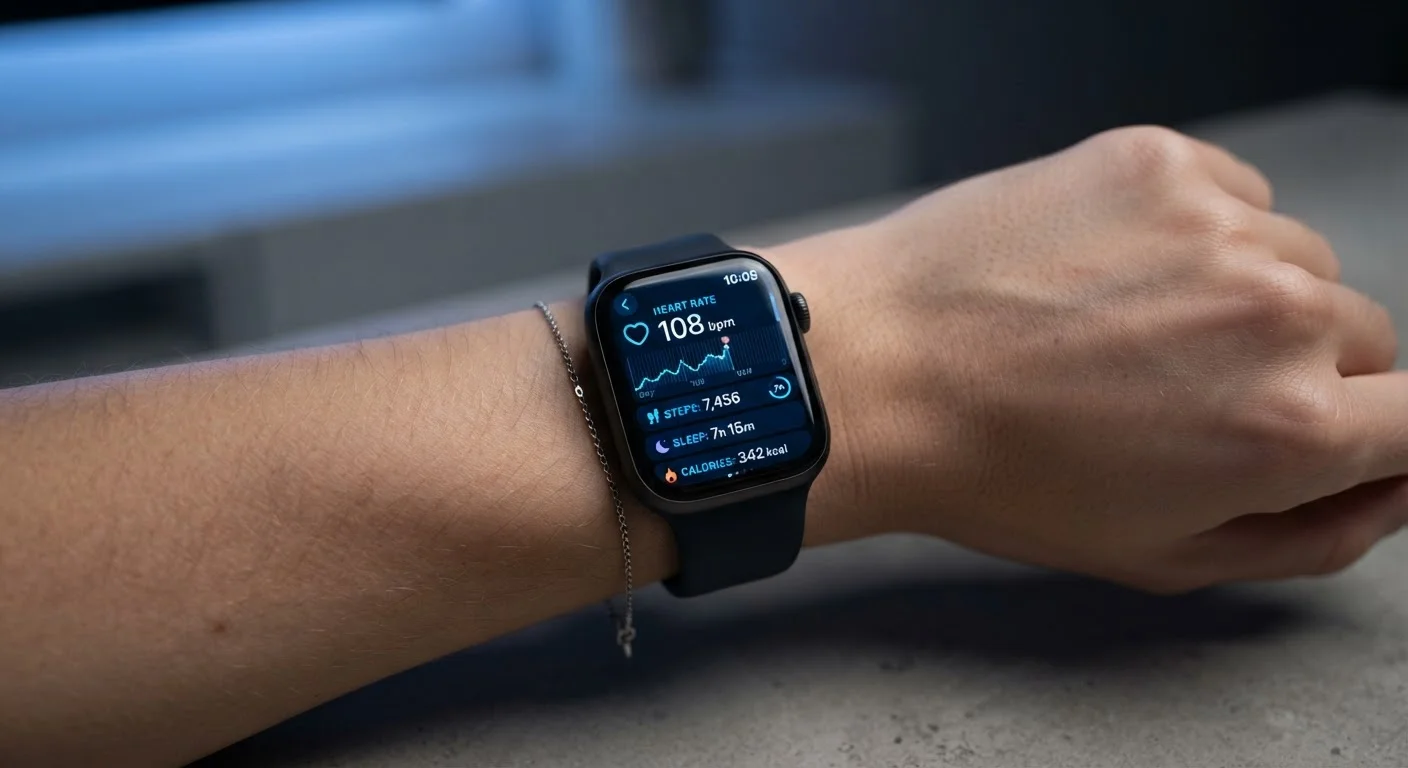
Photo credit: Telecom360.net | Connecting You To The Latest In Telecom
In this article
Fitness trackers and smartwatches collect detailed biometric data. Here's a clear-eyed look at what's captured, stored, and potentially shared.
Key Takeaways
- Wearables collect far more than step counts - heart rate, sleep stages, SpO2, skin temperature, and GPS location are common.
- Data flows from the device to a companion app, then typically to manufacturer cloud servers and sometimes third-party partners.
- Privacy policies for wearable platforms vary significantly in how long data is retained and who it can be shared with.
- Users generally have some control over data sharing but default settings often favor broader collection.
- Health data from wearables is not uniformly protected by medical privacy laws like HIPAA in the United States.
What Wearables Actually Capture
The popular framing of fitness trackers as "step counters" understates the scope of data modern wearables collect. Contemporary devices monitor a broad array of physiological and contextual signals simultaneously.
Common biometric data types collected include:
- Heart rate and heart rate variability (HRV) - measured continuously or at set intervals using photoplethysmography (PPG) sensors
- Blood oxygen saturation (SpO2) - estimated via optical sensors on the wrist or finger
- Sleep staging - derived from movement and heart rate data to estimate light, deep, and REM sleep
- Skin temperature - used as a baseline deviation indicator on higher-end devices
- Electrodermal activity (EDA) - present on select devices, used to infer stress responses
- GPS location and movement routes - logged during outdoor activities
- Menstrual cycle tracking - where users opt in
Beyond raw biometrics, wearables also log behavioral data: when you put the device on and take it off, your activity cadence throughout the day, and interaction patterns with notifications. For a deeper look at how individual sensors generate these readings, see how wearable sensors actually work.
72%
U.S. adults concerned about health data privacy
A Pew Research Center survey found roughly 72% of Americans feel their personal data - including health information - is less secure than it was five years prior.
~30+
Distinct data types collected by modern smartwatches
Independent analyses of leading wearable platforms have identified over 30 distinct data fields collected per user, spanning biometrics, location, behavioral patterns, and device usage.
Under 5%
Users who read wearable privacy policies in full
Research on consumer privacy behavior consistently finds that fewer than 5% of users fully read privacy policies before accepting terms - a pattern that holds for wearable platforms.
The Data Pipeline: From Wrist to Cloud
Data collected by a wearable doesn't stay on the device. It moves through a multi-stage pipeline before becoming the insights displayed in your app.
The typical flow works as follows:
- Sensor capture - Raw electrical and optical signals are recorded on the device's processor.
- On-device processing - Firmware converts raw signals into structured data points (e.g., beats per minute from a PPG waveform).
- Sync to companion app - Data transfers via Bluetooth to a smartphone app, usually in near-real-time or on a scheduled basis.
- Upload to manufacturer cloud - The app forwards data to the platform's cloud infrastructure, where more complex analytics run.
- Third-party integrations - With user permission, data may be passed to connected apps and services via APIs.
This pipeline means your biometric data resides in multiple places simultaneously: the device, the phone, the manufacturer's servers, and potentially partner platforms. Understanding wearable technology end to end provides a fuller breakdown of each stage in this architecture.
Third-Party App Access Varies Widely
When users connect a wearable platform to a third-party app - such as a nutrition logger or coaching platform - the scope of data shared depends on what permissions the user grants and what the third-party app requests. Some integrations receive only summary data (daily step totals), while others request access to raw heart rate logs or sleep records. Reviewing exactly what each connected app can access is worth doing periodically, as permissions granted during initial setup are not always revisited.
Privacy Policies and Legal Protections
A critical point many users overlook: wearable health data occupies a legal gray zone in the United States. Because consumer wearables are not medical devices in the regulatory sense, the data they produce is generally outside the scope of HIPAA. That means the primary governance document is the manufacturer's own privacy policy - a document that varies considerably across platforms.
Key questions worth examining in any wearable platform's privacy policy:
- How long is raw biometric data retained on the platform's servers?
- Is data used to train AI models, and if so, is it anonymized first?
- Under what conditions can data be shared with third-party research institutions or advertisers?
- What happens to user data in the event of a company acquisition or service shutdown?
The broader landscape of online privacy provides relevant context here - many of the same data-broker ecosystems that operate around web browsing have an interest in health and behavioral data as well. For a direct comparison, see how data brokers compile and use personal profiles.
Export Your Data Before Closing an Account
Most wearable platforms offer a data export tool, typically accessible through account settings or a dedicated privacy portal. Downloading your data before deleting an account gives you a local record of your health history and confirms what the platform has stored. Some platforms take several days to generate a full export, so initiating the request early is advisable.
What Users Can - and Can't - Control
Most wearable platforms offer some degree of user control over data collection, but defaults matter. Out of the box, many devices are configured to collect broadly and share data with affiliated services unless the user actively adjusts permissions.
Practical control points typically available to users include:
- Toggling specific sensors off (e.g., continuous heart rate vs. on-demand only)
- Disabling GPS or limiting location precision
- Opting out of data sharing for research or product improvement programs
- Requesting a data export or account deletion through the platform's privacy portal
- Restricting third-party app access through the companion app's permissions screen
However, some data collection is non-negotiable for device function. A wearable cannot surface step counts without an accelerometer logging movement data, and it cannot generate sleep reports without overnight sensor readings. The tradeoff is inherent to the technology. For context on how these choices intersect with a device's overall capabilities, the comparison between smartwatches and dedicated fitness trackers is worth reviewing - feature scope directly correlates with data scope.
Frequently Asked Questions

Author
Consumer Electronics Editorial Team
Consumer Electronics Editorial Team is the collective byline for our editorial team and contributor network. Articles published under this byline or an editorial pen name are researched, written, and reviewed according to our editorial standards for clarity, consistency, and independence before publication.
View all articles →