
Smartwatch vs Dedicated Fitness Tracker: Matching the Device to Your Needs
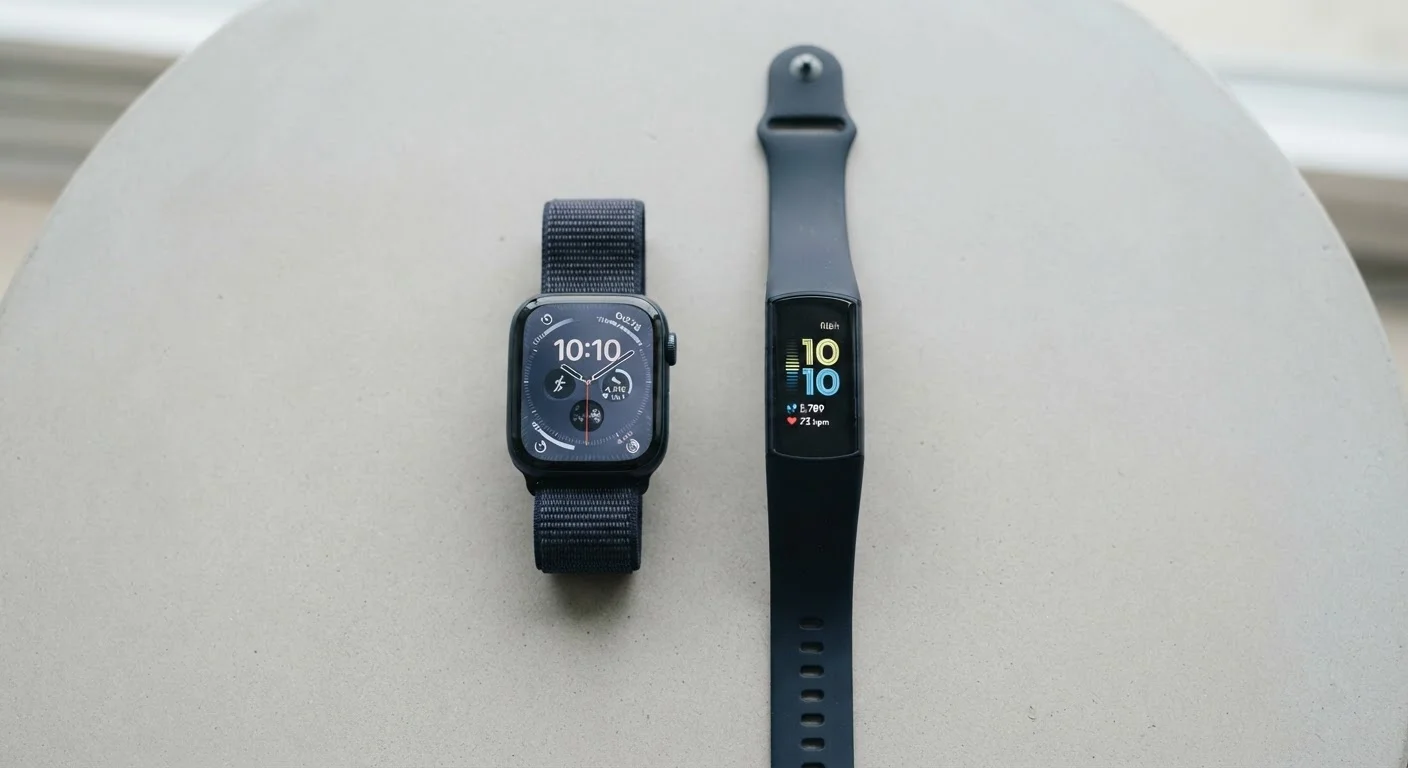
Photo credit: Telecom360.net | Connecting You To The Latest In Telecom
In this article
Smartwatches and fitness bands share features but serve different priorities. Understand what each does well before choosing one.
Key Takeaways
- Smartwatches offer broader functionality including apps and notifications, while fitness trackers emphasize sensor depth and battery endurance.
- Dedicated fitness trackers typically last 5-14 days per charge; smartwatches average 1-3 days.
- Sensor accuracy depends heavily on fit, wear position, and activity type - not just device category.
- Neither device type is inherently more accurate; performance varies significantly by model and use case.
- Choosing the right device depends on whether connectivity or health data granularity is your primary need.
What Separates a Smartwatch from a Fitness Tracker
The distinction between a smartwatch and a dedicated fitness tracker has narrowed over time, but the two device categories still make fundamentally different trade-offs. Understanding those trade-offs is more useful than comparing spec sheets.
A smartwatch is, at its core, a wrist-worn computer. It runs an operating system - watchOS, Wear OS, or a proprietary variant - processes third-party applications, handles real-time phone notifications, and in many cases supports cellular connectivity independent of a paired smartphone. Its display is typically larger and touch-interactive, and it draws on a range of sensors to support both health monitoring and general computing tasks. For a detailed breakdown of the hardware that makes this possible, see The Anatomy of a Smartwatch.
A dedicated fitness tracker, by contrast, is purpose-built around biometric and activity data. It typically runs a leaner firmware stack, omits a full app ecosystem, and routes its engineering resources toward sensor quality, battery efficiency, and wearability. The result is a device that often outlasts a smartwatch by several days per charge and prioritizes metrics like resting heart rate variability, sleep stage segmentation, and training load over connectivity features.
| Criterion | Smartwatch | Dedicated Fitness Tracker |
|---|---|---|
| Primary purpose | Connectivity + health monitoring | Health and activity tracking |
| Typical battery life | 1-3 days | 5-14 days |
| App ecosystem | Full third-party app support | Limited or proprietary only |
| Display | Large, touchscreen | Small or minimal display |
| Notification handling | Full call, text, app alerts | Basic alerts only |
| Sleep tracking continuity | Interrupted by daily charging | Consistent multi-night tracking |
| Platform compatibility | Often platform-specific | Generally cross-platform |
| Sport-specific metrics | Broad but less specialized | Deep on endurance/recovery data |
| Form factor | Larger, heavier case | Slim, lightweight band |
Sensor Capabilities: Depth vs. Breadth
Both device types rely on similar core sensor sets - photoplethysmography (PPG) for heart rate, accelerometers for motion detection, and often a SpO2 sensor for blood oxygen estimation. What differs is how those sensors are tuned and what the firmware does with the raw data. To understand exactly what these sensors measure and where their limitations lie, Wearable Sensors Decoded provides a useful technical foundation.
Fitness trackers from performance-focused manufacturers frequently implement more aggressive multi-zone heart rate sampling during workouts and apply proprietary algorithms for metrics like estimated VO2 max or recovery readiness. Smartwatches, meanwhile, have expanded their health sensor repertoire - many now include electrical heart sensors for ECG readings and skin temperature sensors - features driven partly by their larger chassis accommodating bigger battery and component footprints.
5-14 days
Typical fitness tracker battery life
Manufacturers of dedicated fitness trackers commonly cite multi-day battery life as a key design constraint, contrasted with the 1-3 day average for smartwatches.
~11%
Optical HR error rate during high-intensity exercise
Research published in wearable technology literature has noted that optical heart rate sensors can exhibit elevated error rates during vigorous, high-motion activities on both device types.
40-49mm
Common smartwatch case diameter range
Most mainstream smartwatch lines ship in case sizes between 40mm and 49mm, contributing to their larger wrist footprint compared to fitness band form factors.
Neither category holds a blanket accuracy advantage. Accuracy is highly sensitive to device fit, placement on the wrist, and the type of activity being tracked. High-intensity interval training, for example, poses challenges for optical heart rate sensors on both device types. Before acting on any health metric, it's worth reviewing what to verify before trusting wearable health data.
Battery Life, Form Factor, and Daily Wearability
Battery life is one of the sharpest practical differentiators between the two categories. Most smartwatches require nightly or every-other-night charging, which can interrupt sleep tracking continuity - a significant limitation given that sleep data is among the most actionable outputs a wearable produces. Dedicated fitness trackers, with their lower-power displays and streamlined software, commonly deliver five to fourteen days of runtime on a single charge.
Form factor follows a similar pattern. Smartwatch cases tend to run 40-49mm in diameter with display-forward designs; fitness trackers lean narrower and lighter, often with no exposed glass on the primary face. For users who find conventional watch sizing uncomfortable for sleep or high-impact sport, a tracker's reduced profile can meaningfully improve data consistency - because a device that gets taken off is a device that produces gaps in your health record.
Ecosystem Compatibility Before You Commit
Some smartwatch features - including certain health alerts and seamless handoff between devices - are only fully functional when paired with the manufacturer's own smartphone platform. Before purchasing, verify which features require a specific OS pairing and whether any core functionality is restricted on your current phone. Fitness trackers tend to avoid this constraint, but their companion apps vary in depth and data export flexibility.
It's also worth considering ecosystem lock-in. Smartwatches are typically tethered to a specific smartphone platform - some features are unavailable or degraded when paired with a competing OS. Fitness trackers are generally more platform-agnostic, syncing via Bluetooth to companion apps on both iOS and Android. Wearables also collect significant amounts of biometric data regardless of category; for a clear-eyed look at what gets captured and where it goes, see Wearables and Personal Data.

Author
Consumer Electronics Editorial Team
Consumer Electronics Editorial Team is the collective byline for our editorial team and contributor network. Articles published under this byline or an editorial pen name are researched, written, and reviewed according to our editorial standards for clarity, consistency, and independence before publication.
View all articles →