
End-to-End Encryption vs. Standard Encryption: What the Difference Means for Your Messages
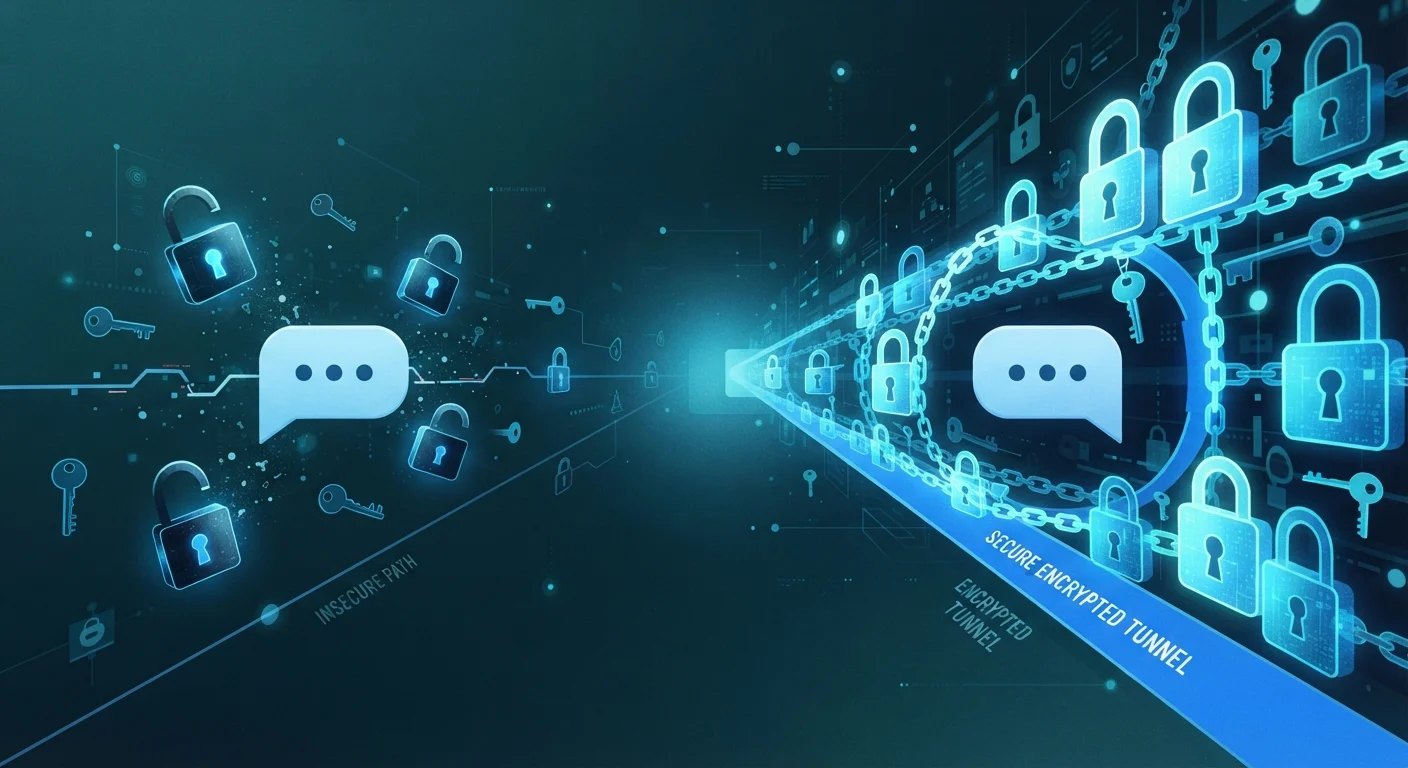
Photo credit: Telecom360.net | Connecting You To The Latest In Telecom
In this article
Not all encryption is equal. Understand the practical difference between end-to-end and standard encryption when choosing how to communicate securely.
Key Takeaways
- End-to-end encryption ensures only the sender and recipient hold decryption keys - no one in between can read the content.
- Standard transport encryption (like TLS) protects data in transit but leaves it readable on the service provider's servers.
- The padlock icon in your browser confirms transport encryption, not end-to-end encryption.
- Metadata - who messaged whom and when - is rarely protected by either encryption method.
- Choosing E2EE matters most when communicating sensitive personal, financial, or professional information.
How Each Encryption Model Actually Works
Encryption scrambles data so that only authorized parties can read it. What differs between end-to-end encryption and standard transport encryption is who holds the keys to unscramble it - and at what points in the journey the data is protected.
Standard encryption, most commonly implemented as TLS, secures data while it travels between your device and a server. Think of it as an armored truck: the cargo is protected on the road, but when it arrives at the warehouse (the service provider's server), it gets unpacked. The provider can read, index, or process the content. This is how most email services, social platforms, and web apps operate.
End-to-end encryption (E2EE) takes a fundamentally different approach. Messages are encrypted on the sender's device using cryptographic keys that only the intended recipient holds. The service provider transmits the encrypted data but never possesses the keys to read it. Even if the provider's servers are breached or compelled by a court order, the message content remains unreadable to anyone except the participants.
| Criterion | End-to-End Encryption | Standard (Transport) Encryption |
|---|---|---|
| Who holds decryption keys | Sender and recipient only | Service provider holds keys |
| Provider can read content | No - architecturally prevented | Yes - accessible on server |
| Protection against server breach | Strong - content unreadable | Weak - plaintext exposed |
| Metadata protection | Typically not included | Typically not included |
| Server-side features (search, backup) | Incompatible or limited | Fully supported |
| Common use context | Secure messaging apps | Web browsing, email, most apps |
This architectural distinction is why security researchers and privacy advocates treat E2EE as a meaningfully higher standard - not just a stronger version of the same idea.
What the Padlock Icon Actually Tells You
A common misconception is that the padlock icon displayed in a browser's address bar means a conversation is end-to-end encrypted. It does not. That padlock indicates a TLS connection - your data is protected between your device and the website's server, but the site itself can access your content once it arrives.
For messaging specifically, the distinction matters enormously. A messaging app can display a padlock, operate over HTTPS, and still store your messages in plaintext on its servers. True E2EE means the app's own infrastructure is architecturally excluded from reading your messages - not just that it promises not to.
Metadata Remains Exposed Even with E2EE
Even robust end-to-end encryption does not conceal metadata - the record of who communicated with whom, at what time, and how often. This information can reveal sensitive patterns even when message content is fully protected. Some services offer additional metadata minimization features, but these vary widely in implementation and should not be assumed.
For a broader look at how encryption protects stored data on your devices - and where it falls short - see our full-disk encryption explainer. Understanding these layers together gives a more complete picture of your actual security posture.
The Practical Implications for Your Messages
Choosing an E2EE messaging platform has real tradeoffs worth understanding before switching.
What E2EE protects: Message content is inaccessible to the service provider, making it significantly harder for third parties - including advertisers, hackers who breach servers, and government agencies - to access what you wrote.
What E2EE doesn't protect: Metadata - such as who you contacted, when, and how frequently - is generally not encrypted end-to-end and can remain visible to providers or network observers. Neither encryption type shields you if your device itself is compromised. For device-level security considerations, the device security guide covers protection strategies across phones, laptops, and tablets.
91%
Data breaches involving compromised server-stored data
Verizon's Data Breach Investigations Report consistently finds that server-side data stores are a primary target in external breach incidents.
0
Readable messages a provider receives under E2EE
By design, a correctly implemented E2EE system gives the service provider no cryptographic ability to decrypt message content, regardless of legal or technical pressure.
Feature tradeoffs: E2EE prevents providers from offering server-side features like message search across old conversations, AI-assisted reply suggestions, or seamless cloud backup - because processing those features requires reading message content. Users should weigh convenience against the privacy assurance they actually need.
Business users face additional considerations. Enterprise devices often require administrative oversight of communications, which can conflict with strict E2EE implementations. The differences between business and consumer smartphones article explores how enterprise device management intersects with security architecture.

Author
Cybersecurity Editorial Team
Cybersecurity Editorial Team is the collective byline for our editorial team and contributor network. Articles published under this byline or an editorial pen name are researched, written, and reviewed according to our editorial standards for clarity, consistency, and independence before publication.
View all articles →