
Why Scam Texts Feel So Convincing Now
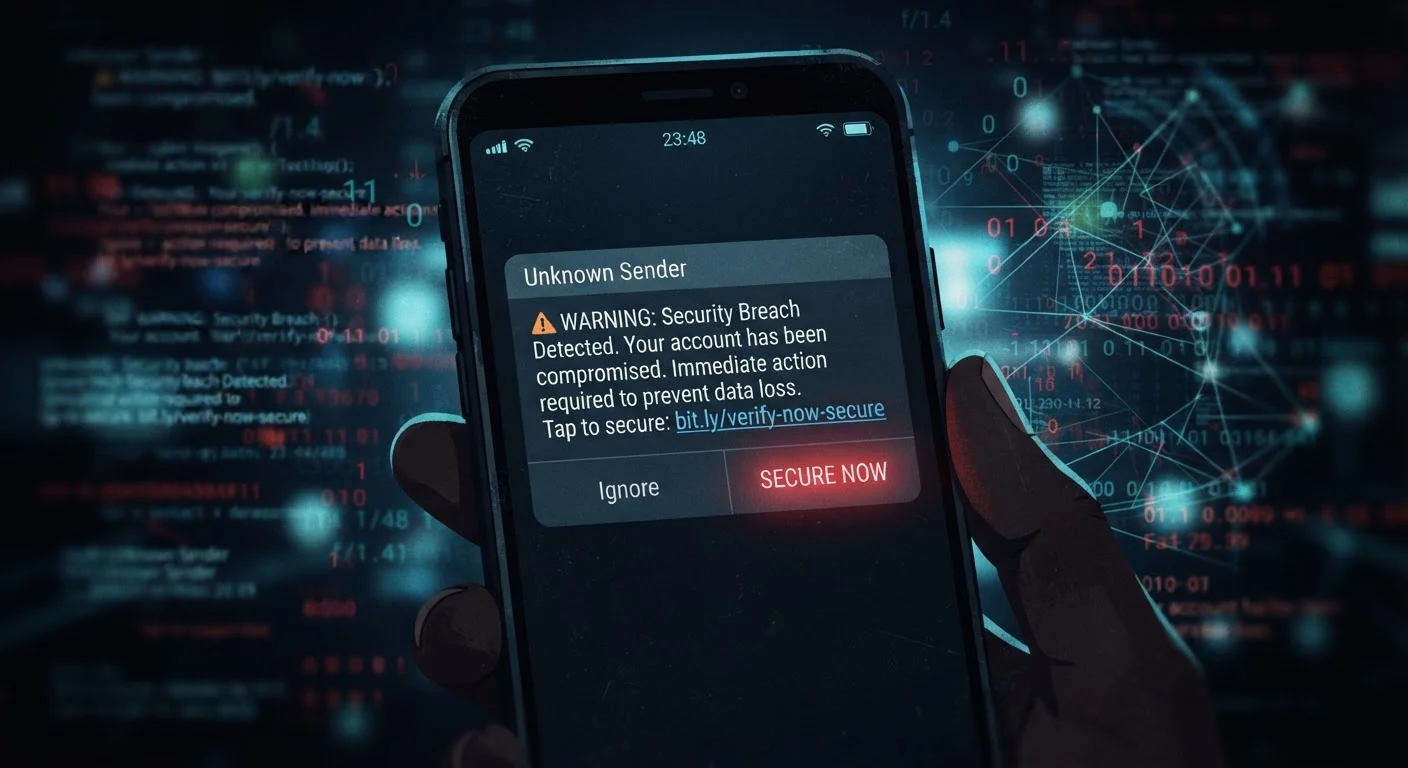
Photo credit: Telecom360.net | Connecting You To The Latest In Telecom
In this article
Modern SMS scams are harder to spot than ever. Here's what makes them so persuasive and the patterns that give them away.
Key Takeaways
- Modern scam texts often contain no spelling errors and accurately mimic real brands.
- Scammers exploit urgency, fear, and familiarity - not just technical tricks - to bypass your judgment.
- Personalized details sourced from data breaches make messages feel unexpectedly legitimate.
- Legitimate organizations rarely ask you to act immediately via a text link.
- Verifying independently - by calling a known number - remains the most reliable defense.
The Shift From Clunky to Convincing
Not long ago, scam texts were easy to dismiss: broken grammar, implausible prizes, generic greetings. That era is effectively over. The messages flooding inboxes today are grammatically polished, contextually plausible, and often contain details - your name, a partial account number, a recent delivery - that make dismissal feel risky.
Several forces converged to produce this shift. Generative AI tools lowered the barrier to writing fluent, natural-sounding English at scale. Access to leaked personal data from years of corporate breaches gave attackers raw material for personalization. And the economics improved: automated platforms now let a single operator send millions of targeted messages with minimal overhead.
Understanding how smishing differs from phishing and vishing is a useful starting point, but recognizing why a specific text feels convincing requires a closer look at the mechanics.
~376%
Increase in smishing attacks reported
The Anti-Phishing Working Group (APWG) has documented a dramatic multi-year rise in mobile phishing reports as attackers shift focus from email to SMS channels.
~$330M
Lost to text message scams (US, reported)
The FTC reported that Americans lost more than $330 million to text scams in a single recent year, with median losses per victim higher than for most other fraud types.
~98%
SMS open rate vs. ~20% for email
Industry research consistently shows SMS messages are opened at far higher rates than email, making text an attractive vector for social engineering at scale.
The Three Psychological Levers Scammers Pull
Effective scam texts don't rely on technical exploits alone - they exploit predictable human responses. Three levers appear consistently across nearly all successful campaigns:
- Urgency. Messages claim your account will be suspended, a package will be returned, or a charge will go through unless you act within hours. Urgency short-circuits deliberate thinking.
- Authority. Impersonating a bank, the IRS, a parcel carrier, or a mobile carrier borrows institutional trust. Recipients are conditioned to respond to these organizations, so the brand alone lowers skepticism.
- Familiarity. Using your first name, referencing a recent order, or appearing in the same SMS thread as a legitimate brand message creates a false sense that the sender already knows you.
These aren't new principles - con artists have relied on them for centuries. What has changed is the precision and scale at which they can be deployed via mobile messaging.
Pause Before You Act on Any Text
If a text creates a strong sense that you must do something right now, treat that urgency as a signal to slow down rather than speed up. Look up the sender's official contact information independently - through their website or a number on your statement - and verify the claim before clicking anything or providing any details.
What Personal Data Makes Possible
Data breaches have deposited enormous quantities of personal information into underground markets: names, phone numbers, email addresses, partial payment card details, even purchase histories. Scammers purchase or access these datasets and use them to craft messages that feel eerily specific.
A message that reads "Hi , your bill of $94.17 is overdue - verify your payment method here" is far more disarming than a generic alert. The named carrier, the plausible dollar amount, and your own name combine to create a message that passes a quick mental check - even for security-conscious readers.
This personalization gap - the difference between what you expect a scam to look like and what it actually looks like - is the most dangerous aspect of modern smishing. While email phishing has visible tells that many users have learned to spot, recognizing those same warning signs in a text message requires applying the same scrutiny to a much shorter, less information-rich format.
The Patterns That Still Give Them Away
Despite the sophistication, structural weaknesses persist in virtually all scam texts. Training yourself to notice these patterns provides a reliable filter:
- Unfamiliar or slightly off links
- Legitimate organizations use their own verified domains. Scam links often use lookalike domains (e.g.,
usps-delivery-update.netinstead ofusps.com), URL shorteners, or random subdomains. - Requests for credentials or payment via link
- Banks, carriers, and government agencies do not resolve account issues through unsolicited text links. Any message directing you to log in or pay via a URL in the text should be independently verified.
- Mismatched context
- A delivery notification for a carrier you didn't use, a fraud alert from a bank where you hold no account, or a prize from a contest you never entered - plausible framing that doesn't match your actual situation is a consistent tell.
If a message creates pressure to act before you can think clearly, that pressure itself is the red flag. Contacting the alleged sender through a number or website you look up independently - not one provided in the text - eliminates the risk of acting on a fraudulent message.
The same persuasion architecture appears in other scam formats. The anatomy of a tech support scam reveals how identical urgency and authority tactics play out over phone calls and pop-ups.
Forward Suspicious Texts to 7726
All major US carriers support the shortcode 7726 (which spells SPAM on a keypad) for reporting suspicious text messages. Forwarding the message helps carriers identify and block smishing campaigns before they reach more recipients. You can also report smishing attempts directly to the FTC at ReportFraud.ftc.gov.
Frequently Asked Questions

Author
Cybersecurity Editorial Team
Cybersecurity Editorial Team is the collective byline for our editorial team and contributor network. Articles published under this byline or an editorial pen name are researched, written, and reviewed according to our editorial standards for clarity, consistency, and independence before publication.
View all articles →