
Mobile OS Update Cycles: How Android and iOS Handle Software Upgrades Differently
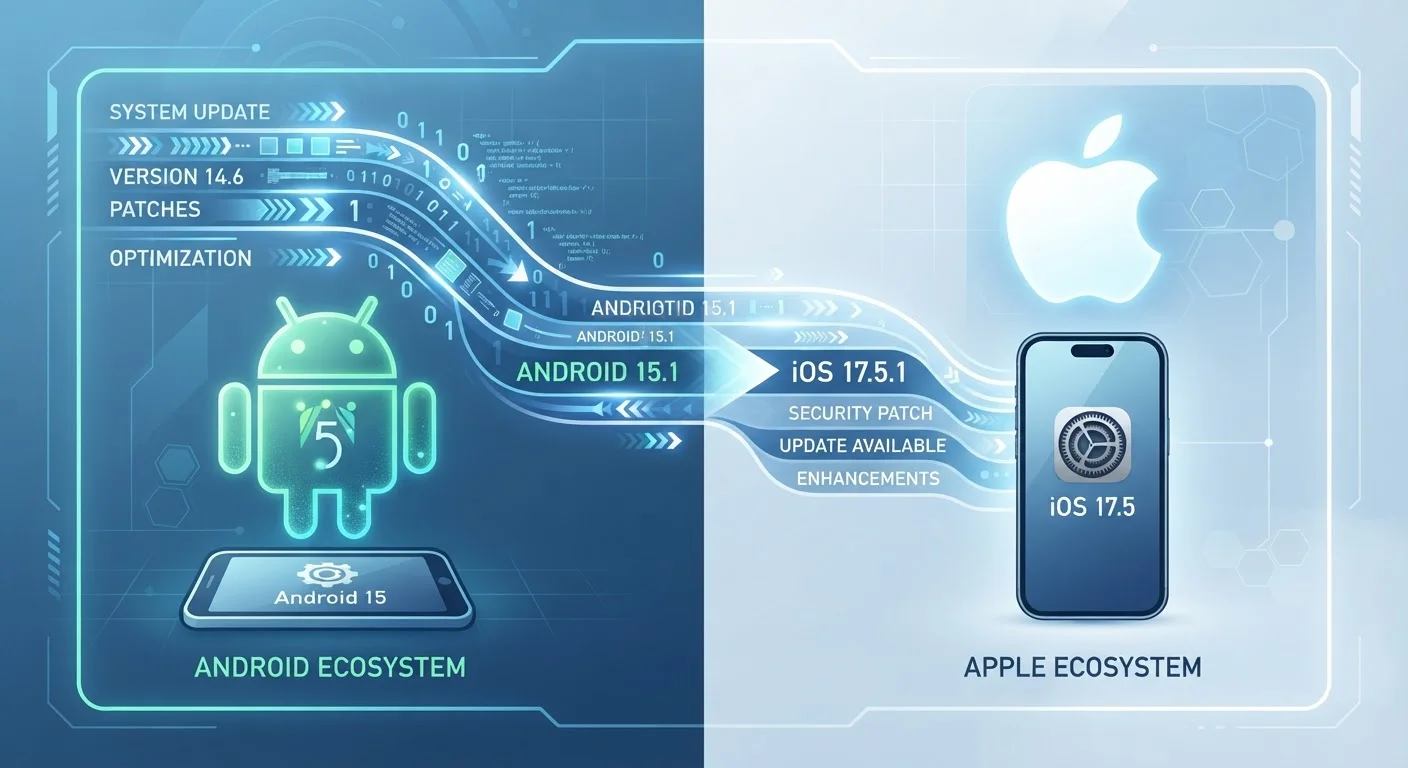
Photo credit: Telecom360.net | Connecting You To The Latest In Telecom
In this article
From Google's Project Mainline to Apple's unified rollouts, learn how software updates reach your phone — and why timing varies so much.
Key Takeaways
- iOS updates deploy simultaneously to all supported devices; Android updates pass through manufacturer and carrier layers first.
- Google's Project Mainline (Google Play System Updates) lets Android push certain security fixes without full OS updates.
- Apple typically supports iPhones with major iOS updates for five to six years; Android support windows vary significantly by manufacturer.
- Android fragmentation means two users on different devices may run the same Android version with meaningfully different software behavior.
- Security patch cadence - not just major version updates - is a practical indicator of real-world device protection.
Two Platforms, Two Update Philosophies
Software updates are one of the most consequential - and least glamorous - aspects of smartphone ownership. They deliver security patches, new features, and compatibility fixes. But how quickly and reliably those updates reach your device depends almost entirely on which platform you're on.
Apple controls both the hardware and the operating system on every iPhone. That vertical integration means a single iOS release can target every supported device simultaneously. Google, by contrast, develops Android as an open-source platform licensed to dozens of manufacturers, each shipping their own hardware with their own software customizations. The result is a fundamentally different update pipeline - one with more moving parts and more opportunities for delay.
Understanding how these two operating systems differ philosophically helps explain why their update mechanics diverge so sharply.
How iOS Updates Reach Your Device
Apple releases one major iOS version per year, typically in the fall, alongside new iPhone hardware. When that update goes live, every supported iPhone - from the current flagship to models released five or six years prior - can download it on the same day. Minor updates and security patches follow the same universal rollout pattern.
Carriers have no ability to block or delay iOS updates. Apple negotiates directly with carriers to ensure over-the-air delivery is unimpeded. This means an iPhone owner in rural Iowa and one in midtown Manhattan receive the same update on the same schedule.
Apple's security patch cadence is also notably tight. Critical vulnerabilities are typically addressed within days to a few weeks, and Rapid Security Response updates - introduced in iOS 16 - allow Apple to push targeted security fixes without requiring a full OS version update, keeping installation sizes small and minimizing disruption.
Check Security Patch Date, Not Just OS Version
When evaluating how current your device's software is, look at the security patch date in your settings - not just the OS version number. A device on the latest Android version but running a six-month-old security patch is meaningfully less protected than one with a recent patch. On iOS, check Settings > General > About for the iOS version, which reflects Apple's unified patch and OS release schedule.
How Android Updates Navigate a Complex Pipeline
Android's update path involves multiple layers. Google develops the core Android Open Source Project (AOSP) release. Chipset manufacturers (such as Qualcomm or MediaTek) then produce platform-specific code adaptations. Device manufacturers integrate those components into their own software skins - One UI, OxygenOS, MIUI - before finally releasing the update. Carriers may add another review stage on top of that.
This pipeline means a new Android version can take weeks to several months to reach non-Google devices after Google announces it. In some cases, budget or older mid-range devices may never receive a major version update at all.
Android's fragmentation problem remains a real structural challenge: millions of devices run versions two or three generations behind, creating a patchwork of security postures across the ecosystem.
| iOS | Android (Google Pixel) | Android (Other Manufacturers) | |
|---|---|---|---|
| Update pipeline layers | Apple only | Google only | Google → OEM → Carrier |
| Rollout timing | Simultaneous, all devices | Near-simultaneous | Weeks to months after release |
| Major OS support window | ~5-6 years | 7 years (newer models) | 2-4 years (varies) |
| Security patch frequency | Monthly + Rapid Response | Monthly | Monthly to quarterly (varies) |
| Carrier ability to delay updates | None | None | Possible on some carriers |
| Modular security fixes (Mainline) | Partial (Rapid Security Response) | Yes, via Play System Updates | Yes, via Play System Updates |
Project Mainline: Android's Answer to Fragmentation
Google introduced Project Mainline (now delivered via Google Play System Updates) starting with Android 10 to address a core fragmentation weakness. Mainline extracts critical OS components - networking stacks, media frameworks, permission controllers - from the base OS and delivers updates for them directly through the Google Play Store, bypassing manufacturer and carrier pipelines entirely.
This means even a device stuck on an older Android version can receive important security and stability fixes for specific subsystems. It's a meaningful architectural improvement, though it doesn't fully replace the need for timely major OS updates. Update cycle policies matter well beyond launch day, and Mainline narrows - but doesn't close - the gap between Android and iOS in security responsiveness.
For a deeper look at how these updates affect what you actually run daily, see how OS updates improve or occasionally hurt performance.
~90%
iOS devices on latest major version within months
Apple's developer data has historically shown adoption rates of the latest iOS version reaching roughly 90% of active devices within a year of release.
~15%
Android devices on latest version within one year
Android version distribution data from Google has consistently shown far lower adoption rates for the latest version in the first year, reflecting the multi-layer update pipeline.
Support Windows and Long-Term Viability
Apple's support window for major iOS updates has historically spanned five to six years from a device's release. An iPhone released in 2019 was still eligible for iOS 16 in 2022 - a noteworthy commitment given how quickly mobile hardware evolves.
Android manufacturer commitments vary considerably. Google's Pixel line has expanded its promise to seven years of OS and security updates for newer models. Samsung has extended its flagship and select mid-range lines to four years of OS updates and five years of security patches. Many other Android manufacturers offer two to three years - or less - particularly on lower-cost hardware.
This disparity matters practically: a device that stops receiving security patches becomes a liability, not just an inconvenience. The architectural differences between Android and iOS go a long way toward explaining why these support commitments diverge. For context on what happens when apps and OS versions fall out of sync, see why apps break after OS updates.

Author
Smartphones Editorial Team
Smartphones Editorial Team is the collective byline for our editorial team and contributor network. Articles published under this byline or an editorial pen name are researched, written, and reviewed according to our editorial standards for clarity, consistency, and independence before publication.
View all articles →