
Heart Rate Monitoring on Wearables: Accuracy, Limitations, and Context
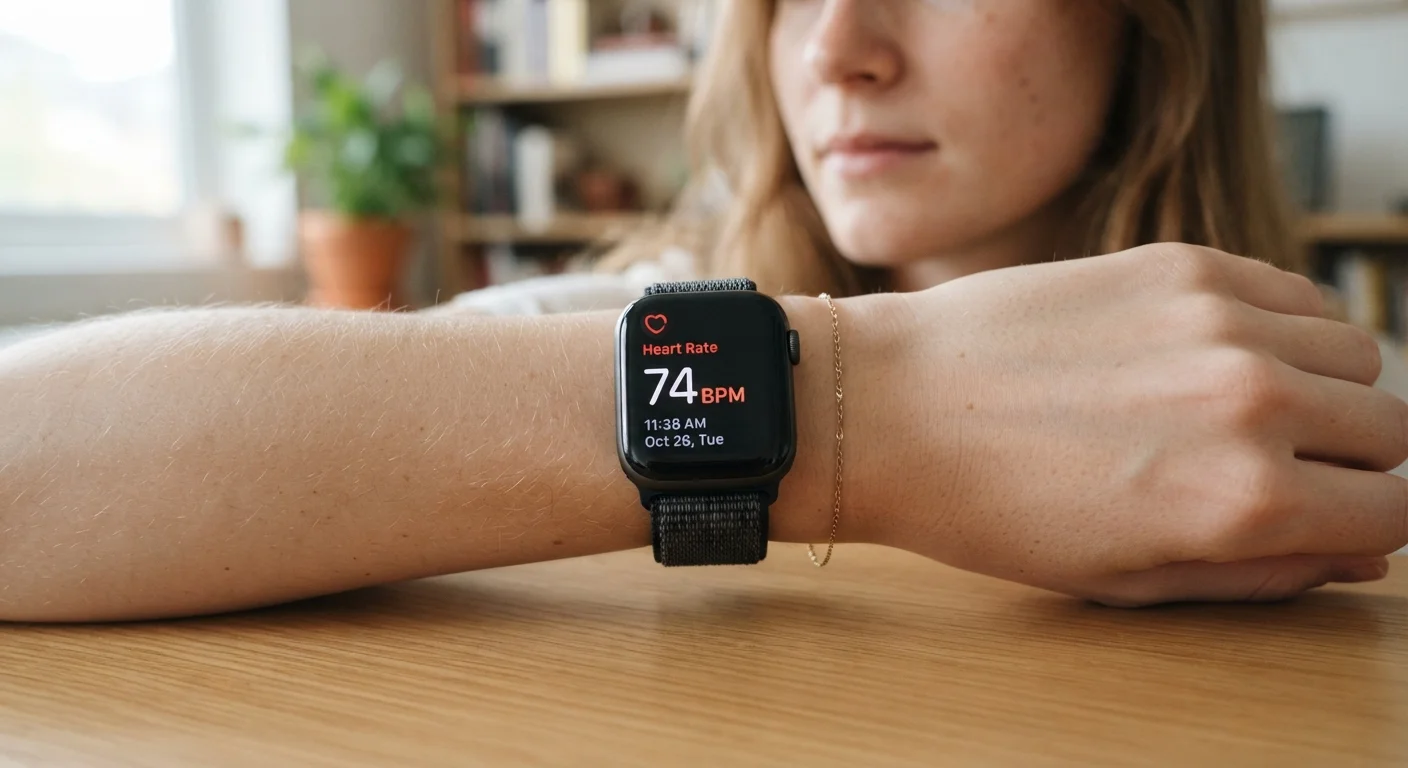
Photo credit: Telecom360.net | Connecting You To The Latest In Telecom
In this article
Optical heart rate sensors are now standard on wearables, but their accuracy varies significantly. Learn what affects readings and when to rely on them.
Key Takeaways
- Wearable heart rate monitors use optical sensors that measure blood volume changes, not electrical signals.
- Accuracy degrades during high-intensity movement, poor wrist contact, and certain skin conditions.
- Resting heart rate readings are generally more reliable than those taken during vigorous exercise.
- Wearable HR data should inform general wellness awareness, not substitute for clinical-grade measurement.
- Fit, placement, and skin tone can all meaningfully affect optical sensor performance.
Reliable resting heart rate trend tracking
PPG sensors are most accurate when the body is still, making overnight and sedentary readings dependable enough to identify meaningful multi-day trends in resting HR.
Continuous, passive monitoring without user input
Unlike chest straps or clinical devices, wrist-worn sensors collect data automatically throughout the day without requiring the user to initiate a measurement.
Useful for moderate-intensity exercise guidance
At steady-state efforts below high-intensity thresholds, optical sensors track heart rate zones with sufficient accuracy to guide pacing and aerobic training decisions.
Long-term cardiovascular pattern visibility
Aggregated over weeks and months, wearable HR data can surface gradual changes in fitness level or recovery capacity that would be invisible from isolated measurements.
Enables derived wellness metrics
Continuous HR data powers secondary metrics like heart rate variability and resting HR trends that add context beyond the raw beats-per-minute figure.
Reduced accuracy during high-intensity movement
Rapid or erratic arm motion introduces motion artifact into the optical signal, causing readings to lag or spike inaccurately during intense exercise.
Cold environments impair sensor signal
Peripheral vasoconstriction in cold temperatures reduces blood flow near the skin, weakening the optical signal and degrading measurement reliability.
Performance variation across skin tones
Published research indicates that some optical HR sensors show measurably higher error rates on darker skin tones, an equity gap the industry has not uniformly resolved.
Tattoos and dense pigmentation can block light
Dark or heavily inked wrist tattoos absorb or scatter the LED light used by PPG sensors, producing inconsistent or invalid readings over affected areas.
Not a clinical-grade diagnostic tool
Consumer wearable sensors are not regulated as medical devices for diagnostic purposes in most jurisdictions, and their readings should not be used to self-diagnose cardiac conditions.
Fit and placement strongly affect accuracy
A loose band, incorrect wrist position, or wearing the device over a bony area can all introduce error that the algorithm cannot fully compensate for.
How Optical Heart Rate Sensors Work
Most consumer wearables measure heart rate using PPG - photoplethysmography. Small LEDs (typically green, sometimes red or infrared) shine light into the skin on your wrist. A photodetector measures how much light reflects back. Because blood absorbs green light more strongly than surrounding tissue, each heartbeat causes a detectable dip in reflected light. The device's algorithm converts those oscillations into a beats-per-minute figure.
This approach is fundamentally different from an electrocardiogram (ECG), which measures the heart's electrical activity directly. PPG detects a secondary, mechanical consequence of each beat - the pulse wave traveling through blood vessels. That distinction matters when evaluating what wearables can and cannot reliably tell you. For a deeper look at the full sensor ecosystem inside these devices, see Wearable Sensors Decoded.
Where Optical Heart Rate Monitoring Performs Well
Reliable resting heart rate trend tracking
PPG sensors are most accurate when the body is still, making overnight and sedentary readings dependable enough to identify meaningful multi-day trends in resting HR.
Continuous, passive monitoring without user input
Unlike chest straps or clinical devices, wrist-worn sensors collect data automatically throughout the day without requiring the user to initiate a measurement.
Useful for moderate-intensity exercise guidance
At steady-state efforts below high-intensity thresholds, optical sensors track heart rate zones with sufficient accuracy to guide pacing and aerobic training decisions.
Long-term cardiovascular pattern visibility
Aggregated over weeks and months, wearable HR data can surface gradual changes in fitness level or recovery capacity that would be invisible from isolated measurements.
Enables derived wellness metrics
Continuous HR data powers secondary metrics like heart rate variability and resting HR trends that add context beyond the raw beats-per-minute figure.
The strongest use case for wearable heart rate monitoring is passive, low-activity tracking. Resting heart rate measured overnight or during sedentary periods consistently falls within a few beats per minute of clinical readings in multiple independent studies. This makes it genuinely useful for identifying resting HR trends over weeks - a meaningful indicator of improving fitness or early illness recovery.
Zone-based training at moderate intensities (roughly 50-75% of maximum effort) also tends to produce reasonably reliable readings, provided the device fits well and the user is not in cold conditions. Many users successfully use this data to avoid overtraining or to confirm they are working at an aerobic rather than anaerobic pace.
Where Accuracy Falls Short
Reduced accuracy during high-intensity movement
Rapid or erratic arm motion introduces motion artifact into the optical signal, causing readings to lag or spike inaccurately during intense exercise.
Cold environments impair sensor signal
Peripheral vasoconstriction in cold temperatures reduces blood flow near the skin, weakening the optical signal and degrading measurement reliability.
Performance variation across skin tones
Published research indicates that some optical HR sensors show measurably higher error rates on darker skin tones, an equity gap the industry has not uniformly resolved.
Tattoos and dense pigmentation can block light
Dark or heavily inked wrist tattoos absorb or scatter the LED light used by PPG sensors, producing inconsistent or invalid readings over affected areas.
Not a clinical-grade diagnostic tool
Consumer wearable sensors are not regulated as medical devices for diagnostic purposes in most jurisdictions, and their readings should not be used to self-diagnose cardiac conditions.
Fit and placement strongly affect accuracy
A loose band, incorrect wrist position, or wearing the device over a bony area can all introduce error that the algorithm cannot fully compensate for.
Accuracy degrades most noticeably during high-intensity interval training, weightlifting, and activities involving significant wrist motion - cycling sprints, boxing, and rowing among them. Rapid arm movement creates motion artifact: the sensor can confuse mechanical vibration with pulse signals, producing readings that are either inflated or delayed by several seconds. This lag is particularly relevant when HR is changing quickly.
Environmental conditions matter too. Cold temperatures cause peripheral vasoconstriction - blood vessels near the skin constrict - reducing the signal amplitude that the LED can detect. Tattoos, particularly dark or densely inked ones, can block or scatter light in ways that impair readings. Research has also documented that some PPG sensors show reduced accuracy on darker skin tones, a hardware bias that manufacturers are gradually addressing but have not uniformly solved.
Wearable HR Data and Medical Decisions
Consumer wearable heart rate monitors are wellness tools, not medical instruments. They are not cleared for diagnosing arrhythmias, heart disease, or other cardiac conditions in most regulatory frameworks. If you notice persistent abnormalities in your heart rate data, consult a qualified healthcare provider rather than relying on device alerts or app interpretations alone.
For a practical checklist on verifying your device's reliability before acting on its health data, see things to verify before trusting a wearable's health metrics.
Putting the Numbers in Context
±5 bpm
Typical resting HR error range
Multiple independent evaluations of consumer wearables suggest resting heart rate readings generally fall within approximately five beats per minute of reference measurements under controlled conditions.
Up to ±20 bpm
Error range during high-intensity exercise
Studies examining wearable accuracy during vigorous or high-motion activities have documented errors substantially larger than those seen at rest, often exceeding 20 bpm in worst-case scenarios.
3-5 seconds
Typical PPG signal lag during intensity changes
Optical sensors require brief averaging windows to stabilize readings, meaning displayed heart rate can trail actual heart rate by several seconds when effort changes rapidly.
A single heart rate reading from a wearable is rarely as informative as a trend. A resting HR of 72 bpm means little in isolation; a resting HR that has risen 8-10 bpm above a stable personal baseline over several days may signal fatigue, illness, or inadequate recovery. The same logic applies to workout data - the absolute number matters less than whether your heart rate at a given effort level is changing over time.
Wearables are also increasingly feeding HR data into derived metrics - HRV, VO2 max estimates, stress scores - that amplify both the value and the error of the underlying sensor. Misinterpreted secondary metrics are a common pitfall; wearable fitness data misreadings explores these in detail. For AI-driven features like irregular rhythm notifications, the stakes are higher still - understanding their limits is essential, as covered in our piece on AI health features on wearables.
Heart rate data from consumer wearables is intended for general wellness awareness only and is not a substitute for professional medical assessment or clinical-grade monitoring equipment.

Author
Consumer Electronics Editorial Team
Consumer Electronics Editorial Team is the collective byline for our editorial team and contributor network. Articles published under this byline or an editorial pen name are researched, written, and reviewed according to our editorial standards for clarity, consistency, and independence before publication.
View all articles →